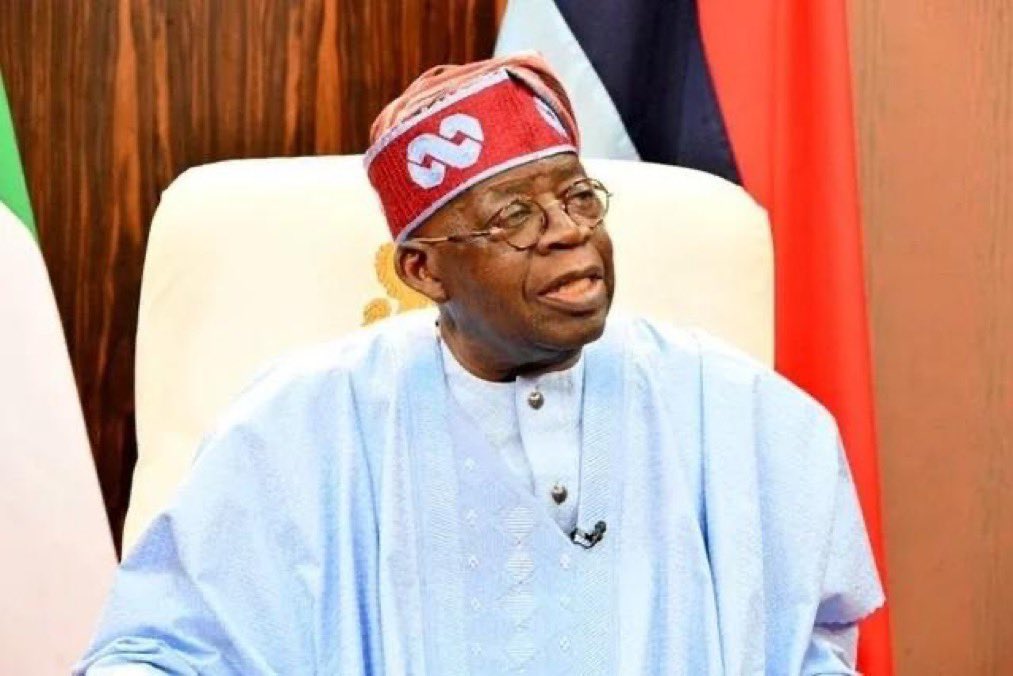
President Bola Tinubu has returned to Nigeria after about four weeks in Europe. He told journalists that concerns about his health were unfounded. A reporter asked him about the worries many Nigerians had raised while he was in France, and he replied: “I’m sound and healthy. Ready to kick and ready to work.”
He landed at the Presidential Wing of the Murtala Muhammed International Airport in Lagos on Tuesday, September 29. He said he enjoyed his vacation and described the health talk as politics. Channels Television reported that he called himself “healthy, sound, and ready to go.”
What the president said, and what he did not say (a denial without details)
Tinubu did not go into detail about his health. Reports say he told reporters that rumours always come from politics, and that his return should settle the matter. He did not say whether he had seen a doctor in France, and none of the reports we reviewed carry any medical confirmation.
His return also ends a period of uncertainty about the date. He left on August 30 for what the Presidency called a three-week working vacation, first in London and later in Paris. The stay was extended by several days, and his return date moved twice.
Where the health talk came from (rumour, allegation and official response)
The concern grew as his absence grew longer. Activist and politician Omoyele Sowore said during an Arise News interview a day before Tinubu’s return that the president was undergoing treatment in France. He also admitted he did not know what the ailment was. That is an allegation, and nothing in the reports proves it.
The Presidency has repeatedly rejected the concerns. It said Tinubu stayed in touch with officials in Nigeria and continued to direct government affairs from abroad. Vice President Kashim Shettima led Nigeria’s delegation to the United Nations General Assembly in his place.
A pattern Nigerians remember well (past cases of absent presidents)
The public’s worry has roots in history. In November 2009, President Umaru Musa Yar’Adua travelled to Saudi Arabia for treatment. His absence dragged on without a formal handover, and Vice President Goodluck Jonathan could not act as president. On February 9, 2010, the Senate used the “doctrine of necessity” to make Jonathan Acting President. This was an unusual step taken to fill a leadership gap that the law did not clearly cover. Yar’Adua returned on February 24 and died on May 5, 2010.
The crisis led to a change in the Constitution. Section 145 now requires a written notice, and it lets the National Assembly act if the president fails to send one within 21 days.
In 2017, President Muhammadu Buhari left for London on January 19 for what was billed as a vacation with routine medical checks. The government later admitted that his doctors advised him to stay to finish his tests, and his time away stretched into weeks.
Tinubu has faced this kind of talk before. In 2023, as President-elect, he returned from France and said he was “healthy, sound and okay” and dismissed speculation about his health. In August 2025, the Presidency also dispelled an illness rumour, and a report noted his frequent trips to France since taking office. It said he had reportedly spent over 50 days there across several visits.
Why silence feeds suspicion (causes of the rumours)
Rumours grow where facts are thin. A long trip, moved return dates and little detail about the reason for the delay left room for guesses. Nigerians also carry the memory of the 2009 and 2017 episodes, so many are quick to ask questions when a president is away for weeks.
Politics adds to it. With the 2027 election approaching, every absence, delay and public appearance is read for political meaning. The president may be right that some talk is driven by politics. But officials also help rumours spread when they answer with short denials instead of clear information.
Trust, markets and the 2027 race (effects on the country)
Uncertainty about who is in charge, or how the president is doing, has real costs. Government decisions may slow down if approvals wait for a leader who is abroad. Investors and foreign partners watch the stability of Africa’s largest economy, and unclear signals make them cautious. At home, public trust drops when people feel they are being kept in the dark.
Political tension also rises. Opponents use the questions to attack the government, and supporters respond with anger. That leaves less room for the real issues facing Nigerians, such as prices, security and jobs.
Ways to end the guessing (possible solutions)
The Presidency can give clear, simple updates during any long trip: where the president is, why, and for how long. It can confirm publicly whether the Section 145 notice was sent, since the law asks for it. It can also explain what a “working vacation” means in practice, for example which duties the president still performs.
On health, a president is entitled to privacy. But when illness may affect the ability to govern, the public has a fair interest in basic facts. A short statement from the Presidency, or a simple medical confirmation of fitness, would help calm things without exposing private details. The National Assembly can also make the notice rules easier to follow. And officials, the press and the public should avoid guessing about a person’s medical condition without evidence.
A public appearance helps, but openness works better
We are glad to see the President back in the country and speaking to the press. Seeing a leader in person does more to calm fears than any written denial. We also note that no evidence has been shown that he is unwell, and health claims made without proof should not be treated as fact.
At the same time, we believe the questions were not mischief. Nigerians asked because of what history has taught them. A government that answers clearly and early does not need to blame politics later. If the Presidency wants the health talk to end, it should pair the president’s words with steady, open communication. Trust is built through openness, and it is a small price for a leader to pay.
Published by Ejoh Caleb