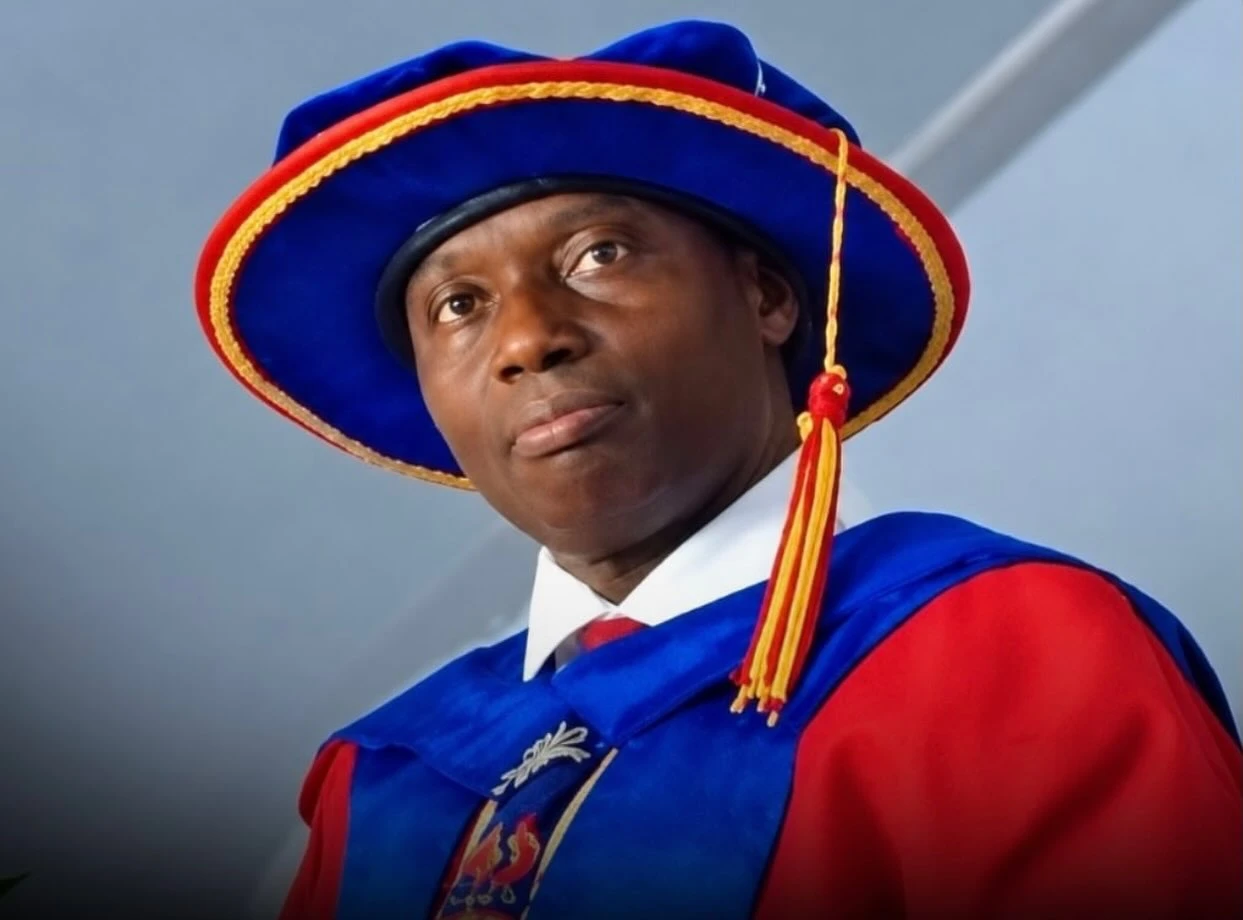
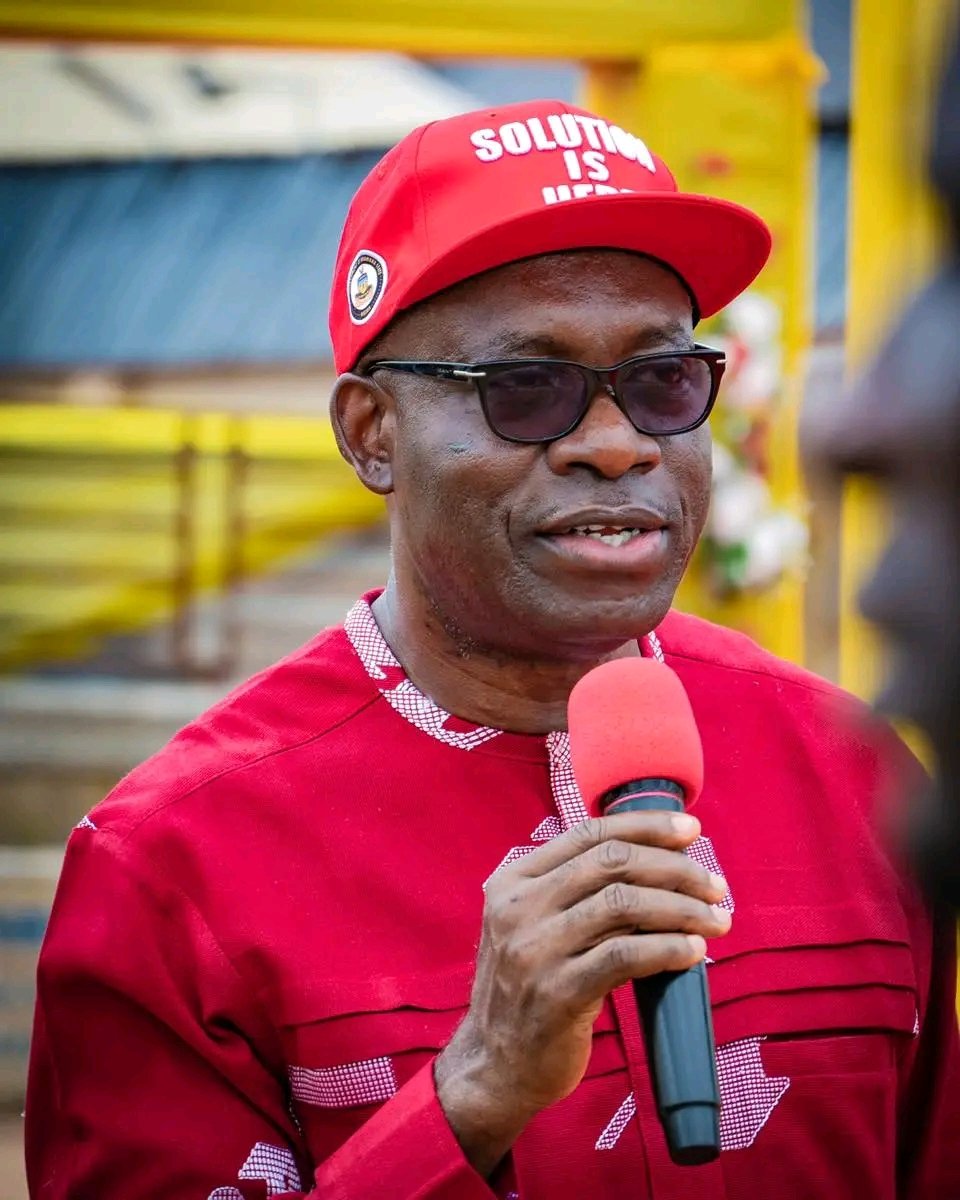
Anambra State Governor, Prof. Chukwuma Soludo, has called on residents to take collective action against flooding and gully erosion. Gully erosion is when running water cuts deep channels into the soil and eats away land, roads and homes. He made the call on Sunday at a thanksgiving service marking Nigeria’s 66th Independence anniversary at the Cathedral Church of St. Faith, Awka. He used the moment to mourn a six-year-old pupil who died in a flood, and told citizens to “stop reading the book of lamentations.” He asked them instead to take a daily oath of personal responsibility to make the state and the country great.
A school-bus journey that ended in tragedy (what happened to the pupil)
The child was Success Ezenwafor, a pupil of Nnamdi Azikiwe University Primary School. He was on his way to school last Tuesday when the bus carrying him and other passengers was trapped by floodwater on the Nibo–Isiagu Road in Awka South and overturned. Police officers and residents rescued seven other schoolchildren and two adults, who were taken to a teaching hospital in Awka. Success was swept away, and his body was found on Wednesday morning.
The governor said the loss had brought grief to the Ezenwafor family, the school, the Ekwulobia community in Aguata Local Government Area, and the whole state. He also said the state government had already sent its condolences to the family through several channels.
Small daily habits that decide how floods behave (the governor’s call for personal responsibility)
Soludo did not only offer sympathy. He asked residents to turn the tragedy into a push for personal responsibility in protecting the environment. He said everyone has a role to play, especially by keeping drains free of blockage. He also asked people not to channel rainwater from their compounds onto the roads, because this can worsen flooding and put lives at risk.
He added that residents should plant trees and clear their drainage systems regularly. These steps sound small. But when thousands of compounds send water onto the same streets, the combined runoff can be strong enough to trap a vehicle, as happened on Tuesday.
A wider disaster than one incident (Anambra’s long fight with erosion)
Anambra’s erosion problem is old and large. Reports say the state has more than 1,000 active erosion sites. Soludo himself put the figure at about 950 in April 2022. Agulu, Nanka and Oko are regarded as the centres of the problem. Residents there are said to live in fear of the next landslide.
Past cases show how deadly this can be. In 2012, two people were feared dead when a bungalow fell into a gully in Ozubulu, Ekwusigo Local Government Area. Five houses were swallowed across four communities. A lawmaker said each of the four communities had at least 10 active erosion sites. Note that the 2012 deaths were reported as “feared”, not confirmed.
More recently, the civil rights group Intersociety petitioned the governor over gully erosion at Ugo Community in Aguata. It alleged that the problem had claimed at least 10 lives in a decade and could affect about 22,000 people. These are the group’s claims and have not been confirmed by the state government.
This week’s tragedy also has a political side. Senator Victor Umeh, who represents Anambra Central, has asked the federal government to declare his zone an ecological disaster zone. He made the call after visiting the boy’s family and the sites where about three houses caved into gullies in Awka.
Human habits and heavy rain make a dangerous mix (causes of the flooding)
Heavy rain is the trigger. Flooding hit parts of Awka after heavy rainfall on Monday and Tuesday. But rain alone does not explain the damage. Reports on the state’s erosion crisis point to illegal excavation, poor waste disposal and blocked drains as factors that keep making things worse, even after heavy spending on repairs.
This is why the governor focused on drains and runoff. Blocked drains push water onto roads. Roads then act like rivers. Bare, unplanted land loses soil faster, and small channels grow into gullies over the years.
Lives, land and national cost (effects of erosion and flooding)
The first effect is loss of life and safety, as the death of a child on a school bus shows. The second is lost property. Families lose homes, farmland and livelihoods when gullies swallow them. Schools, hospitals and roads are also under threat.
The effects reach beyond Anambra. Nigeria depends on farmland for food. When fertile land is washed away, food supply and rural incomes suffer everywhere. Roads that are cut off slow down trade between states. Repairing damage also drains public money that could be used for schools and health. A problem that starts in one state therefore becomes a national cost. Anambra also gets help from the federal Nigeria Erosion and Watershed Management Project (NEWMAP), which shows the crisis is not only local.
Practical steps that can protect lives (possible solutions)
Residents can act first. They can clear drains, stop sending compound runoff onto roads, and plant trees, as the governor advised. Families can also follow safety advice from the governor’s wife, Dr. Nonye Soludo. She urged people to watch weather and flood warnings, avoid crossing flooded roads and waterways, and move to safer areas when their homes become unsafe.
Government also has a part to play. Drivers of school buses need clear rules not to enter flooded routes. Flood-prone roads such as the Nibo–Isiagu stretch need proper drainage and warning signs. Illegal excavation must be checked and punished. The federal government can respond to Senator Umeh’s request and give the zone more support.
Prevention starts before the rain falls
We agree with the governor that personal responsibility matters. A blocked drain in one street can cause a flood in another. Asking citizens to do their part is fair. But we also believe responsibility runs both ways. Residents can clear drains, yet only government can build the big channels, fix failing roads and enforce rules against illegal excavation.
A six-year-old going to school should never be at risk of dying on the road. Sympathy and prayers are needed, but they cannot bring him back. What can honour Success Ezenwafor is action before the next heavy rain: cleaner drains, safer school routes and firm enforcement. If citizens and government both act, this loss can become the turning point the governor is asking for. If not, we will be mourning again.
Published by Ejoh Caleb