
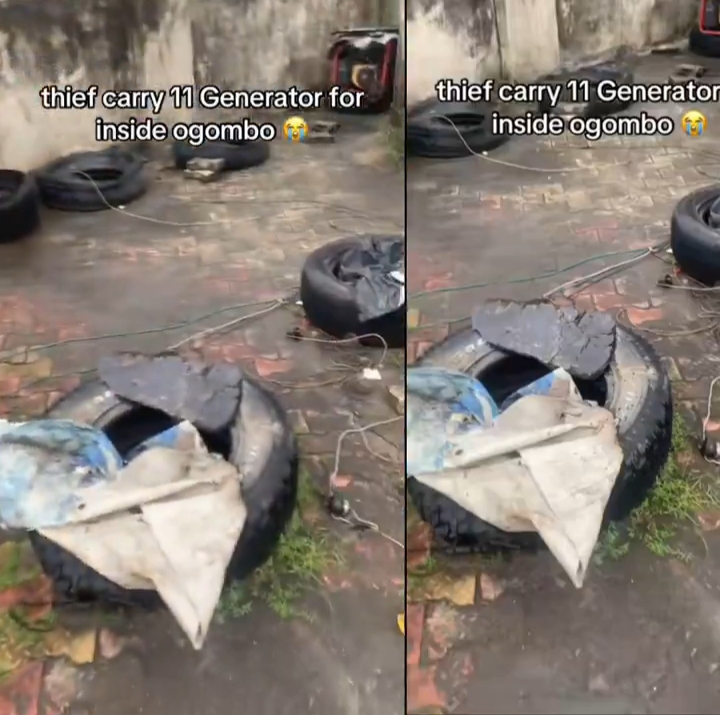
Residents of a compound in Ogombo, a community in Lagos State, are in shock after thieves broke in overnight and made away with 11 generators. According to reports, the thieves entered the compound while everyone was asleep and managed to remove all 11 machines without a single resident or neighbour noticing.
The incident has left people asking a simple but troubling question: how does someone carry 11 generators out of a compound in the middle of the night, undetected? Many residents believe the theft could not have happened without help from someone familiar with the compound, possibly a security guard or even someone living there. That suspicion, whether or not it turns out to be true, says a lot about how much trust has broken down around personal safety in Nigerian neighbourhoods today.
This Is Not an Isolated Case: Other Generator Thefts Across the Country
This theft fits into a much bigger pattern that has been playing out across Nigeria for years, not just in Lagos. In August 2026, thieves broke into the Independent National Electoral Commission (INEC) office in Jega, Kebbi State, and stole six generators. Police later arrested four suspects and recovered all six machines, though one had already been stripped down into scrap parts for resale. That detail matters because it shows exactly why generators are such an attractive target: even a stolen generator that cannot be resold whole still has value once broken apart and sold as scrap metal.
Just a few months earlier, in June 2026, police in Ogun State said they had dismantled an entire generator theft ring operating around Abeokuta, Wasimi, and Ibafo. Officers recovered several stolen generators and arrested a motorcyclist who they said had been providing “rapid logistics support,” ferrying gang members to and from the locations they targeted. This case is important background because it shows these thefts are often not random, opportunistic acts by a single person. In many cases, they are organised operations involving several people playing different roles, from the person who breaks in to the one who provides transport to the one who resells the parts.
There is also a long history of ordinary Nigerians simply waking up to find their own generators looted piece by piece, engines and valuable parts stripped away overnight while the shell is left behind. One widely shared case involved a man who discovered his generator’s engine and other parts had been removed while he slept, leaving him with nothing but the empty frame. These smaller, everyday thefts rarely make national headlines, but together with larger break-ins like the one in Ogombo, they paint a picture of a country where a basic appliance meant to solve one problem (unreliable electricity) has become a magnet for crime.
The Real Reason Generators Keep Getting Stolen, and What It Costs the Country
At the heart of this problem is Nigeria’s ongoing electricity crisis. Because the national power grid is unreliable, millions of households and businesses depend on generators just to have light, refrigerate food, or run a small business. This widespread dependence means generators are everywhere, and thieves know exactly where to find them and how much they are worth. A generator is also relatively easy to resell, either as a whole working unit through informal markets or broken down into parts and scrap metal, which makes it a low-risk, high-reward target compared to many other stolen goods.
Weak estate and community security also plays a major role. Many residential compounds and estates rely on a single untrained or poorly paid security guard, sometimes with little to no vetting done before hiring. When 11 generators disappear from one compound in a single night, it raises fair questions about whether the people meant to guard the property were involved, careless, or simply overwhelmed.
For the residents directly affected, the cost is immediate and painful. Losing a generator in Nigeria today is not a small inconvenience; it often means a household or small business loses its only reliable source of power, on top of the financial cost of replacing it. But this problem also has effects far beyond the individuals involved. Every generator theft adds to a national narrative that Nigeria cannot even protect the makeshift solutions its citizens have created to survive a failing power grid. It also strains an already overstretched police force, forcing officers to spend time and resources chasing scrap-dealing networks instead of tackling more violent crimes. Over time, this kind of insecurity discourages investment in neighbourhoods and communities, as residents and businesses lose confidence that their property, and by extension their livelihoods, can be kept safe.
Steps That Could Help Prevent the Next Break-In
Several practical measures could reduce how often these thefts happen. Estates and compounds can invest in basic security upgrades such as CCTV cameras, motion-sensor lighting, and properly vetted, trained security personnel rather than relying on a single untrained guard. Community policing, where residents work directly with local police divisions and share information quickly, has also proven useful in similar cases, including the Ogun State operation where police intelligence led to arrests and recovery of stolen generators.
Because stolen generators are so often broken down and sold as scrap, tighter regulation of scrap metal dealers and informal generator resale markets could also help. If dealers were required to verify where large generator parts came from before buying them, it would become much harder for thieves to profit from what they steal. Ultimately, though, the deeper and more lasting solution is improving Nigeria’s electricity supply itself. If fewer people needed to depend entirely on generators, the incentive driving this entire category of crime would shrink significantly.
What This Says About Nigeria’s Wider Security Gaps
We think this case is a small window into a much bigger national problem. It is not simply about one compound in Ogombo losing 11 generators; it is about what happens when a country’s failure to provide basic services, in this case reliable electricity, forces citizens to create their own solutions, only for those solutions to then become targets of crime that the same country struggles to prevent. We find it especially troubling that residents themselves suspect an inside job, because that suggests a deeper erosion of trust, not just in strangers, but in the very people hired to protect them.
We believe incidents like this should push both communities and government to act on two fronts at once: tightening immediate security measures at the local level, while continuing to push for the long-term fix that would remove the underlying motive for these crimes altogether, a stable and reliable power supply. Until that happens, cases like this one in Ogombo are unlikely to be the last of their kind.
Published by Ejoh Caleb