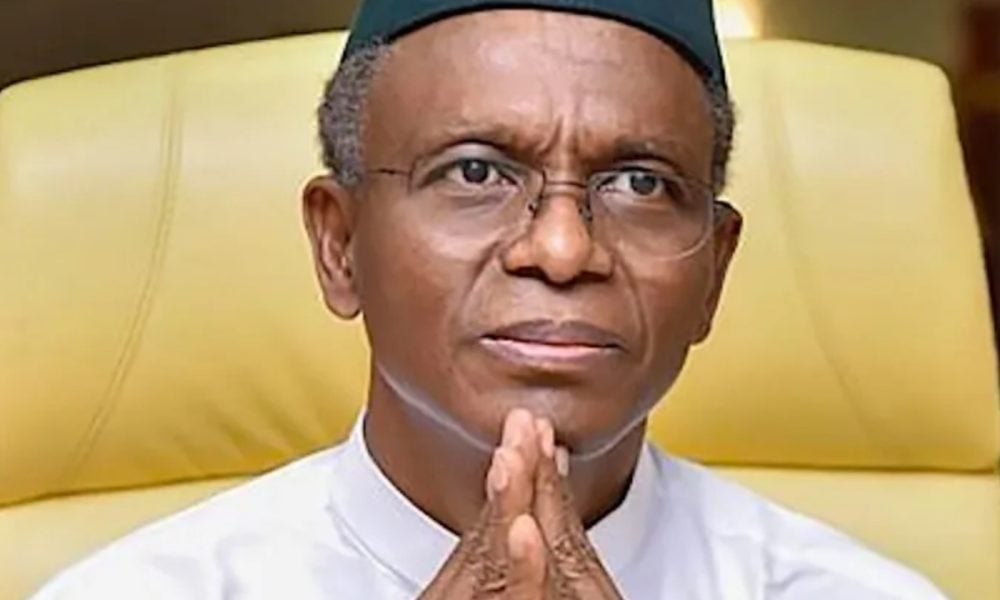
Former Kaduna State Governor Nasir El-Rufai has been named Deputy Chairman of Atiku Abubakar’s National Campaign Council for the 2027 presidential election, while still in the custody of Nigeria’s Independent Corrupt Practices and Other Related Offences Commission (ICPC). Atiku, the African Democratic Congress (ADC) presidential candidate, unveiled the full campaign structure on Thursday, with Kashim Ibrahim-Imam as chairman and Senator Augustine Okwudiri Akobundu as Director-General and campaign manager. Other appointees include former Edo governor and ex-APC national chairman John Oyegun as head of the Campaign Advisory Council, journalist and former presidential candidate Dele Momodu overseeing Media and Communications, and former senator Dino Melaye handling national outreach and mobilisation.
The appointment came a day after El-Rufai, writing from ICPC custody, published a statement titled “My Relationships and the Aftermath” on X, addressing the silence of former friends, colleagues and associates since his detention began. “As for any injustice, ingratitude or injury done to me, I seek neither revenge nor retribution,” he wrote, adding that he would leave “ultimate judgement to God.” He said his past support for people over the years had been shaped by his Islamic faith, his Arewa upbringing and his personal conscience, “not because I expected recognition, appreciation or reciprocal support when I eventually needed it.” He did not name any of the people whose silence had prompted the statement.
How a Tinubu Ally Became a Detained Opposition Figure (The Fall That Led Here)
El-Rufai’s path to an ADC campaign role from behind bars began with a political rupture, not a legal one. He was a key strategist in Tinubu’s successful 2023 presidential campaign, but the relationship broke down in August 2023 when the Senate rejected his nomination for a ministerial position, which El-Rufai has said he saw as Tinubu withdrawing his support “through the back door” to humiliate him. He spent the following two years growing increasingly critical of the APC leadership, first defecting to the Social Democratic Party in 2025 and then formally joining the ADC in November of that year, where he invoked the coalition that unseated the PDP in 2015 as his template for defeating Tinubu in 2027.
His legal troubles followed close behind his political break. El-Rufai honoured an invitation from the Economic and Financial Crimes Commission (EFCC) on February 16, 2026, and was detained; days later, as he left EFCC custody, ICPC operatives arrested him on separate corruption allegations tied to his tenure as Kaduna governor between 2015 and 2023, including claims he received severance payments well above his legal entitlement and unexplained dollar deposits. He was later also charged separately by the Department of State Services (DSS) over allegations that he unlawfully intercepted phone communications involving National Security Adviser Nuhu Ribadu. He has pleaded not guilty to all charges, describes the prosecutions as political persecution, and has now spent more than 220 days in custody, an unusually long stretch even by the standards of Nigeria’s slow-moving corruption trials.
Nigeria Has Seen Detained Political Figures Loom Over Elections Before, Though Rarely Given a Formal Campaign Role (A Comparable, More Extreme Case)
The closest recent parallel to a high-profile figure’s detention shaping Nigerian electoral politics is Nnamdi Kanu, leader of the separatist Indigenous People of Biafra (IPOB), who has been held since his 2021 rearrest in Kenya and was ultimately convicted on terrorism charges in November 2025. Unlike El-Rufai, Kanu has never held any formal role in a political party’s campaign structure, since his case involves separatist advocacy rather than mainstream party politics, but commentators have explicitly argued that his continued imprisonment functions as an invisible presence on the 2027 ballot in the South East, with his lawyer warning that South East politicians risk losing support if Kanu remains behind bars.
What distinguishes El-Rufai’s situation is that the ADC has not simply invoked his detention as a talking point; it has given him formal operational authority over its national campaign while he remains in custody. That is a more direct test of how a Nigerian political party functions when one of its most senior strategists cannot physically attend meetings, coordinate logistics or campaign publicly, relying instead on lawyers, aides and public statements written from inside detention to carry out at least part of the role.
Why the ADC Made This Move Despite the Obvious Logistical Problem (What the Appointment Signals)
An ADC spokesman and Kaduna assembly candidate, Darius Kurah, was candid about the practical cost of El-Rufai’s absence, telling reporters, “We miss him… in terms of mobilisation, organisation and financial support.” That acknowledgement suggests the appointment is not simply symbolic; it is an attempt to formally reserve El-Rufai’s role and influence within the campaign structure in anticipation that he may eventually secure bail or have his cases resolved before the 2027 vote, rather than sidelining him until his legal situation is settled.
The appointment also carries a clear political message about how the opposition wants El-Rufai’s detention understood. His allies, including ADC chieftain Sunny Barde, have argued that the Tinubu Presidency is deliberately using the courts to neutralise a former insider whose “institutional knowledge” and “intra-party networks” make him uniquely dangerous to the ruling party, distinct from external critics like Atiku or Peter Obi who have not faced similar prosecutions. By formally elevating him within the campaign rather than distancing itself from a defendant facing serious corruption allegations, the ADC is betting that its base will read his detention as persecution rather than as a legitimate legal process, a bet reinforced by his own family’s political trajectory, since his son Bello El-Rufai also left the APC for the ADC earlier this year specifically to run for re-election on that platform.
What This Means for the Opposition’s 2027 Strategy, and for Nigeria’s Broader Political Culture
For the ADC and Atiku’s campaign specifically, the practical effect of El-Rufai’s detention is a real strategic gap that a title alone cannot close; whatever authority the deputy chairmanship confers, it does not restore his ability to travel, negotiate directly with regional power brokers, or manage day-to-day mobilisation the way an active political operative normally would. The party’s decision to formalise his role anyway suggests it judges his symbolic value, and the possibility of his eventual release, to be worth more than the operational cost of naming someone else outright.
More broadly, this case adds to a growing pattern in Nigerian politics where legal proceedings and electoral positioning have become difficult to fully separate. Whether or not El-Rufai’s prosecution is politically motivated, as he and his allies claim, the optics of a sitting government prosecuting a former insider who became a prominent critic, while that same figure is simultaneously elevated within the opposition’s campaign structure, deepens public perception that Nigeria’s anti-corruption apparatus and its electoral competition are increasingly entangled with each other, a perception that damages trust in both institutions regardless of which version of events is ultimately true.
What Would Actually Clarify Whether This Is Justice or Persecution
The most direct resolution would be for El-Rufai’s four ongoing cases, the two ICPC corruption trials, the money laundering charge, and the DSS wiretapping case, to proceed to a clear judicial outcome rather than continuing through the extended remand and adjournment cycle that has kept him in custody for over 200 days without conviction. His wiretapping case has moved fastest, with the prosecution having closed its case and a hearing on his no-case submission fixed for September 22, and a swift, transparent ruling there would offer an early signal of whether the broader pattern of prosecutions holds up to scrutiny.
Beyond his individual case, Nigeria’s anti-corruption institutions would benefit from applying the same standard of urgency and independence to politically connected defendants across party lines, so that neither government supporters nor critics can credibly claim prosecutions track political usefulness rather than evidence. Independent observers, including the Nigerian Supreme Council for Islamic Affairs, have reportedly begun signalling concern about possible bias in how El-Rufai’s case has been handled, and a transparent accounting of the evidence against him, presented and tested in open court rather than argued primarily through public statements from detention, remains the clearest way to settle the dispute either way.
A Title Cannot Substitute for a Verdict, and Neither Should Public Sympathy
We think El-Rufai’s statement about being abandoned by former allies reads as genuinely difficult, and it is easy to understand why more than 220 days in custody, alongside reports of a serious health concern and the recent loss of his mother, would prompt this kind of public reflection. Whatever the truth of the charges against him, that is a real personal toll, and we do not think it should be dismissed simply because he is a controversial political figure.
At the same time, we do not think a deputy chairmanship changes the central, unresolved question at the heart of this story: whether the corruption and wiretapping allegations against him are substantiated. Handing a defendant formal authority over a national campaign, while sympathetic supporters frame his prosecution as persecution, risks turning a legal process that should be judged on evidence into one judged on political loyalty instead, a dynamic that serves neither genuine anti-corruption enforcement nor a fair opposition movement.
We think Nigerians are owed a resolution to El-Rufai’s cases on their legal merits, delivered without unreasonable delay, rather than a political tug-of-war conducted through statements from detention on one side and prosecutorial silence on the other. Until that happens, both the government’s case and El-Rufai’s defence remain, in the fullest sense, unproven.
Published by Ejoh Caleb