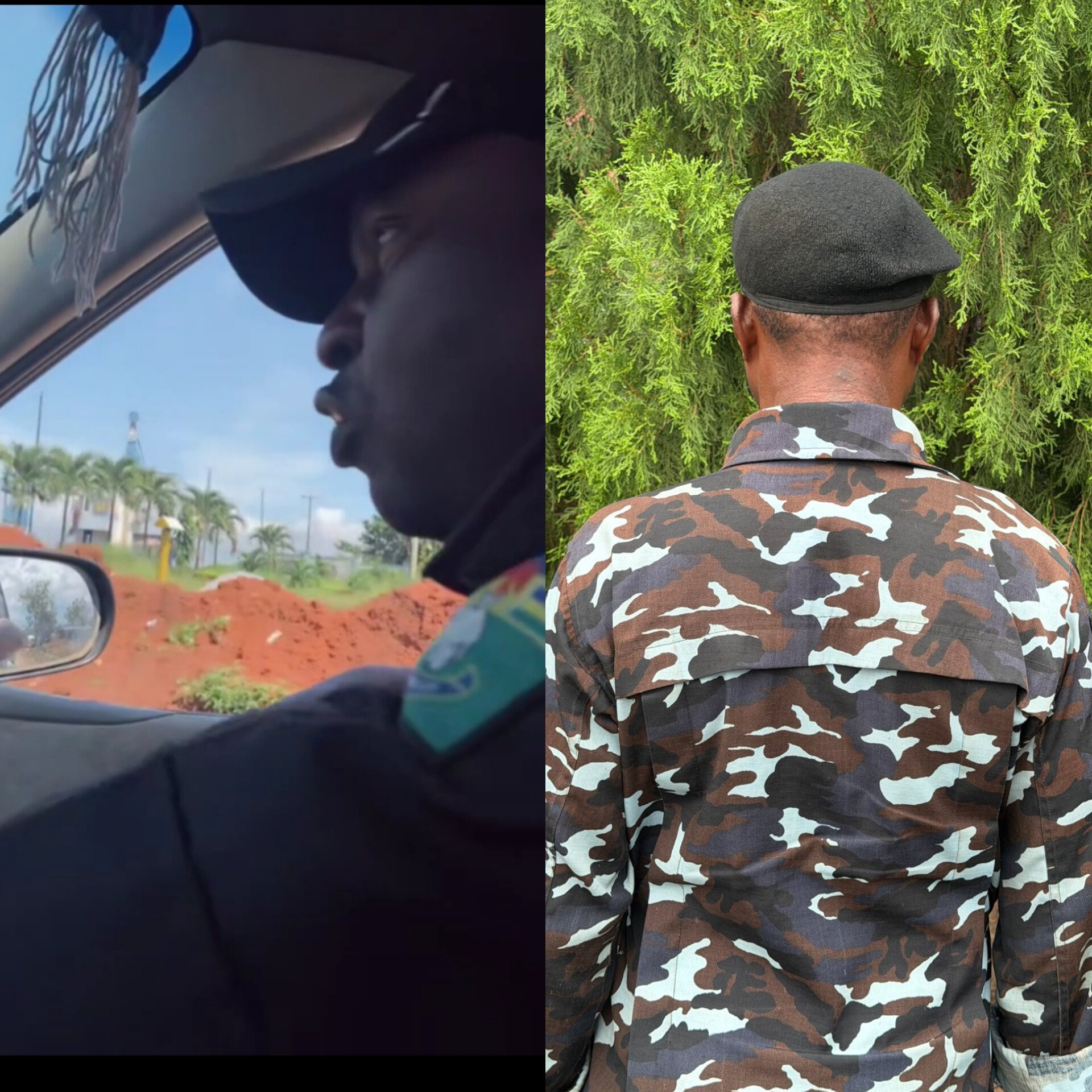
The Lagos State Police Command has identified and begun disciplinary action against one of its officers after a video of him making derogatory remarks about Nigeria Democratic Congress (NDC) presidential candidate Peter Obi and Igbo people went viral. The officer, named as Inspector Osumah Frank, was filmed in his police uniform while seated in a public transport vehicle, where he said an Igbo person could never become president of Nigeria. In the recording, Frank went further than the ethnic claim alone, also alleging that Obi is involved in ritual activities, describing him as “too small” to stand alongside President Bola Tinubu and former Vice President Atiku Abubakar in the 2027 race, and suggesting Obi and other Igbo people could be linked to internet fraud. He also floated the idea that police officers could be paid to undermine a political candidate’s chances in an election.
In a statement released on Friday, September 25, command spokesperson SP Abimbola Adebisi said the command had commenced “appropriate disciplinary action against the officer in line with the established regulations of the Nigeria Police Force.” She stressed that Frank’s remarks were made in his personal capacity and did not represent the position, views or official disposition of the Lagos State Police Command or the wider Nigeria Police Force. Commissioner of Police for Lagos State, CP Tijani Fatai, reiterated that all personnel are expected to maintain professionalism, civility, discipline and respect for members of the public at all times, adding that wearing the police uniform carries a responsibility to uphold the dignity and integrity of the force, and that the command would not condone conduct capable of bringing the force into disrepute or undermining public confidence in the police.
A Question Nigeria Has Fought Over for Decades, and a Recent Case Involving the Same Region (Where “Can an Igbo Man Be President” Comes From)
The specific claim Frank made, that an Igbo person cannot become Nigeria’s president, taps into a decades-old and deeply sensitive grievance. Since Nigeria’s return to democracy in 1999, the South East geopolitical zone, home to most of the country’s Igbo population, has never produced a president, and many Igbo Nigerians view this as evidence of an unwritten but real exclusion from the country’s highest office, sometimes described as an informal “born to rule” arrangement favouring other regions. Obi’s own 2023 and 2027 campaigns have drawn much of their energy from voters, particularly younger Nigerians, who see his candidacy as a direct challenge to that perceived exclusion, which is part of why a uniformed police officer publicly declaring the idea impossible struck such a nerve.
This is also not the first time Lagos has seen a security-adjacent figure accused of targeting Igbo political participation specifically. During the 2023 general election, Musiliu Akinsanya, popularly known as MC Oluomo, a prominent figure in Lagos’s transport union structure, was accused of intimidating Igbo voters at his polling unit and of using local enforcers to disrupt voting in areas with large Igbo populations across the state. That case, like this one, involved a Lagos-based figure with some form of institutional authority appearing to target Igbo political participation specifically, and it fed the same broader narrative Frank’s video has now reignited: that some Nigerians in positions of local power actively work against Igbo political ambition rather than remaining neutral.
Why the Police Are Cracking Down Harder on Officers’ Public Conduct Right Now (What Changed Inside the Force)
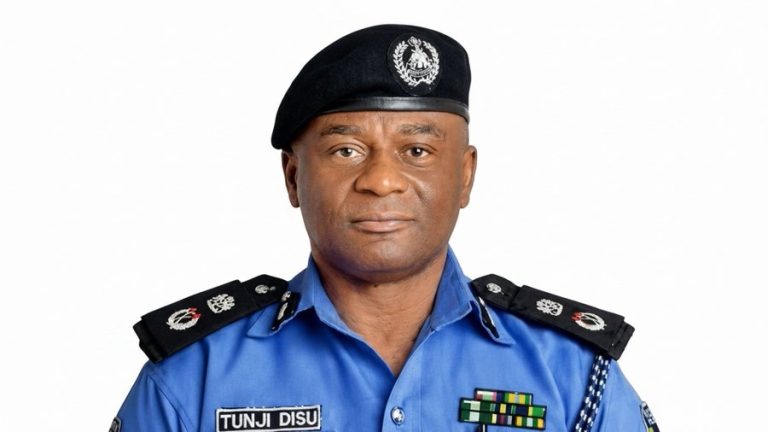
Frank’s case did not happen in a vacuum; it lands directly inside a fresh, force-wide crackdown on how officers conduct themselves publicly and online. In June 2026, Inspector-General of Police Olatunji Rilwan Disu issued a sweeping directive banning officers from unauthorised social media activity, including posting videos, livestreams or commentary that identifies them as police personnel without official approval, warning that violations could bring interdiction, salary forfeiture, demotion or outright dismissal. That directive explicitly cited concern over a “growing and most disturbing trend” of officers embarrassing the force through public conduct, and it reminded officers that their behaviour is governed by the Nigeria Police Act 2020, the Police Regulations, Police Service Commission disciplinary rules and the Cybercrime Act, all at once.
Frank’s video was not posted by the officer himself and does not fall neatly under the social media content-creation ban, since it was filmed by someone else during an ordinary commute, but it lands squarely within the same broader push for stricter public conduct. The Lagos Command has taken similar corrective action before: in April, a Lagos officer was identified, queried and detained after video appeared to show him collecting ₦10,000 from a motorist, and in July, the force ordered an investigation after officers were filmed behaving improperly on the Lagos-Badagry expressway. Each of these cases shows the same basic mechanism at work: a video circulates publicly first, and only after public pressure does the force identify the officer and announce disciplinary steps, rather than catching the misconduct through its own internal monitoring first.
What It Means When the Public Sees a Uniform Attached to a Biased Opinion (The Real Damage Beyond One Officer’s Words)
For ordinary Nigerians, and Igbo Nigerians in particular, a police officer stating flatly that their ethnic group can never hold the presidency is not simply one man’s rude opinion; it raises a genuine question about whether that same bias could shape how he, or officers like him, treat Igbo citizens in an ordinary policing encounter, a traffic stop, an arrest, a complaint filed at a station. The Nigeria Police Force is meant to serve every Nigerian equally regardless of ethnicity, and a serving officer publicly declaring one ethnic group unfit for the country’s top office undermines the basic assurance of that neutrality, even if, as the command insists, his views do not reflect official policy.
Nationally, the timing compounds the damage. With the 2027 election drawing closer and ethnic tension around Obi’s candidacy already a live issue in Nigerian political discourse, a video like this spreads quickly precisely because it confirms exactly the fear Obi’s supporters have voiced for years: that opposition to his candidacy is not always about policy, but sometimes about identity itself. Frank’s additional remarks, floating the idea that officers could be paid to work against a candidate, add a further layer of concern, suggesting a possible willingness among some officers to see their role in an election as something that could be influenced rather than strictly neutral, even though no evidence has been presented that Frank himself has acted on that idea.
What Real Accountability Would Look Like Here, Beyond a Statement
The most immediate step, already underway, is the disciplinary process the Lagos Command has opened against Frank under existing Police Service Commission regulations, which can range from a formal query and interdiction up to dismissal from the force depending on the outcome of the internal investigation. For that process to carry real weight, and to reassure the public rather than simply manage a news cycle, the command would need to make its final decision and reasoning public, rather than letting the case quietly disappear once the immediate media attention fades, a pattern that has occurred with some past police misconduct cases in Nigeria.
Beyond this individual case, the broader fix lies in how police training addresses political and ethnic neutrality specifically, not just general professionalism. IGP Disu’s June directive focused primarily on unauthorised content creation and reputational risk to the force; a case like Frank’s suggests there is a parallel need for explicit, repeated training on ethnic and political impartiality, given that an officer expressing this view in uniform, in public, to a bus full of strangers, suggests he did not see anything wrong with voicing it at all, which points to a gap in what officers are taught to consider acceptable rather than simply a lapse in judgment by one individual.
One Officer’s Words, But a Test for the Institution Behind Him
We think the Lagos Police Command’s swift identification of Frank and its public disciplinary statement are the right first steps, and Commissioner Fatai’s insistence that the uniform carries a responsibility to the public is exactly the standard officers should be held to. Nigerians deserve confidence that the people empowered to enforce the law are not privately convinced entire regions of the country are unfit to lead it.
At the same time, we do not think this should be treated as a story about one careless inspector’s bad day. Frank’s comments echo a grievance Igbo Nigerians have voiced for a quarter of a century, and the fact that a uniformed officer felt comfortable stating it as settled fact, on camera, to strangers, suggests the sentiment is more widespread than the Lagos Command’s swift statement might imply.
We hope the disciplinary process concludes transparently and that its outcome is made public, not just to hold Frank accountable, but to signal clearly to every serving officer that whatever personal views they hold, the badge does not come with permission to declare, out loud, that any Nigerian’s ethnicity disqualifies them from leading their own country.
Published by Ejoh Caleb