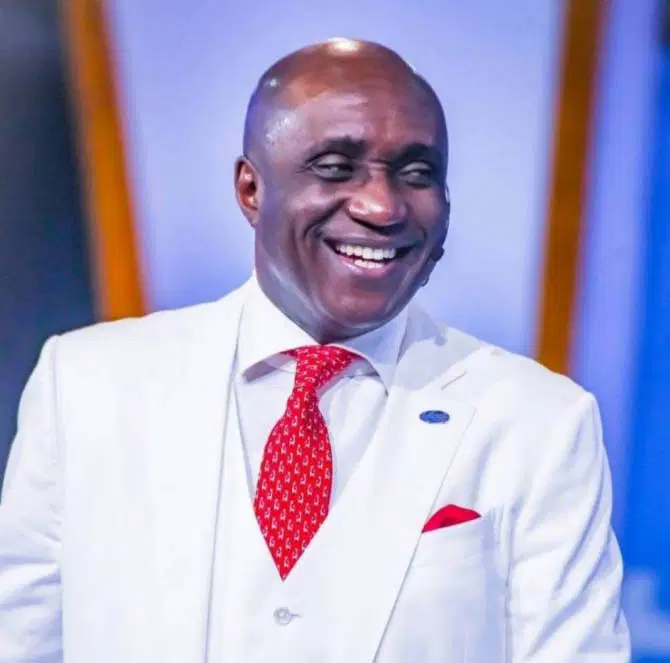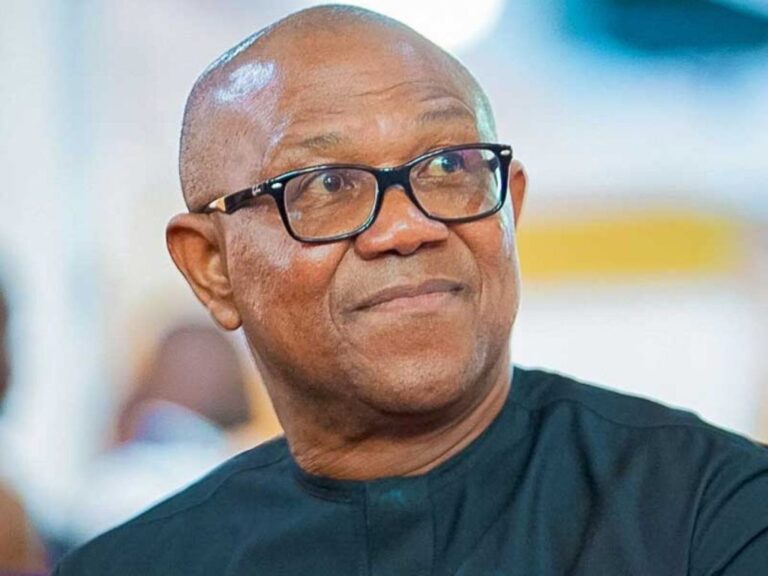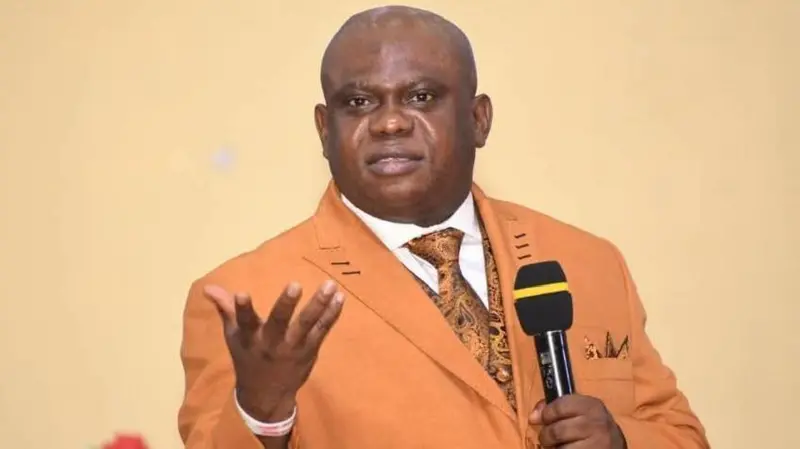
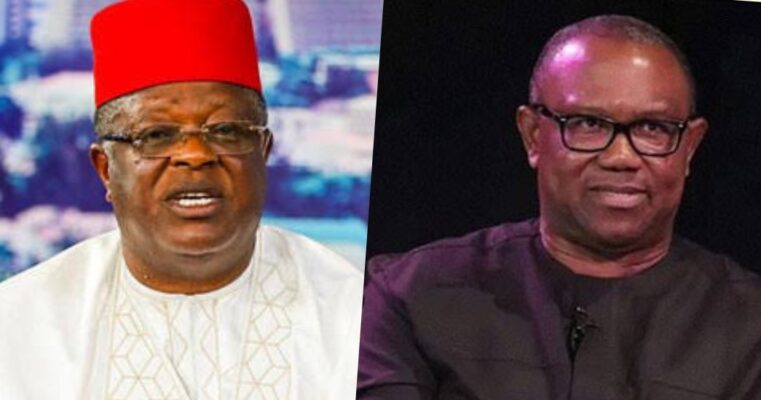
Minister of Works Dave Umahi has openly criticised Peter Obi’s signature catchphrase, telling an audience, “I hate hearing this statement he always makes, ‘Go and verify.'” Umahi made the remark on Tuesday, September 23, 2026, in Abuja, while receiving a report from the National Association of Nigerian Students (NANS) on its nationwide tour of federal road projects. In the same appearance, he declared that Obi, the presidential candidate of the Nigeria Democratic Congress (NDC), cannot win the 2027 election, asking pointedly, “What Has He Done For The People Of The South-East? He Keeps Saying, ‘We Go And Verify,’ What’s Not In Existence.”
Umahi urged South-East leaders to actively campaign against Obi in the region, saying, “The more we educate our people, the less votes Peter Obi will get. Peter Obi cannot win in 2027… It is important for the leaders of the South-East to be bold, vocal and speak to our people, the Igbos, about what President Tinubu has done and is doing for the Igbos.” He also praised Anambra State Governor Chukwuma Soludo for backing President Bola Tinubu, and defended the funding structure of federal road projects, saying the government was providing 30 per cent of costs while the rest came from loans to be repaid through tolling.
Where “Go and Verify” Came From, and Why It Has Not Gone Unchallenged (The History Behind the Phrase)
“Go and verify” is not a new phrase from Obi; it has followed him since his first presidential run in 2023 and has become closely tied to his political brand. He has repeated it in different forms across the years, telling audiences to check his personal history, his record as Anambra governor, and his policy claims for themselves rather than take his word alone. As recently as this month, he told a Port Harcourt town hall, “You can go and verify our backgrounds worldwide, anywhere,” extending the challenge to his running mate, Rabiu Kwankwaso, as well.
The phrase has real appeal because it invites scrutiny rather than asking for blind trust, but that same invitation has occasionally backfired. In 2022, Nigeria’s FactCheckHub examined a claim Obi made while literally using the phrase, that Nigeria’s total exports in 2021 were less than $30 billion, and found the figure was false based on National Bureau of Statistics data. That episode shows the phrase cuts both ways: it has become a rallying cry for supporters who see Obi as unusually willing to be fact-checked, but it has also given critics a specific opening to point out moments when the invited verification did not go the way Obi implied it would.
A Pattern of Direct Clashes Between Umahi and Obi (Past Confrontations Between the Two Men)
This is far from the first time Umahi has taken aim at Obi directly. In July 2026, Umahi dismissed Obi as a political non-factor during a television interview, describing the enthusiasm around him as “AI politics” and challenging the Obidient movement to debate him on infrastructure and reforms. That same month, after Obi suggested his safety was at risk ahead of the election, Umahi rejected the claim outright, saying, “Nobody wants Obi dead, it’s not just reasonable,” and framed it as a sign of political frustration rather than a genuine threat.
The rivalry has also played out over smaller, more visual disputes. In early July, Obi posted a photo of a bad road, and Umahi responded by asking whether governance had “become comedy,” challenging Obi to a public debate instead of continuing to highlight infrastructure failures online. Taken together, these episodes show a consistent strategy from Umahi: respond to Obi’s specific claims and slogans directly and repeatedly, rather than letting them stand unanswered, which suggests the minister sees Obi’s messaging style itself as a serious political threat worth countering point by point.
Why a Simple Phrase Has Become a Genuine Political Battleground (What’s Actually Driving the Dispute)
At its core, “go and verify” works as a trust signal. In a political environment where many Nigerians are used to politicians making promises that go unchecked, a candidate who says “don’t take my word for it, check yourself” is making a deliberate contrast with that pattern. This is likely why the phrase has stuck as an identifying feature of Obi’s campaign rather than fading like most political slogans do.
That same quality is exactly what makes it frustrating for opponents like Umahi. If Obi’s claims are individually checkable and mostly hold up, the phrase becomes a durable asset that is hard to counter with ordinary political rhetoric, because attacking the phrase itself risks looking defensive. Umahi’s specific framing, that Obi keeps insisting people verify things “that’s not in existence,” suggests his real objection is not to verification as a concept, but to what he sees as Obi asking people to check claims that Umahi believes are exaggerated or without basis, such as claims about insecurity or a lack of achievement in the South-East.
What This Exchange Signals About the Shape of the 2027 Race (Effects on Political Discourse and Public Trust)
For ordinary voters, exchanges like this one function as a proxy for the deeper argument neither side has fully settled: whose account of Nigeria’s current condition, particularly in the South-East, is accurate. Umahi’s insistence that Tinubu has delivered unprecedented projects for the region, paired with his direct challenge to Obi’s signature phrase, is an attempt to reframe “verification” as something that favours the government’s record rather than the opposition’s criticism of it.
Nationally, this kind of clash also shapes how political communication gets conducted heading into 2027. If ministers respond to a candidate’s slogans point by point rather than dismissing them outright, it suggests the ruling party sees rhetorical framing itself as a genuine battleground, not just policy delivery. It also normalises a more combative style of political exchange, where personal catchphrases become targets in their own right, which can crowd out substantive debate about the actual claims being disputed, such as what has or has not been delivered in the South-East.
What Would Actually Settle the Underlying Argument (A Path Beyond Slogans and Counter-Slogans)
The most direct way to resolve this dispute is the one both men have separately gestured toward without fully committing to: a public, structured debate or point-by-point comparison of claims, rather than reactive statements made at separate events. Umahi has repeatedly challenged Obi and the Obidient movement to debate him directly on infrastructure and reforms, while Obi has built his entire campaign style around inviting exactly this kind of scrutiny. If both men are genuinely confident in their positions, a shared forum where specific claims, road projects, security figures, economic data, are checked against verifiable sources would do more to settle the argument than continued exchanges through press statements and social media clips.
Short of a formal debate, independent fact-checking organisations already play this role in a more limited way, as shown by FactCheckHub’s 2022 examination of one of Obi’s own export figures. Wider use of these organisations by both government officials and opposition candidates, and a willingness from politicians on both sides to accept correction when their own claims do not hold up, would do more to build public trust than either dismissing verification as an annoying slogan or repeating it as an unchallengeable mantra.
A Catchphrase Is Not a Substitute for a Debate, and Neither Is Dismissing One
We think Umahi’s frustration is worth taking seriously on its own terms, separate from whether one agrees with his politics. A slogan that is never actually tested loses meaning over time, and if Umahi genuinely believes some of what Obi asks people to “verify” does not hold up, saying so directly, backed by specific counter-evidence, is a fair response.
At the same time, we do not think dismissing the phrase itself, rather than the specific claims behind it, advances the argument. “Go and verify” is, at its core, an invitation to check facts, and criticising the invitation rather than the facts risks looking like an attempt to avoid scrutiny rather than meet it.
What voters actually need heading into 2027 is not a winner between two competing slogans, but a genuine, checkable account of what has been delivered in the South-East and elsewhere, and what has not. Both Umahi and Obi have said they are willing to have that argument in the open. We would encourage them to actually have it, rather than continuing to trade jabs about how the other side asks people to check the facts.
Published by Ejoh Caleb