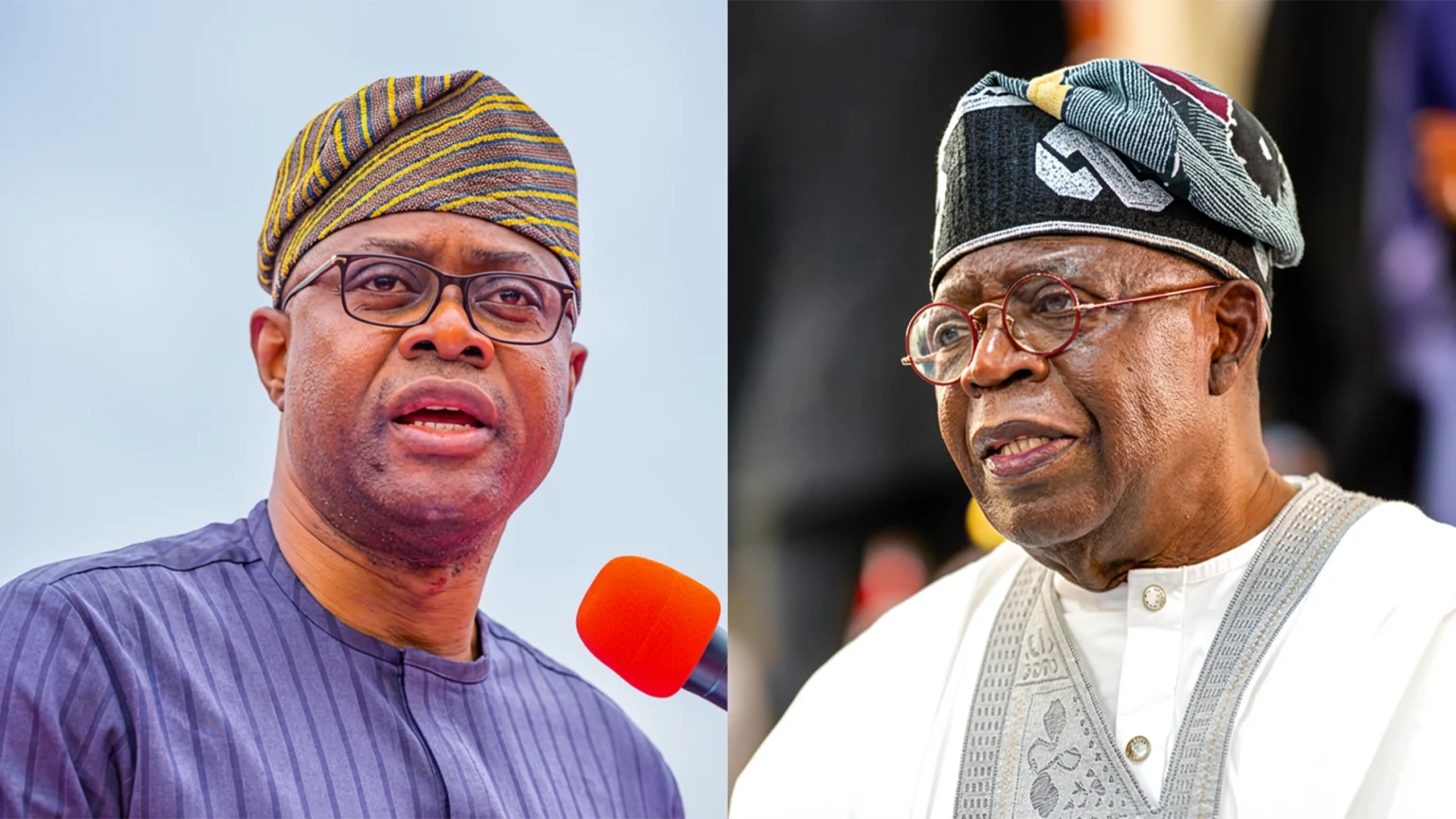
Oyo State Governor Seyi Makinde, the presidential candidate of the Allied Peoples Movement (APM), has argued that President Bola Tinubu does not deserve a second term because of an electricity promise he made before the 2023 election. Speaking on Monday, September 21, 2026, Makinde said: “President Tinubu deserves no second term because he once said that if electricity is not fixed, Nigerians should not vote for him.” The remark turns an old campaign line into a direct question for voters: should a leader be re-elected if he did not deliver on one of his most public pledges?
Makinde was named the APM’s 2027 presidential candidate in May, and he remains the sitting governor of Oyo State. The promise he referred to is widely traced to December 2022, when Tinubu told business leaders he would work to give Nigerians stable electricity within four years, and that they should not vote for him again if he failed. That line has since become a favourite weapon of opposition figures, including Peter Obi. It matters more now because Tinubu is seeking re-election, so voters will judge the promise against his record.
The Presidency Pushes Back: A Promise Said to Be Misread
The Presidency says critics are twisting the promise. Special Adviser Bayo Onanuga said Tinubu’s Lagos campaign remarks were really about ending estimated billing, a practice where electricity companies send bills based on guesswork rather than real meter readings, and that the speech was not a guarantee of round-the-clock power. In the Presidency’s account, Tinubu told voters not to back him again unless he gave good reasons for any failure to deliver, and it called the 24-hour reading “mischievous.”
Onanuga made a second argument in a separate interview, saying the remarks were conditional and did not amount to a promise to give up on re-election. This is the heart of the dispute. Critics hear a clear four-year deadline on steady power, while the Presidency hears a promise about billing with room for explanation if things went wrong. Neither side disputes that the promise was made in some form; they disagree about how strong it was.
Tinubu has also admitted the power sector is in trouble. At the APC convention in March, he spoke of “legacy issues,” meaning problems inherited from earlier governments, and named debts owed to power generation companies (known as GenCos) and outdated transmission lines. He also announced a Grid Asset Management Company that he said would add about 1,600 megawatts (MW, a unit for measuring electric power) to a new grid corridor, a modest gain next to the several thousand megawatts Nigeria typically delivers.
A Long Line of Power Promises That Never Fully Delivered
Nigerian governments have promised steady light for a quarter of a century. Bola Ige, the first power minister under President Olusegun Obasanjo, pledged to make power failure a thing of the past within six months. The promise was not met, and grid collapses became more frequent. The lesson is that big, fast promises on power have a poor record in Nigeria, whichever party makes them.
Obasanjo’s government then spent heavily, reportedly between $10 billion and $16 billion on repairs and emergency power plants, yet generation rose only to about 3,000 MW. A 2008 House of Representatives probe found heavy mismanagement, and no one was held to account. In 2019, President Muhammadu Buhari publicly asked where the power and the money had gone.
President Umaru Yar’Adua tried a different route, declaring a state of emergency in the power sector to expand generation and attract private investors. Red tape, corruption and poor funding crippled the plan, showing that declaring an emergency does not fix a sector without money and discipline behind it.
President Goodluck Jonathan chose privatisation instead. In November 2013, private investors took control of the companies that succeeded the old state power company, six generation firms and 11 distribution firms, in a sale reported to have raised between $2.5 billion and $3.36 billion depending on the source. The new owners promised to cut losses within five years, roll out meters, and lift generation above 5,000 MW. Generation still hovers below 5,000 MW for a nation of over 200 million people, and within three years the distribution firms were remitting far less than they collected to the market, at one point falling to about 30 per cent.
Buhari’s government tried again with a Siemens partnership and a national metering programme, injecting over ₦1.7 trillion in bailouts and subsidies. Even so, Nigeria recorded over 100 grid collapses between 2015 and 2022, and generation averaged below 4,000 MW. That government blamed the earlier sale of the distribution companies to weak owners. The common thread across four administrations is that each one blamed the last, and each left the same shortages behind.
Unpaid Bills, Thin Gas Supply and Ageing Lines Keep the Grid Fragile
The grid remains unreliable today. A grid collapse happens when the network fails so badly that generation drops almost to nothing and distribution firms receive no electricity to share. On January 23, 2026, generation fell to zero MW, with only 65 MW left to share across the whole country. A second collapse followed four days later, and on August 22 output dropped to 1,132 MW from above 4,000 MW earlier that day, with no official cause given.
The deeper problem is the gap between what Nigeria needs and what it delivers. The country typically generates 4,000 to 5,000 MW against an estimated need of about 30,000 MW, even though installed capacity is reported at about 15,500 MW. That gap exists because the power lines cannot carry all the power the plants could produce, and Tinubu himself admitted that transmission equipment is outdated.
Much of the trouble is financial. The state buyer of electricity pays the GenCos, who use that money to pay gas suppliers and maintain their plants; Joy Ogaji, who heads the generators’ association, says the state buyer has never paid in full since 2013. GenCos were owed about ₦7.66 trillion as of June 2026, and their association warns the debt could reach ₦17.11 trillion by 2033 if payment gaps continue. Gas-fired plants supply nearly 70 per cent of the grid’s power, so when gas suppliers threaten to cut supply over unpaid bills, the whole grid is at risk. Ogaji said of the strain on plants, “We cannot maintain the machines.”
The damage shows in the numbers. By February, gas plants were getting only about 43 per cent of the gas they needed, and in March, 16 of 33 plants on the grid were not generating at all. Bill collection adds to the pressure too, since missing meters, estimated bills, theft and network losses feed a cycle where weaker payments mean weaker generation, and weaker generation makes customers even less willing to pay.
The Hidden Cost of Darkness for Homes, Businesses and the Nation
For households, poor power means a double bill. Many Nigerians now rely on generators and solar power to fill the gap. Electricity tariffs are split into bands based on hours of supply, and customers on Band A, promised 20 to 24 hours daily, pay ₦209.50 per unit, far above the subsidised ₦40 to ₦62.48 paid by customers in lower bands who get fewer hours. Better service costs more, while poorer service leaves people paying twice, once to the power company and again for fuel.
Factories carry a heavier load. Manufacturers reportedly spent ₦1.34 trillion on backup power in 2025, 21 per cent more than in 2024, as grid supply to factories fell from 16.7 hours a day to 13.1 hours. Money spent on diesel cannot be spent on machines, workers or new production lines.
Those costs reach everyone. Firms raise prices, cut output or accept thinner profits, so buyers pay more for ordinary goods. At the national level, idle factories mean fewer goods and slower job creation, and rising imports leave the country exposed to swings in the naira. There is a political cost too: each broken promise makes voters less willing to trust the next one.
Separating the Campaign Attack From What Is Actually Established
It is worth being precise about what is in dispute. The grid collapses, the generation figures and the debts are all documented above, so nobody can seriously argue that the grid is stable. The real argument is over what Tinubu promised and what it means to have “fixed” electricity. The Presidency says his words were conditional and about billing, while critics read them as a plain four-year deadline, and there is no agreed benchmark, such as a target number of hours or megawatts, that would settle the question either way.
Makinde is also a rival candidate with a political interest in the argument, and voters should weigh his words with that in mind. Supporters of the president make their own case: Abass Mimiko, a 2024 Ondo governorship candidate, says Tinubu deserves re-election for pulling the economy back from collapse. They can also point to reform steps taken under Tinubu, including the Electricity Act he signed in June 2023, the law that lets states run their own power markets. It is also true that the generators’ debt has been building since 2015, well before this government took office.
The Electricity Act cuts both ways for Makinde, too. Oyo State took over regulation of its own electricity market from the federal regulator in February 2025, which means his government now carries responsibility for how power is regulated inside the state. The claim that Tinubu failed on power and the claim that a challenger would do better are separate claims, and only the first has so far been tested in office.
Fixes Analysts Say Could Steady the Supply (Debt Clearance, State Power Markets, Local Grids and Better Metering)
The first fix is clearing old debts so plants can buy gas and repair machines. The government issued a ₦501 billion bond in January 2026 and is rolling out a ₦729 billion second bond, though generators say this leaves about ₦5.07 trillion uncovered. Energy executive Sola Adebawo argues old debts must be settled openly while new ones are stopped, since an unfunded subsidy is only a debt pushed onto another part of the electricity chain.
The second fix is better metering and collection. A working meter tells the company what to bill and gives the customer a fair charge, so Adebawo says lower losses and action against electricity theft matter as much as new plants.
The third fix is state power markets. By July 2026, the federal regulator had transferred electricity regulation to 16 states, keeping control only of power markets that cross state lines. The idea is that states can license local suppliers and fix problems closer to consumers, but one report warns that gaining the authority has proved much easier than using it.
The fourth fix is smaller local grids serving one city or area. Aba, a city of about 900,000 people, runs on a private 188 MW plant with smart meters and has enjoyed steady power, and analysts want that model copied elsewhere because a small grid is easier to run and less likely to collapse with the national grid. Nigeria also has a new Power Minister, Joseph Tegbe, who took office in June, and his early record will be closely watched.
Our Reading of the Row: A Fair Test for the President, and for His Challenger
We think a public promise on something as basic as electricity is a fair yardstick, and Makinde is entitled to use it. Voters heard the promise, and Tinubu’s own team accepts it was made in some form. The argument is over its meaning, and that is a fair question for voters to weigh. Nobody can dispute that Nigerians still endure collapsing grids, expensive generators and factories that cannot rely on the national supply.
At the same time, we do not think one broken pledge tells the whole story. Nigeria’s power crisis has outlasted every government since 1999, and each one promised light and left debts behind. It would be misleading to pretend one leader could have solved it alone, and it would be equally misleading to say Tinubu has nothing to answer for. Some of the reforms he backed, such as the Electricity Act, are real steps; they will only matter if the lights improve.
What this row really tests is whether promises made in campaigns come with proof. We would urge Makinde, and every other candidate, to go beyond criticism and give dates, targets and costs that voters can check later. Voters deserve a fair account of what was promised, what was delivered and what a rival would do differently. That is how a promise becomes a contract with voters rather than a slogan.
Published by Ejoh Caleb