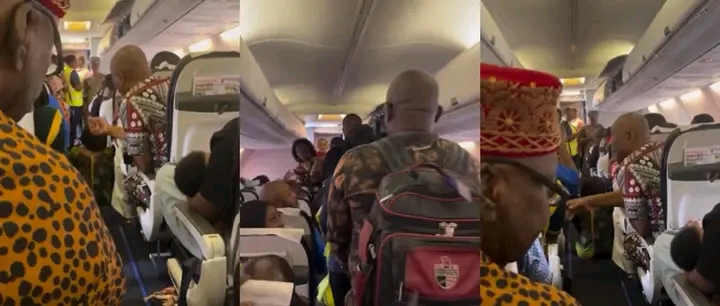
An Air Peace flight was delayed after a female passenger refused to leave the aircraft when staff told her the flight was fully booked and that she would have to wait for the next available flight. The woman insisted she had a valid ticket and that someone else had taken her assigned seat.
With the standoff continuing, Air Peace staff announced that any passenger willing to give up their seat for the next flight would receive a 50 percent discount, but no one came forward at first. The flight remained delayed until two passengers eventually accepted the discount and agreed to disembark, which allowed the woman at the centre of the dispute to keep her seat and the aircraft to finally depart. Nigerians online have questioned how ticketed passengers ended up having to negotiate for seats on a flight they had already paid for.
Overbooked Flights Keep Sparking Similar Standoffs
This is not the first time a Nigerian airline has had to talk passengers into giving up seats after selling more tickets than the plane could hold. Earlier this year, the Nigeria Civil Aviation Authority (NCAA) stepped in after a Nigerian passenger was left stranded overnight at Nairobi Airport by Kenya Airways without accommodation, eventually forcing the airline to issue a public apology and pay compensation. The NCAA noted that this was not an isolated case, pointing to a pattern of poor treatment of passengers by that airline.
More broadly, the NCAA’s Consumer Protection Directorate has had to intervene in several denied-boarding disputes across Nigerian airports, and domestic carriers, including Air Peace and Max Air, have been ordered to refund passengers over separate service failures. Overbooking, in particular, remains one of the most common complaints passengers raise against Nigerian carriers.
Why Airlines Overbook Flights, and the Wider Cost of Getting It Wrong
Airlines overbook flights on purpose, betting that a certain number of ticketed passengers won’t show up, so selling a few extra seats helps them avoid flying with empty seats and losing revenue. When that bet doesn’t pay off and everyone shows up, the airline is left having to convince someone to give up a seat they already paid for, often through last-minute cash or discount offers, as happened on this Air Peace flight.
For individual passengers, this creates real disruption: missed connections, late arrivals to work or family events, and the frustration of paying for a service that wasn’t fully honoured. For the airline, scenes like this one, filmed and shared widely online, damage public trust and reinforce a general perception that Nigerian carriers are not passenger-friendly. At a national level, repeated incidents like this weaken confidence in Nigeria’s domestic aviation sector as a whole, feed into ongoing debates about the need for stronger enforcement of passenger protection rules, and can discourage air travel in a country that already faces high ticket prices and frequent complaints about delays.
How These Situations Could Be Avoided
Nigeria’s Civil Aviation Regulations already require airlines to compensate and rebook passengers who are denied boarding due to overbooking, and to explain the process in writing at the point of denial. Airlines could avoid these public standoffs by handling overbooking before passengers board, offering compensation to volunteers at the check-in counter or boarding gate rather than after everyone is already seated on the aircraft.
Stricter enforcement from the NCAA, including public reporting of airlines with high rates of overbooking and denied boarding, could also push carriers to manage their booking systems more carefully. For passengers, knowing their rights under NCAA rules, and insisting on written compensation details when denied boarding, can help ensure airlines follow through on their obligations.
A Problem Airlines Create, That Passengers Are Left to Solve
We find it telling that it took two passengers voluntarily giving up their seats, not a swift resolution from the airline, to get this flight moving again. Overbooking is a decision airlines make deliberately to protect their revenue, so when it goes wrong, we don’t think passengers should be the ones left negotiating with each other on board a delayed aircraft while everyone else waits. We believe incidents like this should push regulators to demand that airlines resolve overbooking before boarding begins, not after tempers have already flared in front of a camera. Until that becomes standard practice, we suspect this won’t be the last video of its kind.
Published by Ejoh Caleb