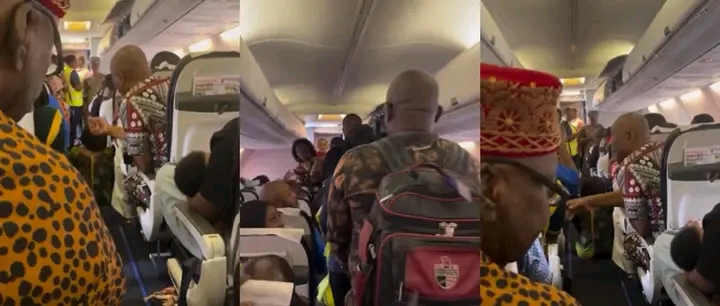
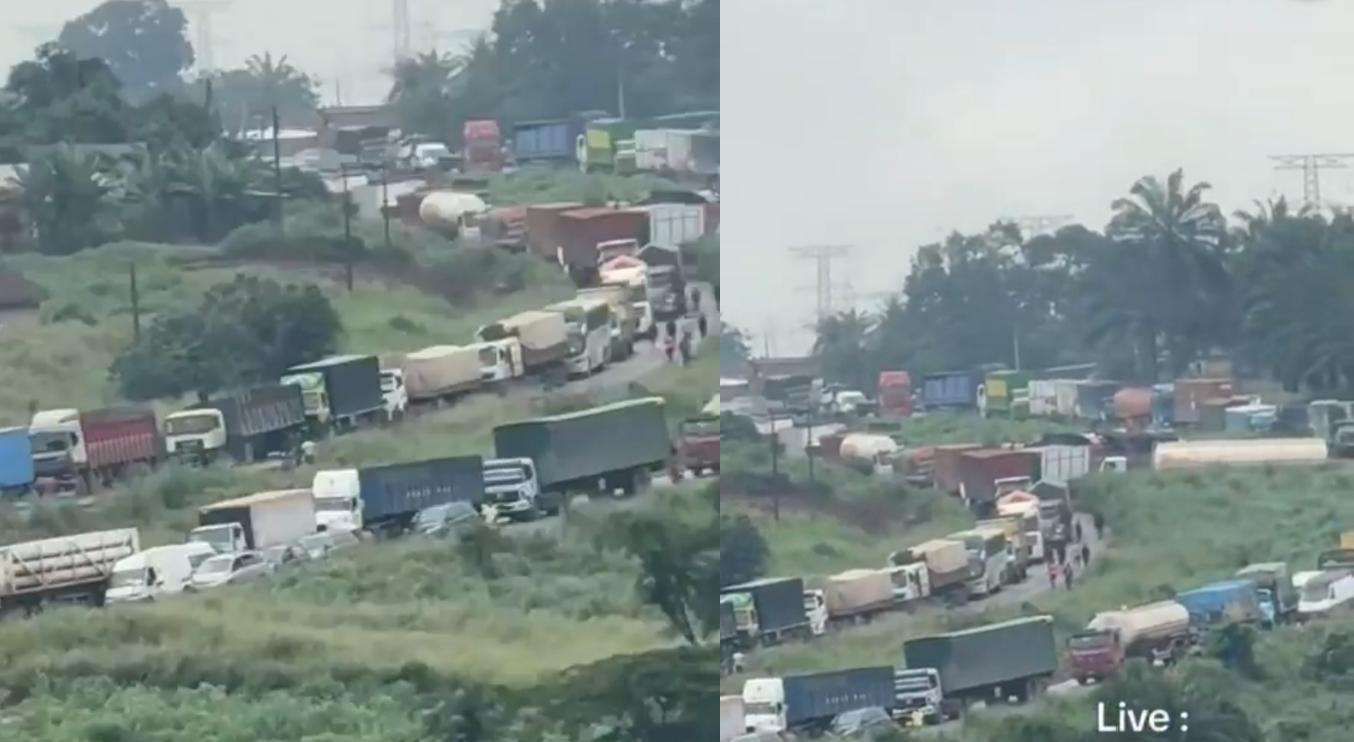
A man has shared a video of himself riding a motorcycle from Agbor in Delta State toward Edo State, after choosing to bypass the heavy gridlock still trapping vehicles on the road connecting the two states.
His video adds to mounting evidence that travellers on this corridor are abandoning cars and buses altogether, turning to motorcycles as the only reliable way to get through.
A Corridor That Has Pushed Travellers to Their Limit
This gridlock has been building for days, not hours. Travellers on the Lagos-Onitsha route have been stranded for days in heavy traffic along the Agbor-Benin Road, with vehicles crawling through damaged sections under harsh daytime conditions. Many commuters abandoned their vehicles entirely and trekked long distances, while others paid motorcycle operators charging steep fares just to get through the worst stretches.
The frustration boiled over into open protest just days ago. Residents and motorists blocked the Benin-Agbor Bypass, carrying signs reading “we don’t need money, fix our roads,” as they demanded urgent repairs after facing mud, congestion and hours-long delays. One resident said he had spent about four hours trying to get through the area.
This is also not the corridor’s first extended shutdown. In November 2025, motorists were stranded on the wider Benin-Agbor-Onitsha Expressway for days after residents of a nearby community blocked the road to protest its condition, with one truck driver saying he had not moved in two days and had gone without food.
Why Riders Are Choosing Two Wheels Over Four, and Who Pays the Price
The core problem remains the same one driving every recent gridlock on this stretch: badly damaged road sections force too many vehicles into too few usable lanes. A motorcycle can weave through gaps that a car or bus simply cannot.
Ongoing reconstruction work on the wider Benin-Agbor-Asaba Expressway adds to the squeeze. The company handling the project, the Benin-Asaba Expressway Concession Company (BAECC), says construction has not been suspended and that drainage work is under way to fix flooding linked to the project, but for travellers stuck in traffic today, the road remains difficult to pass.
For ordinary travellers, turning to motorcycles is not a convenience; it is often the only workable option, even though riding through gridlocked traffic on a two-wheeler carries its own real safety risks, especially over long distances between states.
At the national level, this corridor links the South-South and South-East to the rest of Nigeria, and its repeated breakdown slows the movement of goods and people well beyond Edo and Delta states, raising transport costs and business losses that ripple outward across the country.
A Widening List of Complaints From Stranded Travellers
The motorcycle detours are only one part of a much bigger picture of hardship building up along this corridor. Traders stuck in the gridlock have reported watching their perishable goods spoil in the heat before they can reach the market, a complaint that has become common on failed Edo and Delta highways during the rainy season.
Some frustrated motorists have reportedly begun clearing nearby bush paths to create makeshift alternative routes around the worst sections of the road, echoing a pattern already seen on other collapsed highways in the region, where drivers have been forced onto community roads never built to carry heavy traffic.
Businessmen who depend on the road for deliveries and supply runs say they are simply unable to move goods or reach clients on schedule, forcing costly delays and, in some cases, cancelled orders. Teachers and students living along the corridor have also complained that the disruption is affecting school schedules, with the unpredictable, multi-day delays making it difficult for people to plan classes, exams or work commitments with any confidence.
Not Just Agbor-Benin: A National Pattern of Federal Road Failures
This corridor’s troubles are part of a much wider pattern of collapsing federal roads across Nigeria. Just this week, hundreds of trucks and articulated vehicles, including tankers carrying petroleum products, were left stranded for days along the Ifaki-Oye-Ilupeju-Kabba axis in Ekiti State after a section of the federal road collapsed at Ilupeju-Ekiti. One driver said he had been stranded for about 48 hours, and a former lawmaker who visited the scene compared the gridlock to the infamous Apapa traffic congestion in Lagos.
Motorists on another Ekiti route, the Kabba-Omuo-Ekiti road linking the state to Kogi, have separately complained for months about the slow pace of reconstruction work, saying frequent gridlock and vehicle damage have driven away passenger patronage on the corridor.
Similar frustration has surfaced on the Asaba/Benin Expressway near the Koka Flyover in Delta State, where a contractor’s apparent withdrawal from a failed section of road left residents anxious and motorists facing renewed gridlock during past rainy seasons.
Taken together, these cases suggest the hardship on the Agbor-Benin corridor is not an isolated failure, but one visible example of a much larger, nationwide problem with how federal roads are maintained and repaired.
What Could Ease the Pressure on This Road
Faster, publicly communicated timelines for completing reconstruction work would help travellers plan around ongoing disruption instead of being caught by surprise in multi-day gridlock.
Temporary traffic management measures during construction, such as dedicated lanes or staggered truck movement, could reduce how badly ordinary vehicles get squeezed into the worst sections.
Addressing drainage and flooding tied to construction work, as the concession company has promised, would remove one of the recurring triggers that turns slow traffic into a total standstill.
A Road That Keeps Forcing Nigerians to Improvise
We think it says a lot about the state of Nigeria’s federal roads when a motorcycle becomes the more reliable way to travel between two states. Travellers should not have to choose between sitting in gridlock for days or risking a long-distance motorcycle ride just to reach their destination.
We also believe the protests on this same stretch just days ago should be taken as a clear warning. When residents are carrying signs saying they don’t want money, only fixed roads, patience with promises of ongoing reconstruction is running out.
Every video like this one, another traveller improvising a way around a road the government has failed to fix, is a small but repeated verdict on how much longer this corridor’s problems can be allowed to continue.
Published by Ejoh Caleb