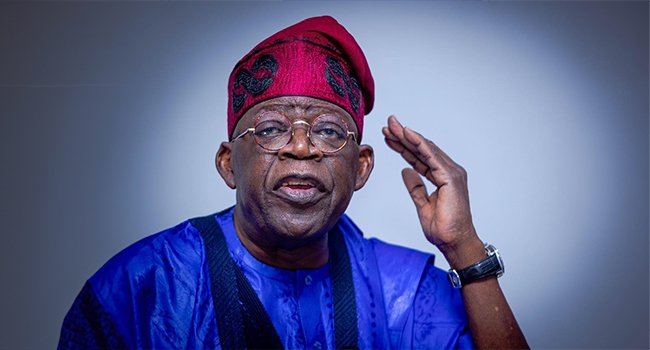
President Bola Tinubu has asked the Senate to approve $7.7 billion, about ₦10.79 trillion, in external borrowing to help finance the 2026 budget deficit. The request was in a letter dated October 26, 2026, which Senate President Godswill Akpabio read at plenary on Wednesday, November 4.
The letter says the 2026 Appropriation Act approved ₦29.2 trillion in new borrowing, made up of ₦18.4 trillion from domestic sources and ₦10.79 trillion from abroad. Tinubu said the money would support defence and security, transport, agriculture, power, education and health.
A Big Change of Course: The Earlier Request Is Withdrawn (Supersede Means Replace)
Barely a week ago, Tinubu asked the Senate to approve $20,517,755,901 and €1,045,083,643 under a 2026–2027 supplementary external borrowing plan. Tribune reports that the president formally withdrew that request.
Akpabio said the new letter replaces the earlier request because it is more explicit. He added that the government would look for the best available funding options and terms. Only days ago, Tinubu defended the larger plan in a published essay, saying borrowing should be judged by what it builds. We found no official reason for the switch.
How the New Plan Works: Eurobonds, Multiple Options and Reserves (A Eurobond Is a Bond Sold to Foreign Investors and Repaid in Dollars)
The letter says the government will pursue several funding options at once, with more emphasis on international capital market instruments. It says Eurobonds can raise larger sums in a shorter time. The foreign currency would be received by the Central Bank of Nigeria on behalf of the Federal Government, which Tinubu said could support external reserves and the naira.
That differs from the earlier plan, which was tied to named sectors and projects over two years. Supporters can say it gives the government flexibility. Critics can say general budget support makes it harder to trace what the money buys. The loan terms will also have to come before the National Assembly, according to The Sun’s reading of the legal provisions.
The Opposition Says “Reject”: The Argument Against Another Borrowing Request
Atiku Abubakar, the African Democratic Congress (ADC) presidential candidate, urged the Senate to reject the request. His campaign statement asked why Tinubu was making borrowing requests “week in, week out”, and said Nigerians should not accept a loan before knowing what it will cost.
He also said the Senate should scrutinise the proposal line by line and not rubber-stamp executive borrowing plans. An analyst on Channels Television also questioned the need for new debt when oil prices were high. Those are opinions from critics. We found no direct reply from the Presidency to them.
The Government’s Case: Budget Gaps Need Financing and Debt Remains Manageable by Some Measures
The government’s argument is that the 2026 budget was passed with a deficit, and that deficit must be financed somehow. This borrowing is part of an amount already approved in the Appropriation Act, which lawmakers passed. Pen Agency says the government has defended external borrowing as necessary to close the infrastructure gap and meet budget commitments.
TheNigeriaLawyer notes that Nigeria’s debt-to-GDP ratio has generally been considered moderate compared with some peers, though analysts worry about the government’s narrow revenue base and its ability to pay. Both points can be true. A moderate ratio on paper can still be painful if revenue is small.
A Familiar Cycle: Earlier Borrowing Requests and How They Ended
This request follows a repeated pattern. In October 2025, the House of Representatives approved Tinubu’s request to raise over $2.3 billion externally. It covered new borrowing for the 2025 deficit, refinancing of maturing Eurobonds and the country’s debut sovereign sukuk (a bond that follows Islamic finance rules).
In 2023, he sought approval for an $8.6 billion plan inherited from the previous government, and analysts then warned about the rising debt stock. Public debt stood at ₦166.79 trillion on June 30, 2026, up from ₦159.35 trillion in March, according to the Debt Management Office. Each request has been defended as necessary and criticised as too much.
What the Debt Means for Households and the Country (Debt Service Means Yearly Payments on Loans and Interest)
Every dollar borrowed must be repaid with interest, mostly in foreign currency. If the naira weakens, the naira cost rises. Money used for debt service is not available for schools, hospitals or roads. That is why critics ask how much of each year’s revenue goes to repayments.
For ordinary Nigerians, the effects can arrive in many ways: tax changes, public spending choices and the strength of the naira. Supporters say borrowing for productive spending can raise growth and jobs. The risk is that borrowed money covers ordinary running costs, which leaves nothing to show later.
Questions the Senate Can Ask: Terms, Use of Funds and Debt Limits
The Senate has referred the request to its Committee on Local and Foreign Debts. The committee can ask for the interest rates, maturities and fees on each option. It can ask how much of the borrowing refinances old debt, how much funds new spending and how the Central Bank will manage the dollars.
It can also ask for a clear list of the projects in the 2026 budget that this money supports, plus regular reports on spending. Public hearings, with the Debt Management Office, economists and civil groups, would help the public follow the review.
Smaller Is Not the Same as Settled: Our Reading of a Changed Request
We welcome the fact that the earlier, larger request has been withdrawn and replaced with a more detailed one. That suggests the process of scrutiny has had an effect, even if the government has not said so.
But a smaller number is not an answer. $7.7 billion is still a very large sum, and the debt stock keeps rising. The government should explain why the plan changed, publish its terms and show how it will protect the naira and the budget.
We take no side between the Presidency and its critics. We ask the Senate to do its job, line by line, and to report its findings in public. Nigerians who will pay the debt deserve to know what they are paying for.
Published by Ejoh Caleb