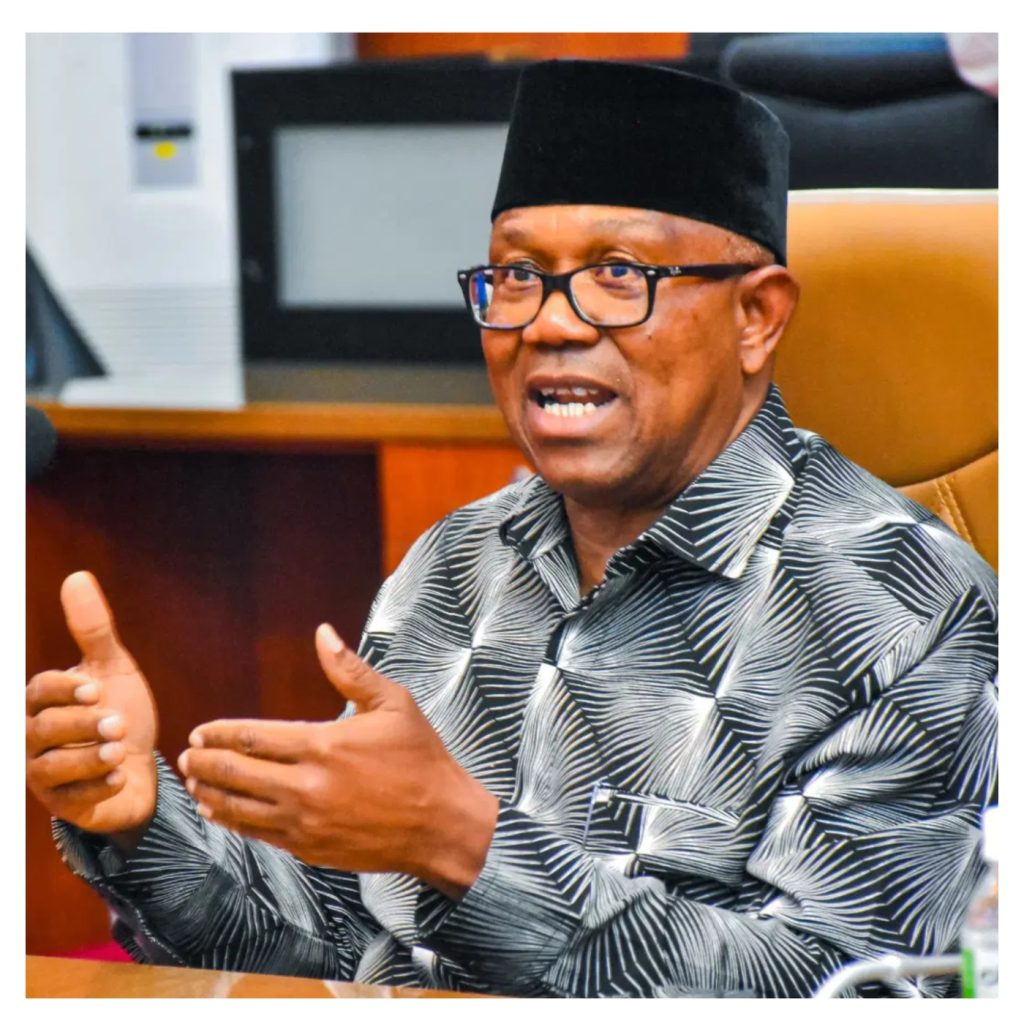

Popular Nigerian cleric, Olumide Emmanuel, has reacted strongly to ongoing criticisms over churches using offerings to establish schools that many of their members allegedly cannot afford.
In a recent statement, the pastor defended religious institutions, arguing that several churches have delivered infrastructural developments that governments have failed to provide for decades.
Addressing critics, he said:
“Someone said they used church money to start a school, and the church members cannot afford it. Let me help your foolishness. Many of these pastors and churches that you are speaking against, what they are doing, your presidents and your governors have never done it in almost 60 years.”
He pointed to notable church-owned communities such as Redemption Camp, linked to Redeemed Christian Church of God, and Canaanland, owned by Living Faith Church, noting that they enjoy stable electricity and better infrastructure compared to many parts of the country.
Pastor Emmanuel further explained that once church funds are invested in establishing a school, the institution becomes a business entity that must sustain itself financially.
“When we carry church money to start a school, once we release that money into the school, the school becomes an entity. That is what we call capital for starting a business. That school must become self-sufficient, or else it will die a natural death.”
According to him, such institutions cannot continuously rely on church offerings, as they are expected to generate revenue to pay staff salaries and maintain operations.
“That school must pay salary to all the professors. So you mean every Sunday we should now collect school offering for salary? No, the money we have put there must be used in such a way that it can continue to run the school.”
His remarks come amid ongoing debates sparked by human rights activist, Omoyele Sowore, who recently criticised the accessibility of church-owned universities, particularly Covenant University.
Reactions
The statement has triggered strong and divided reactions online:
Supportive reactions:
“He’s saying the truth. Running a university is not beans. If government cannot fund education properly, how do you expect churches to do it for free?”
“People complaining won’t even pay tithe, but want world-class schools at giveaway prices. It doesn’t work like that.”
“Check places like Canaanland — steady light, clean roads, security. These are things government failed to provide.”
Opposing reactions:
“So poor members should donate to build schools their children can never attend? Make it make sense.”
“Church is not a business empire. If offerings built it, members deserve access, not exclusion.”
“The issue is not sustainability, it’s exploitation. You can’t use people’s faith to fund luxury institutions.”
Neutral / middle-ground takes:
“Both sides have a point. Schools need money to run, but churches can do better with scholarships.”
“Why not create different fee tiers or subsidies for members? That way everyone benefits.”
“The infrastructure argument is valid, but accessibility should also be part of the mission.”
The conversation continues to spark debate about whether church-owned institutions should operate strictly as businesses or reflect the welfare of the congregation that helped build them.
Published by Ejoh Caleb