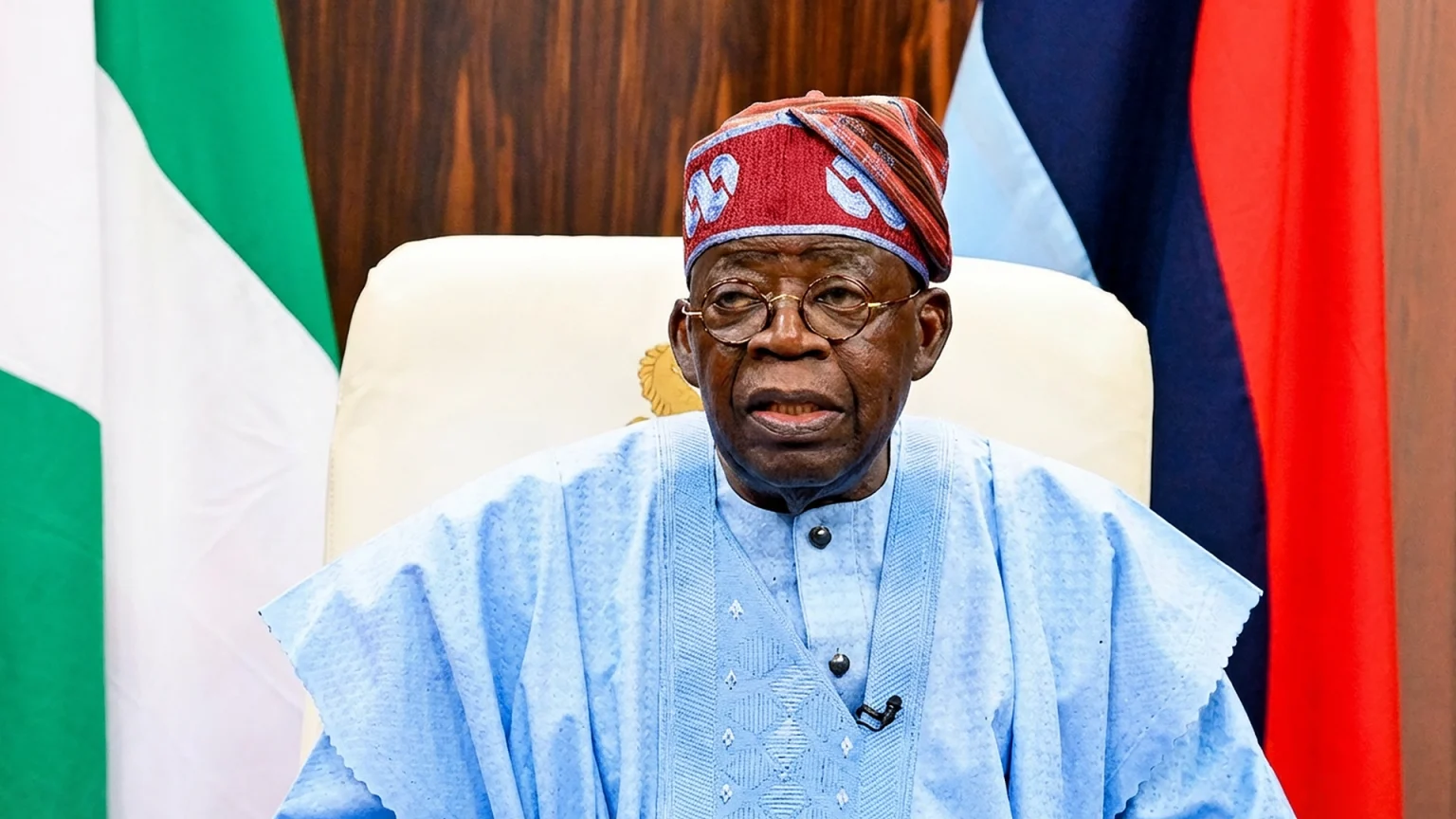
A political coalition that was supposed to widen support for President Bola Tinubu ahead of the 2027 election has instead opened a public rift between one of his closest allies and the governors of his own party.
The Minister of the Federal Capital Territory, Nyesom Wike, has been building what he calls the “Rainbow Coalition” — a cross-party group meant to mobilise votes for Tinubu’s re-election. But governors of the All Progressives Congress (APC) say the coalition threatens to undermine the very party structure that delivers votes for Tinubu and other APC candidates.
Why The President’s Own Allies Are Fighting Each Other
The disagreement became public this week when the Progressive Governors’ Forum, led by Imo State Governor Hope Uzodimma, distanced itself from the Rainbow Coalition, declaring that its members would not support any arrangement capable of weakening the party or hurting APC candidates.
Wike responded sharply, calling the APC governors “politically lazy” for opposing his coalition idea. He argued that his mobilisation drive is meant only to support Tinubu’s re-election, not the governorship or legislative ambitions of APC candidates in individual states, and pointed to the 2023 Imo State results, where the APC won two Senate seats despite Tinubu getting under 15 percent of the presidential vote there.
Uzodimma, who chairs the governors’ forum, said Wike had recently accused him of sponsoring political attacks against him — a sign of how personal the dispute has become.
An Old Rivalry With New Stakes: What Happened The Last Time Wike Broke Ranks
This is not the first time Wike has built a political structure outside his own party’s mainstream. The roots of the current tension trace back to the 2023 election cycle, when Wike and four other governors from the Peoples Democratic Party (PDP) — Seyi Makinde, Samuel Ortom, Okezie Ikpeazu, and Ifeanyi Ugwuanyi — broke away from their party’s presidential candidate, Atiku Abubakar, to form a group known as the G5.
That defection is widely believed to have hurt Atiku’s chances and helped Tinubu win the presidency. Wike later joined Tinubu’s government as FCT Minister while keeping his PDP membership — an unusual dual arrangement that has now carried into the current standoff. In other words, the very strategy that helped Tinubu in 2023 is the one now causing friction with his party in 2026.
The Governors’ Real Worry: Control, Not Just Loyalty
For the APC governors, this fight is about more than personal rivalry. Beyond the presidency, the 2027 elections will decide who controls state government structures, legislative seats and succession plans in each state. A political machine that helps deliver votes for Tinubu while simultaneously backing non-APC candidates for governor or senator could strengthen the president while weakening the very governors whose states he needs.
This tension is already visible in states like Kwara, Rivers and Cross River. Wike has also publicly criticised Kwara State Governor AbdulRahman AbdulRazaq over concerns AbdulRazaq raised about Wike’s political activities in his state.
What This Means For Nigeria’s Governing Party — And The Country’s Politics
At the national level, a divided ruling party heading into an election year weakens the APC’s negotiating position and could complicate policy delivery, since governors control much of the party’s grassroots machinery. Analysts see this as more than a personality clash: it is now “a wider contest over the relationship between Tinubu’s presidential campaign, the APC’s formal structure and Wike’s cross-party political network.”
If Wike and the governors fail to reach an understanding, Tinubu could find himself in an unusual position — with politicians campaigning for his re-election while simultaneously working against APC candidates in state-level races. That scenario, analysts note, could become “a double-edged sword” for the president’s overall campaign.
Voices Calling For Peace — And Voices Warning Against It
Not everyone in Tinubu’s camp wants the fight to continue. Ima Niboro, spokesperson for the APC Presidential Campaign Council, urged both Wike and the governors to leave television studios and take their campaigns to voters in communities and marketplaces instead.
Even voices outside government are weighing in. Socialite and Tinubu supporter Pascal Okechukwu, known as Cubana Chiefpriest, publicly urged the APC to reconcile with Wike, warning that Tinubu’s re-election may depend on cross-party alliances like the one Wike is building, citing the 2023 coalition as proof of what such alliances can achieve.
The national leadership of the APC has since stepped in to try to calm the disagreement, aware that a prolonged public rift could complicate Tinubu’s path to re-election.
Our Take On What This Fight Really Reveals
We think this dispute says less about Wike or any single governor and more about a deeper question Nigerian politics has never fully answered: can loyalty to a president and loyalty to a political party ever be cleanly separated? Wike’s arrangement — supporting Tinubu while remaining in the PDP — was unusual from the start, and it was always going to eventually collide with the interests of governors who need their party’s full machinery intact to survive their own re-election battles.
We do not think this fight will break the APC before 2027, since both sides need Tinubu to win. But we do believe it signals that Nigeria’s political coalitions are becoming more transactional and less about shared party identity — a trend voters should watch closely as more politicians follow Wike’s playbook of loyalty to a person over loyalty to a party.
Published by Ejoh Caleb