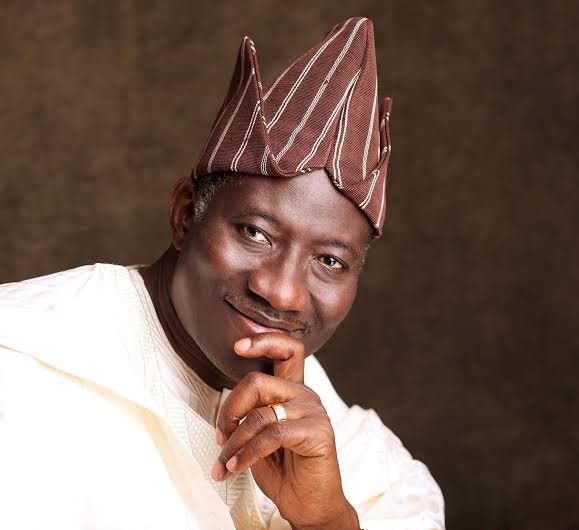
Former President Goodluck Jonathan says Nigeria will keep struggling with development until it drops what he called primitive ways of choosing political leaders. He said these ways rest on religion, ethnicity, language and other narrow considerations. He spoke on Saturday, November 14, 2026, at the Herbert Macaulay Colloquium in Lagos, which marked the 162nd anniversary of the birth of the nationalist pioneer. He urged Nigerians to put competence and merit ahead of religious and ethnic ties when they choose leaders.
What Jonathan Said, and What He Left Unsaid
Jonathan chaired the event, which was organised by the Macaulay Heritage Foundation. He said that even a very capable person cannot take the country far while leaders are chosen on narrow grounds. He added that the problem sometimes goes beyond Muslim versus Christian, down to denomination. He claimed that in one southern state, a person outside a particular denomination cannot become governor. He did not name the state, and we found no evidence for the claim. It should be read as his view.
He also named other obstacles. These were corruption, insecurity, weak institutions, policy inconsistency and poor infrastructure. Citing India, Singapore and South Korea, he said quality education helped those countries grow, and that nobody can go far with weak educational institutions. He called for a national development plan with clear objectives, measurable targets, timelines and named responsibilities, and he challenged leaders to think about the country they want by 2060. He also urged young people to take part through innovation, enterprise and holding leaders to account.
Old Debates Over Faith, Region and Fair Representation
The argument is not new. Nigeria’s politics has long tried to balance religion and region. In 1979, the National Party of Nigeria fielded Shehu Shagari, a northern Muslim, with Alex Ekwueme, a southern Christian, as its ticket. A same-faith ticket was tried in 1993, but that election was annulled.
The 2023 presidential race brought the debate back. The APC fielded a Muslim–Muslim ticket, while the PDP and Labour Party tickets each paired a Muslim with a Christian. Analysts say this broke an informal convention of religious balance and put religion at the centre of the campaign. No law forbids a same-faith ticket, and some defended it on that basis. Critics said it was insensitive and divisive. The same analysis says religion, ethnicity and region overlap so heavily in Nigeria that they are hard to separate. It also says religious identity influences, but does not alone decide, how people vote.
Violence has followed past contests too. After the 2011 presidential election, post-election riots in northern states killed more than 800 people, according to Human Rights Watch as cited by ACLED. The causes were many, but the episode shows how high feelings can run.
How Identity Politics Takes Root: Fear, Habit and Weak Trust in Institutions
When people do not trust that the state will treat everyone fairly, they look for leaders from their own group. This can feel safe. A person who shares your faith or language may seem more likely to protect your interests. Parties also use these feelings to win votes, because they are easy to rally.
Habit plays a part. Many voters, parties and communities have followed the same pattern for decades. Where schools, jobs and services are weak, people may judge leaders by who they are, not by what they have done, because track records are hard to check. Jonathan’s own list of weak institutions and weak education fits this problem. We cannot say how much each factor matters, and scholars disagree on that.
The National Price of Narrow Choices: Lost Talent, Weak Institutions and Slow Growth
When leaders are picked mainly by identity, the country may miss capable people from other groups. It may also keep leaders who fail to deliver, because supporters feel they must defend one of their own. That can slow reforms and make it harder to hold officials accountable.
The state of education shows what is at stake. UNICEF says more than 10 million primary-age children in Nigeria are out of school, and only one in four children can read at a basic level. Insecurity is also severe. SBM Intelligence counted at least 7,825 people abducted between July 2025 and June 2026. These are problems that need capable, accountable leaders. They also strain national unity when people feel left out.
Fair Representation or Pure Merit? Weighing What Each Protects
There are two views, and both have a point. Jonathan’s argument is that skill should come first. Supporters say countries that chose leaders for ability, then invested in education, have grown faster.
The other view stresses inclusion. The 1999 Constitution requires that government reflect the federal character of Nigeria and the diversity of its people. Supporters say this protects smaller ethnic and religious groups from being shut out. Without balance, a minority group may feel its voice does not count, and that can lead to anger and division. Critics say strict balancing can sometimes put group origin ahead of ability.
The two aims need not be enemies. A system can ask for competence and still make sure that qualified people from every group can reach the top. The question is how to do both fairly.
Practical Steps Toward Leaders Chosen for What They Can Do
Political parties can publish clear standards for candidates, such as record, qualifications and plans, and run open primaries. Voters can ask candidates for plans with targets and timelines, as Jonathan suggested, and can compare them across parties. The media and civil society can fact-check promises.
Government can strengthen schools, civil service rules and anti-corruption agencies, so that merit is rewarded. Leaders from every faith and region should speak against hate and use inclusive language during campaigns. Young people can take part in debates and in politics. Schools can teach civic values early, including respect for people of other faiths and languages.
Competence and Unity Do Not Have to Compete
We note Jonathan’s warning. We also note that he spoke as a former president and politician, and that his claims about particular states are his own. But the broad message is worth thinking about. Our country needs leaders who can deliver good schools, safe streets and honest government, and it needs them from every part of the nation.
We believe fairness and ability can go together. A Nigerian child should be able to dream of high office whatever her faith, tribe or language, and a voter should be able to ask what a candidate has done, not only where he comes from. Our democracy will be stronger when we make that choice with open eyes and clear standards. That is how we can honour the founders Herbert Macaulay stood alongside, and how we can build the nation they imagined.
Published by Ejoh Caleb