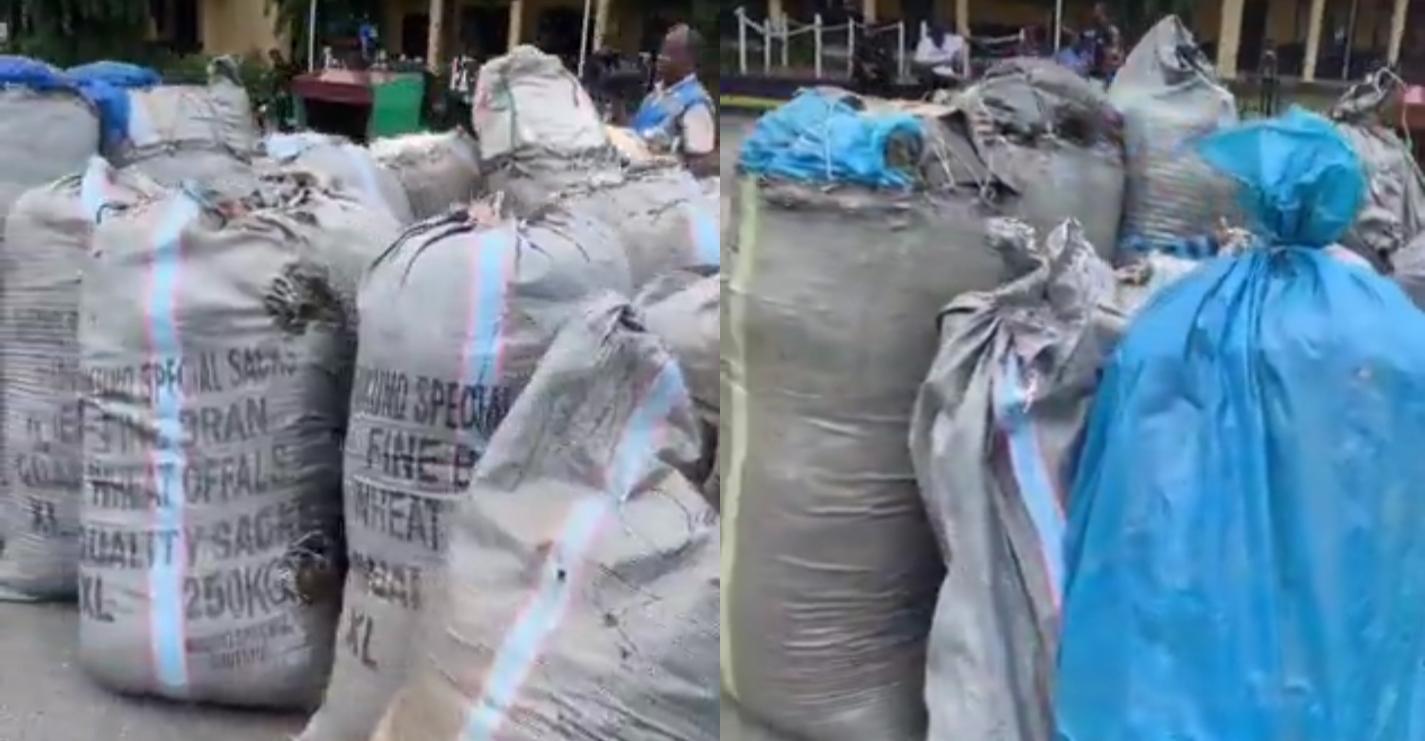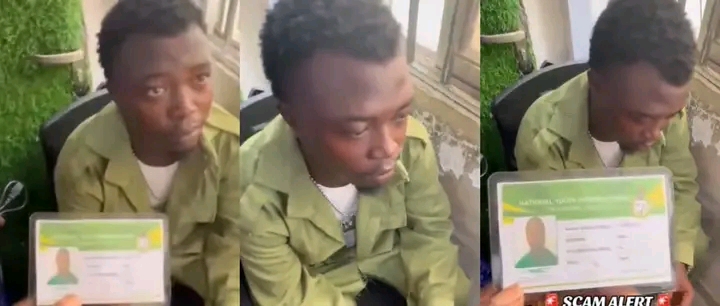
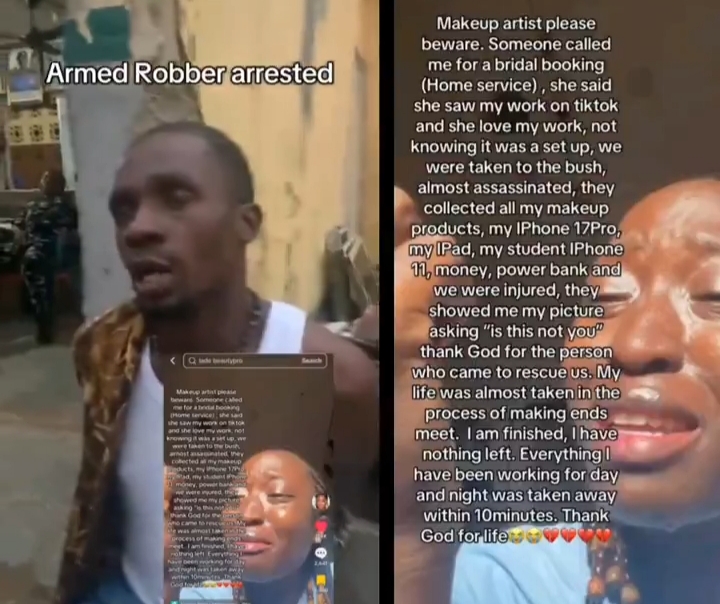
A suspected thief has been tracked and arrested by the Nigeria Police after allegedly inviting makeup artists to a supposed wedding and sending them ₦30,000 as an advance payment to secure the booking.
According to the makeup artists, the suspect took them to an unfamiliar location before robbing them of their belongings, which reportedly included an iPhone 17 Pro, an iPhone 11, an iPad, a power bank, and cash.
The victims said the suspect and an accomplice led them into a bush area under the pretence of the wedding job, before turning on them and taking their valuables. The makeup artists took to social media on July 16 to narrate what happened to them, in a video that has since circulated online.
Gig Workers Have Long Been Targets for Booking Scams
Fake booking scams aimed at freelance service providers, especially makeup artists, are not new in Nigeria or elsewhere, though this case stands out for how far it reportedly went, from a fraudulent booking to a physical robbery in an isolated location.
Beauty and event professionals frequently rely on social media and word-of-mouth referrals to secure bookings, often communicating only with a phone number or Instagram handle before meeting a client in person for the first time. This makes it difficult to verify a client’s identity or intentions before showing up, sometimes alone, at an unfamiliar venue.
Similar patterns have been documented elsewhere: bad actors posing as brides or wedding planners to lure beauty professionals, sometimes stealing personal information, and in other cases internationally, luring artists into meeting at addresses that turn out to be fake. What sets this Nigerian case apart is the alleged use of an actual cash advance to build trust, followed by physical robbery rather than simple fraud.
Why This Kind of Scam Works — and Who Pays for It
Trust built through partial payment. Sending a real advance payment, in this case ₦30,000, makes a booking look legitimate and lowers a service provider’s guard, since scammers asking for money upfront are easier to spot than ones offering it.
Weak verification norms in gig and freelance work. Many independent beauty professionals have no standard way to verify a client’s identity, home address, or event details before agreeing to travel to a new location.
Isolated meeting points. Wedding and event bookings often involve travelling to unfamiliar venues, sometimes outside the artist’s home city, which makes it easier for a bad actor to redirect victims to an isolated spot.
High resale value of electronics. iPhones, iPads, and other devices remain attractive targets for thieves in Nigeria because of their resale value, making freelancers who carry expensive equipment or personal devices to appointments a frequent target.
The effects of scams like this reach beyond the immediate financial loss.
For the victims, losing a phone, tablet, and cash in one incident is a major financial setback, and for makeup artists specifically, a stolen phone often means losing access to client contacts, payment records, and a professional Instagram or WhatsApp presence built over years.
For the wider gig economy, cases like this add to a growing wariness among freelance service providers about accepting new client bookings, particularly ones that involve travelling to unfamiliar locations alone.
For public trust in mobile bookings, incidents like this can push freelance professionals toward requiring in-person verification or upfront meetings at public locations, potentially making it harder for genuine new clients to book services quickly.
How Freelancers and Platforms Can Reduce the Risk
Verify before travelling. Beauty and event professionals can ask for a video call, a venue address that can be independently confirmed, or a second contact person before agreeing to travel to an unfamiliar or remote location.
Share trip details with someone else. Sending a trusted friend or family member the client’s number, meeting location, and expected time of return can make it easier to raise an alarm quickly if something goes wrong.
Insist on meeting in populated locations first. Where possible, an initial meeting or trial session at a public venue, rather than heading straight to an unfamiliar or remote address, reduces the risk of being led somewhere isolated.
Report suspicious bookings early. Makeup artists and event vendors who compare notes, in WhatsApp groups or professional associations, could flag repeat scam numbers or patterns before more people fall victim.
Faster police coordination on gadget theft. Since stolen phones and tablets are often resold quickly, faster reporting to police and network providers (to block the stolen devices’ IMEI numbers) could reduce the resale value of items taken in robberies like this.
Our Honest Assessment
What makes this case unsettling isn’t just the robbery, it’s how ordinary the setup looked beforehand. A booking, a deposit, a location for the job. Nothing about that would raise suspicion for most freelance professionals, which is exactly why it worked.
I think the real lesson here isn’t that makeup artists were careless. It’s that Nigeria’s freelance and gig economy has grown much faster than the informal safety habits around it. People are booking beauty, catering, and event services entirely over the phone, often travelling alone to addresses they’ve never seen. Until that habit changes, or platforms and professional groups build in some basic verification step, cases like this one will likely keep happening to people just trying to do their jobs.
Published by Ejoh Caleb