By Ejoh Caleb | Visiotalks
Published: November 28, 2026
Key Takeaways
- Former Lagos Governor Babatunde Raji Fashola says he is confident President Bola Tinubu will win Lagos State in the 2027 presidential election.
- He said the APC was “blindsided” when Peter Obi won Lagos in 2023, and that Lagos did not look like a battleground at the time.
- Obi won Lagos by 9,848 votes in 2023. The APC then won the governorship comfortably weeks later.
- The 2027 presidential election is set for January 16, 2027. Fashola’s statement is a prediction, not a result.
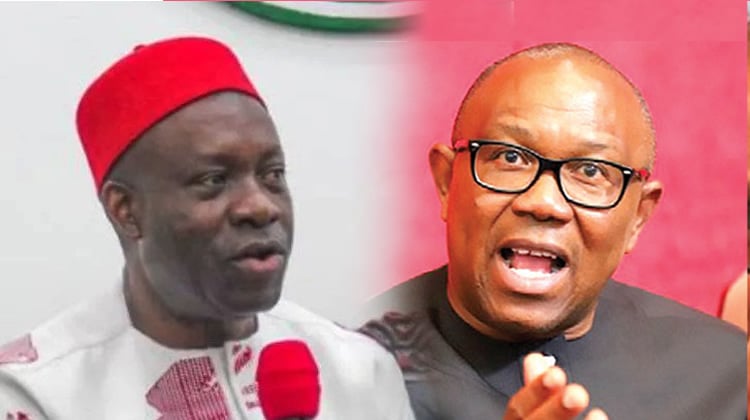
Former Lagos State Governor Babatunde Raji Fashola, SAN, has expressed confidence that President Bola Tinubu will win Lagos State in the 2027 presidential election. Speaking in an interview on Arise Television on Friday, November 27, 2026, he said the All Progressives Congress (APC) was “blindsided” when Peter Obi won Lagos in 2023, and that such an outcome would not happen again.
What Fashola Said, and the Reasons He Gave
Asked whether he was confident Mr Obi would not win Lagos again, Mr Fashola replied that he was. He said that despite the setback at the presidential level, the APC had turned it around at the governorship level. His words were that the party was blindsided, that it would not happen again, and that Lagos did not look like a battleground at the time.
He explained that the party’s polling before the 2023 vote did not show Lagos as seriously in play. He said the party does scientific surveys, and that on that basis he was blindsided, on reflection. He also said the APC had learnt its lesson and would treat Lagos as a battleground in 2027 by mobilising at the grassroots.
Mr Fashola criticised what he called inconsistent reactions to the 2023 results, alleging that those who claimed victory in Lagos rejected results elsewhere. He also urged Nigerians to look at the political relationships around Mr Tinubu and his rivals, which he described as a job reference for judging candidates. These are his views as a senior APC figure. We have not independently checked his polling claim.
The 2023 Numbers Behind the Claim: A Narrow Presidential Loss and a Wide Governorship Win
On February 25, 2023, Mr Obi, then of the Labour Party, polled 582,454 votes in Lagos against Mr Tinubu’s 572,606. By our own calculation, the margin was 9,848 votes. Lagos was Mr Tinubu’s political base, and he had governed it from 1999 to 2007. Fewer than one in five of Lagos’s roughly seven million registered voters turned out for the presidential vote.
Weeks later, on March 18, the APC’s Babajide Sanwo-Olu was re-elected governor with 762,134 votes against 312,329 for Labour’s Gbadebo Rhodes-Vivour and 62,449 for the PDP’s Abdul-Azeez Adediran. He won 19 of 20 local government areas. This supports Mr Fashola’s point that the APC recovered at state level. It also shows that voters can choose differently for president and governor.
Allegations, Observers’ Findings and the Ethnic Tone of the 2023 Contest
The 2023 Lagos contests were not calm. Observers and journalists described the governorship election as marred by low turnout, violence and voter intimidation. Daily Trust reported that the governorship campaign took on an ethnic tone, with the ruling party alleging a plot by non-indigenes to take over the state and describing the Labour candidate as an Igbo candidate.
Supporters of Mr Obi alleged that Igbo voters were targeted in some Lagos markets during the presidential election. European Union observers documented intimidation and violence in Lagos but, according to one summary, did not attribute it systematically to ethnic targeting. Those are allegations and summaries, not court findings. Mr Rhodes-Vivour filed a petition challenging the governorship result. Mr Fashola, speaking about that period, said political competition should not involve threats, attacks or hate speech.
Turnout, Machinery and Messaging: Forces That Could Shape the Next Result
Turnout is likely to matter most. In 2023, only a small share of registered voters took part. A summary of pre-election reporting says Mr Obi’s strength in Lagos came from turning out non-indigenes and educated young people, with help from the Labour governorship candidate. That summary also says some coverage listed Lagos as a battleground before the vote, which sits uneasily with the claim that no one saw it coming.
Party structure also counts. The APC has governed Lagos since 1999 and has deep local networks. A new NDC platform under Mr Obi must build its own. Voters’ views of the economy, security and cost of living will also play a role. We cannot say how these factors will balance out.
A State Vote With National Weight: What Lagos Means for the Wider Race
Lagos has the largest number of registered voters of any state, and it is the country’s commercial centre. A win or loss there sends a signal about the national mood. The presidential and National Assembly elections are set for January 16, 2027.
The state’s role in peace also matters. The NDC town hall in Lagos was attacked on November 12, and police said they arrested one suspect. [https://nationalinsightnews.com/lagos-political-violence-ndc-defiant-after-town-hall-attack-apc-condemns-incident-as-police-arrest-suspect/] If violence returns, it could keep voters at home and undermine confidence in the result. A calm, credible contest in Lagos would be a good example for the rest of the country.
Confidence and Complacency: Weighing Fashola’s Claim and Its Critics
Mr Fashola’s argument has some support. The APC did win the governorship in 2023 by a wide margin, and it controls Lagos’s government. A party that admits a mistake and says it will mobilise harder is behaving as a campaign should. Confidence is also a normal part of political messaging.
Critics could argue that the 2023 presidential result showed a real shift among voters that the APC missed, and that being blindsided points to complacency. They might add that a state that votes differently at different levels cannot be assumed to be settled. Predictions by one side are also not evidence. We found no NDC reply, and Mr Obi has not been quoted on the claim in the reports we saw.
The question of settlers’ rights sits in the background. Lagos is home to people from every part of Nigeria. The ethnic rhetoric of 2023, if repeated, would risk making some residents afraid to vote. Every resident who is registered has the same right to vote, and parties of all sides should say so clearly.
Visiotalks Analysis: Five Factors That Will Decide Lagos in 2027
- Turnout. In 2023, fewer than one in five registered voters voted. Whichever side brings out more of its supporters has an advantage.
- Young and first-time voters. Reports say they played a big role in 2023.
- Non-indigene voters. Their turnout was reported as important, and their safety on voting day is essential.
- Party structure. Local networks, alliances and defections can shift votes.
- Security and credibility. A peaceful, transparent process affects whether people turn out and whether they accept the result.
The 2023 governorship turnout was about 19 percent of permanent voter card holders, by our calculation from the figures of 1,173,631 voters and 6,214,970 card holders. Low turnout makes outcomes sensitive to small changes.
Frequently Asked Questions
Did Obi win Lagos in 2023? Yes, by 582,454 votes to 572,606, according to reports.
Did the APC win the Lagos governorship in 2023? Yes. Sanwo-Olu won with 762,134 votes.
What did Fashola promise? That Obi will not win Lagos again and that the APC will treat it as a battleground.
Is his claim proven? No. It is a prediction. The vote is on January 16, 2027.
Which party is Obi running for now? The Nigeria Democratic Congress.
Practical Steps for a Peaceful and Credible Contest
Parties can campaign on issues and avoid ethnic language. Police can protect rallies and polling units without taking sides. INEC can publish clear data on registered voters and turnout, and can ensure result sheets are uploaded as the law requires. Civil society can observe and report.
Voters can check that their names are on the register and collect their cards. Candidates can pledge to accept results and use the courts for complaints. Media can verify claims on all sides and avoid presenting predictions as facts.
A Confident Prediction Is Not a Verdict; Voters Still Decide
We note Mr Fashola’s confidence and the history behind it. The APC lost Lagos at the presidential level in 2023 and won it at the governorship level a few weeks later. That is a real pattern, and it makes the 2027 race worth watching.
But a prediction is not a result. Lagos voters will decide for themselves, and every registered voter has an equal right to do so safely. We hope the campaign will be peaceful and issue-based, and that all sides will accept the outcome. Our democracy is stronger when voters choose freely and leaders respect their choice.