
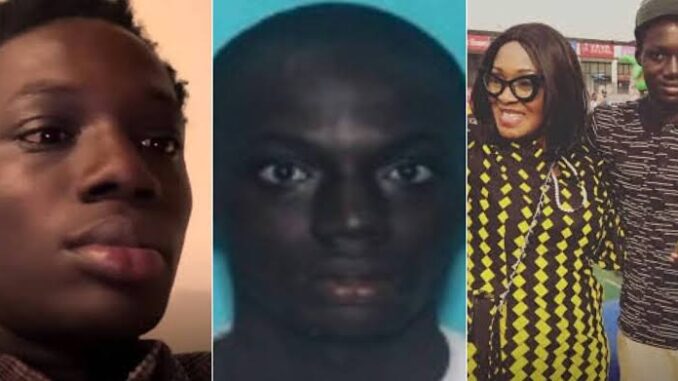
Olukayode Joshua Taiwo, 26, the son of Nigerian journalist Kemi Olunloyo, was arrested in Newington, Connecticut, on Thursday night, November 19, 2026. US Marshals and Newington police took him into custody after a search operation, according to reports.
Philadelphia police wanted him over the alleged abduction of a 23-year-old woman at gunpoint on November 2, and a shooting aimed at the same woman and her home on November 15. The woman was not struck.
What the US Authorities Allege and What He Says (Presumption of Innocence Means Treating a Suspect as Not Guilty Until a Court Decides)
The US Marshals Service said he was wanted for alleged aggravated assault, robbery, kidnapping, unlawful restraint, false imprisonment, harassment and other serious crimes. WTNH reported that police say he held the woman hostage and fired at her after she got away.
Taiwo has not been tried. He appeared in court in Connecticut on Friday. After speaking with his attorney, he did not waive extradition and said it was a case of mistaken identity. That is his claim, and a court will weigh it against the evidence, including surveillance video that NBC10 reported showing a man forcing a woman into a vehicle. We make no finding on either account.
How the Arrest Unfolded: A Six-Hour Manhunt and a Mother’s Public Plea
US Marshals tracked Taiwo to an apartment complex in Newington after investigators learned he had left Pennsylvania. The complex was locked down for hours, and he was arrested at a nearby business shortly before 9 p.m. A friend who let him stay at the apartment told local television the friend was just trying to be kind.
The arrest came a day after his mother posted an emotional public plea for him to surrender. She said she had not heard from him since August. On Friday, Olunloyo confirmed that her son had been found by US law enforcement, and she thanked those who had expressed concern and offered prayers.
What Happens Next: Extradition and Court (Extradition Means Sending an Accused Person Back to the State Where He Is Wanted)
Because he is held in Connecticut but wanted in Pennsylvania, he faces extradition between US states. He is being held at the Hartford Correctional Center awaiting extradition to Philadelphia.
Since he declined to waive extradition, the process may take longer and involve a hearing. We are not US lawyers and cannot say how long it will take. The Pennsylvania authorities will have to bring the case, and the court will decide the charges after a trial or a plea.
A Wider Context: Violence Against Women by People They Know (Acquaintance Violence Means Violence by Someone the Victim Already Knows)
We could not find a closely comparable earlier case to cite, so we point to a wider pattern. Violence against women often comes from people who know them. In Nigeria, the 2024 Demographic and Health Survey found that 21 per cent of women aged 15 to 49 had faced physical or sexual violence.
In Enugu this autumn, police arrested a 30-year-old man for alleged rape, robbery and sextortion of women he had lured to isolated places. Those allegations are different from the Philadelphia case, and we do not suggest a link. But both show how a woman’s safety can depend on whether someone who knows her, or poses as a friend, decides to harm her. Reports say the woman in Philadelphia was targeted twice within two weeks, which makes her protection a priority.
Why This Story Spread So Quickly: A Famous Mother, Social Media and Public Curiosity
The case spread across Nigerian media because of the suspect’s mother, a well-known journalist and blogger who has used her platform to speak about her son. Her public plea made the search for him widely known.
Fame can help and harm. It can bring tips and pressure to surrender, as it may have done here. It can also bring rumours, insults and a rush to judge a person before a court has spoken. The victim, whose identity police have not released, also deserves privacy, and readers should avoid trying to find her.
Effects on the Victim, the Families and the Wider Public
For the woman, being abducted and later shot at, if the allegations are true, means fear and lasting trauma. She will need support and safety while the case proceeds. Taiwo’s family also faces pressure, because they must deal with allegations and public attention in a foreign legal system.
The wider cost reaches Nigerian communities abroad and at home. Cases of violence involving Nigerians overseas can shape how some people see the whole community, even though one person’s alleged acts say nothing about others. A fair, careful reading of the facts helps avoid unfair judgments.
Handling a Case Like This Responsibly: Facts First, Privacy for Victims, Fair Process for the Accused
Journalists and readers can stick to what US authorities and courts have said. They can attribute claims, such as the mistaken-identity statement, to the person who made them. They can leave out the victim’s identity and avoid sharing unverified videos or rumours.
The justice process can also help the victim. Courts can provide protection orders and victim support services, and prosecutors can keep her informed. Family members of accused people can support them without interfering in a case, and can cooperate with lawyers and authorities.
Facts Before Judgment, Safety Before Spectacle: Our Reading of a Cross-State Manhunt
We take no position on Mr Taiwo’s guilt. The allegations are serious, he denies that he is the wanted person, and a court must decide. We also note his mother’s public acknowledgment, which came after a difficult week.
Our first concern is the woman at the centre of the case. If the allegations are true, she lived through a frightening ordeal, and she deserves safety and privacy. Our second concern is fairness. A suspect has the right to a proper trial, and no one should be condemned by headlines.
We urge readers to wait for the court, to avoid spreading unverified claims and to remember that every person in this story is someone’s child. Justice is slow, but it is better than speed without proof.
Published by Ejoh Caleb