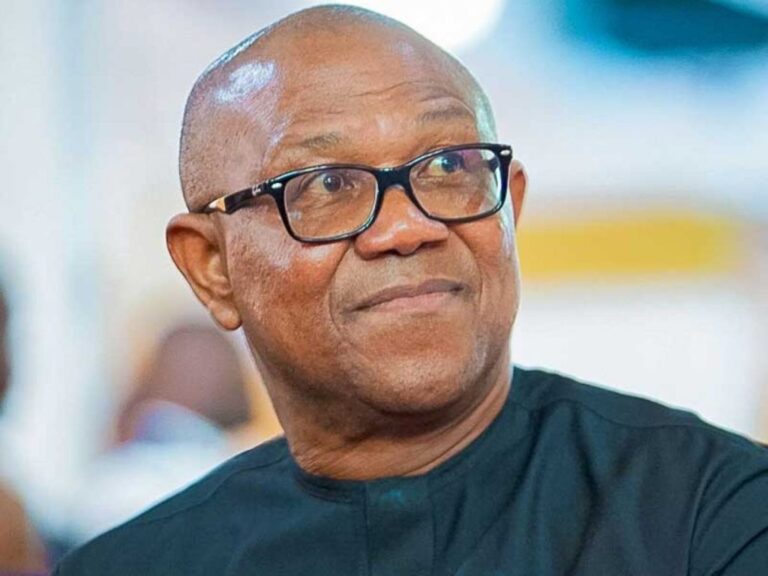

Works Minister David Umahi has reportedly said, “Every time, money na water, how much do you think you have?” The remark comes about two weeks after socialite Cubana Chief Priest described him as the second-worst minister the South-East has ever had.
We could not confirm the context. We found no report saying who the minister was addressing, and the video is the only source for the words. “Money na water” is the catchphrase Cubana Chief Priest made famous, so many readers will take it as a reply, but that has not been confirmed.
What Cubana Chief Priest Said and Why (A Public Rebuke Means Open Criticism of Someone’s Conduct)
In an Instagram post reported on October 25, Cubana Chief Priest wrote that the minister was “always blabbing” and called him “the second to worst minister southeast ever had”. He said the region had nothing to show for having a Minister of Works, and he asked President Bola Tinubu to replace ministers he called failures.
He also rated a minister from Imo State even lower. Reports say his comments followed an incident in which a microphone was reportedly snatched from Umahi at an All Progressives Congress function. The National Association of Nigerian Students (NANS) then called the criticism unwarranted and insulting. It said Umahi is one of the best-performing ministers from the region, and it linked the criticism to his political support for Tinubu.
A Catchphrase With a History: How “Money Na Water” Became a Cultural Flashpoint
The phrase gained fame in April 2024, after Cubana Chief Priest was arraigned by the Economic and Financial Crimes Commission over alleged naira abuse. He was granted ₦10 million bail and posted that “money na water”.
In October 2025, billionaire businessman Cosmas Maduka criticised the slogan. He called it reckless and said no real wealth builder would say it. Cubana Chief Priest replied that it stood for “abundance and flow”, not vanity. That clash shows the phrase already divides opinion, long before the minister’s remark.
A Pattern of Public Spats: Earlier Rows Between Cubana Chief Priest and Politicians (Alignment Means Which Side Someone Supports)
Cubana Chief Priest has criticised other officials. In November 2025, after a court sentenced Nnamdi Kanu to life imprisonment, he criticised Tinubu and ministers and governors from the South-East. He had publicly endorsed Tinubu’s 2027 bid about seven months earlier.
More recently, he called on Ebonyi State Governor Francis Nwifuru to resign over alleged poor development. Reports say Nwifuru responded dismissively, and critics argued that Cubana lacked electoral standing to judge governance. These rows show how quickly a celebrity’s views on politics can turn into a public contest.
The Substance Behind the Insults: What the Minister’s Record Shows (A Federal Road Project Is One Funded and Managed by the National Government)
Beneath the name-calling is a real question about roads. Umahi has said the Tinubu administration inherited 2,064 federal road and bridge projects in various states of disrepair. He lists South-East projects including the Enugu–Onitsha Expressway, where a 15-kilometre concrete section reopened in April 2026, and the Enugu–Abakaliki–Ogoja Road.
At the April opening, he said the Enugu–Onitsha journey took about seven hours before 2023. He said the project was awarded before Tinubu “with no meaningful progress made”. Critics, however, point to unfinished sections. A Daily Trust piece, which described itself as the other side of the story, noted that reconstruction methods “do not excuse projects that remain incomplete or roads that have deteriorated”.
So the facts are mixed. Some work has opened, and much remains unfinished. Whether that adds up to a good or bad record is a judgment voters can make with the evidence.
Why Insults Replace Debate: Election Season, Social Media and Loyalty Politics
The 2027 election is near, and every public figure’s words carry political weight. A celebrity with millions of followers can shape opinion quickly, and a minister who responds can draw a wider audience to the spat.
Social media rewards sharp lines. A catchphrase, a nickname or a one-liner travels faster than a road report. That can leave the real issues, such as roads, costs and results, out of view. Supporters on each side may then defend their man instead of asking for facts.
What It Costs the Public: Lost Focus, Lost Trust and a Cheaper Debate
When public figures trade insults, voters get little new information. A minister’s job is to build and maintain roads, and a celebrity’s criticism may or may not be fair. If neither side shares data, the public learns little.
The wider cost reaches the country. Leaders who respond to criticism with slogans may seem dismissive, and critics who use insults can lose credibility. Either way, public trust in the debate falls. A tone of contempt can also harden divisions inside a region that already feels neglected by some, and that does not help road users stuck on bad roads.
Raising the Quality of the Argument: Facts, Courtesy and Public Reports
The Works Ministry can publish simple progress reports for each South-East road, including completion rates, contract values, deadlines and any delays. Critics can use those reports to check claims and say precisely which road fails and why.
Public figures on both sides can keep to the issues. A minister can answer a critic with data, and a celebrity can name the road or the contract he is angry about. Journalists and civil groups can also fact-check statements from both sides.
Roads, Rhetoric and Respect: Our Reading of a Celebrity–Minister Spat
We take no side between the minister and the socialite. The minister’s words are reported only through a video, and we cannot confirm who he meant. Cubana Chief Priest is entitled to criticise public officials, and Umahi is entitled to answer.
But the public is the real audience. Road users in the South-East do not need a slogan. They need to know when the next section will open, who is building it and what it costs.
We urge both men to put that information on the table. If the roads are good, the figures should show it. If they are not, the criticism deserves a real answer. A country does not move forward on catchphrases, even clever ones.
Published by Ejoh Caleb