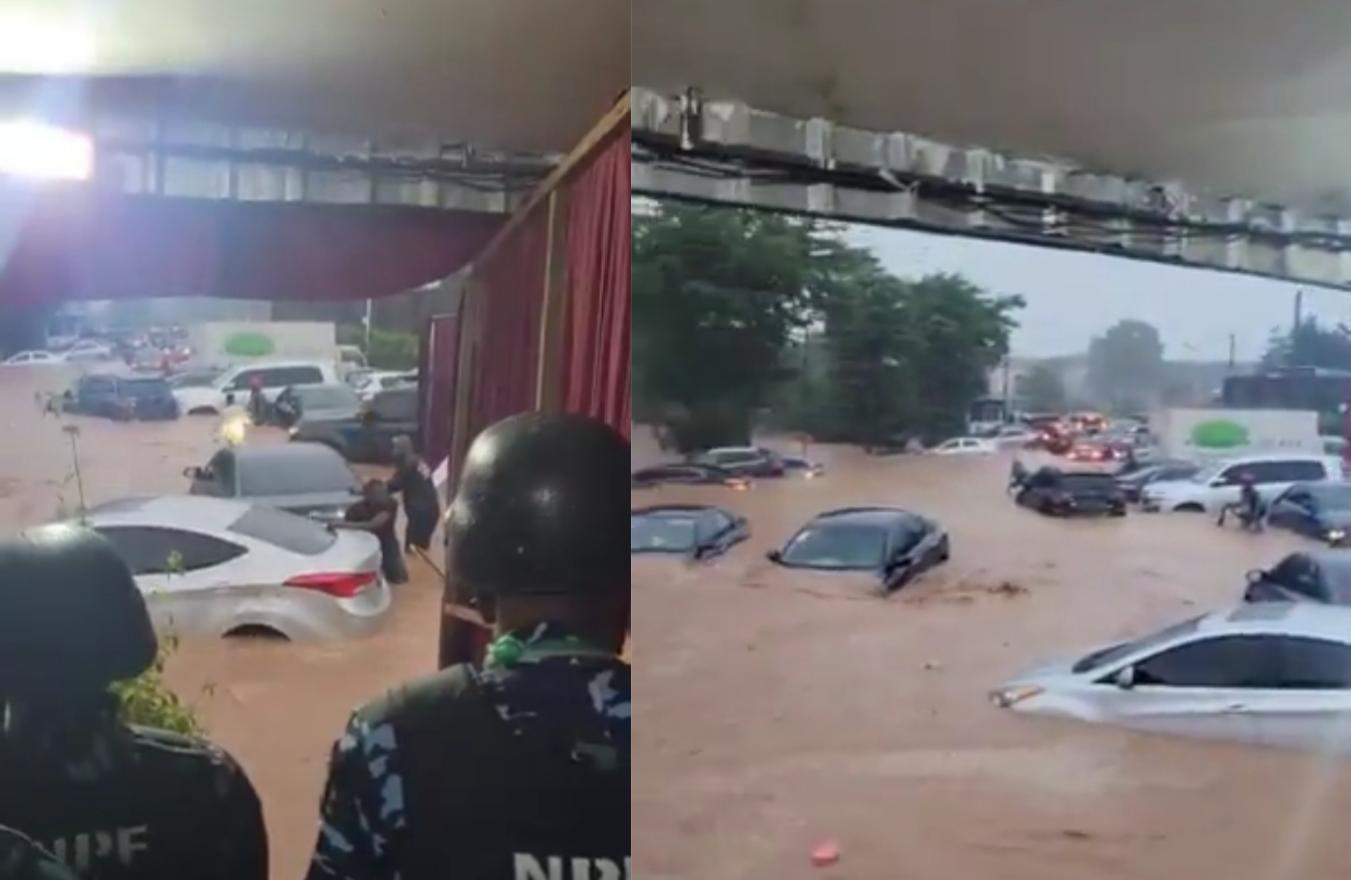
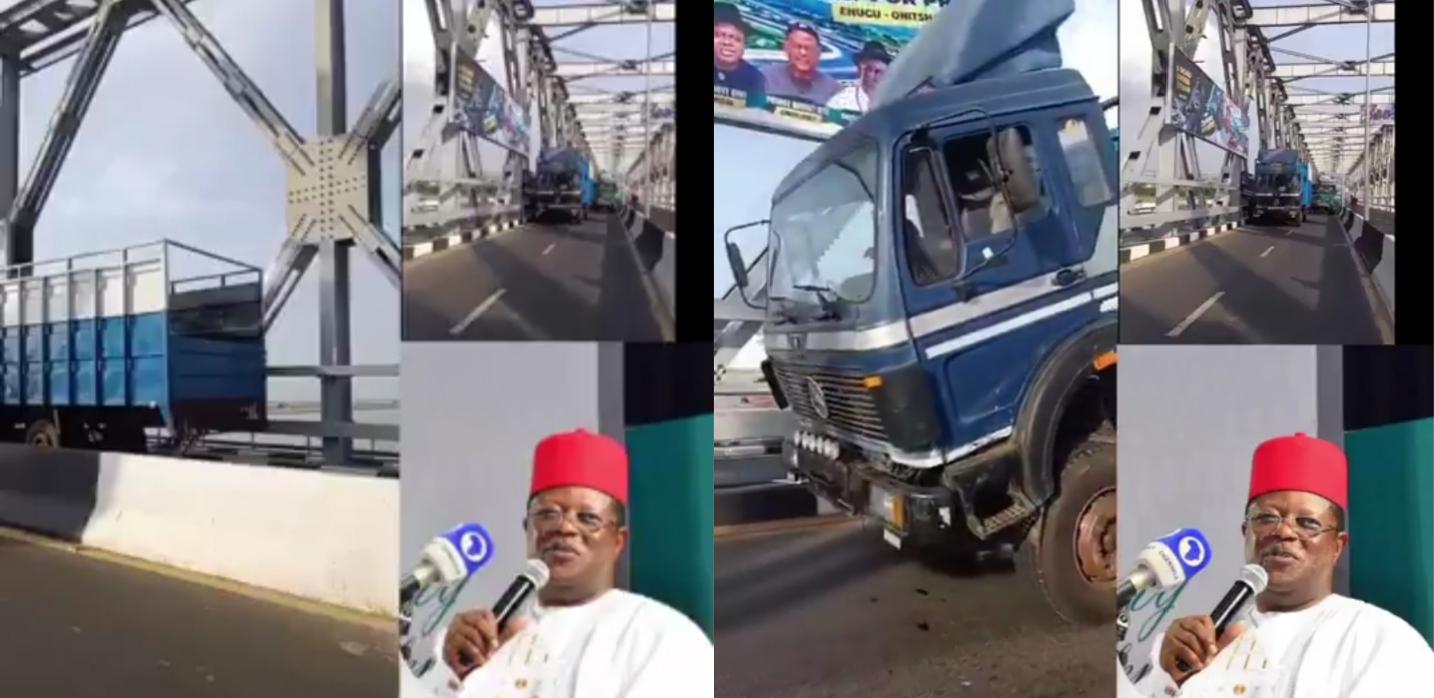
Motorists have complained after a truck broke down on the newly rehabilitated Onitsha Head Bridge in Anambra State. One of them said the incident shows exactly what critics had warned about regarding the new demarcation (the barrier that now divides the carriageway) and asked how vehicles stuck behind the truck are supposed to move.
A Bridge Reopened After 38 Days, With Warnings Already on the Table: What Has Happened So Far (Background to the Repairs)
The First Niger Bridge links Onitsha in Anambra State with Asaba in Delta State and was built in 1965 with an open, single-space roadway. It was closed on September 7, 2026, for emergency rehabilitation after vandalised components and a deteriorating surface, and traffic was diverted to the Second Niger Bridge. Works Minister David Umahi reopened it on October 15 after 38 days. The Federal Government said the repairs included resurfacing, structural repairs, solar-powered streetlights, CCTV cameras, median barriers and designated turnaround points for emergencies. The minister acknowledged at the reopening that the work was not entirely complete.
Concerns About Breakdowns Were Raised Before and After Reopening: Earlier Warnings and Incidents (Past Cases on the Same Bridge)
Road users raised this exact worry before the bridge reopened. In late September, after the minister announced the demarcation, some motorists told reporters it would organise traffic, and one shuttle operator said splitting the bridge into two lanes would help. Others warned that if a heavy truck breaks down in the middle of the demarcated path, it will block traffic and cause gridlock. One urged the authorities to station tow vehicles at both ends of the bridge so breakdowns could be cleared quickly.
On October 7, the ministry dismissed reports that the barriers were being removed. The Federal Controller of Works in Anambra, Engr. Timothy Emenike, said openings were created deliberately so vehicles could make U-turns in emergencies and so the Federal Road Safety Corps and other agencies could work on the bridge. He called the removal claims lies and said the barriers remained intact.
Within days of reopening, gridlock returned. A report on October 19 said the traffic had raised fresh concerns about traffic management and the effectiveness of the emergency works. Another report described a damaged car blocking one lane of the bridge, with a motorist complaining that one broken-down vehicle had blocked a lane. The truck breakdown now reported follows that pattern.
Why a Single Breakdown Can Freeze a Whole Crossing: Design, Weight and Missing Support (Causes)
The main cause is simple geometry. A bridge is a narrow corridor with no side roads. When a divider separates the two directions, a vehicle that stops in a lane may have nowhere to go. Road users predicted exactly this before the reopening.
A second cause is the traffic itself. The bridge serves a heavy flow of trucks and buses between the South-East and South-South, and traffic that used the Second Niger Bridge during the closure is now returning. Older structures and heavy loads raise the chance of breakdowns, though we found no data on how often trucks have stopped on this bridge.
A third cause is the response gap. Road users asked for tow vehicles at both ends. We do not know whether recovery vehicles are now on site, and the minister said work was still incomplete. The ministry’s openings may help turning, but U-turns are not the same as clearing a stranded truck.
There is also a difference of view. Supporters say a divider orders traffic and separates opposing flows, while critics say it removes flexibility. Both views come from road users, and neither has been tested with data.
Time Lost, Emergencies Delayed and Trade Slowed: Effects of a Blocked Crossing (Consequences)
The first effect is on commuters. People travelling between Onitsha and Asaba may lose hours in a queue, with workers late and traders unable to move goods. The closure had already caused hardship, and residents had been waiting for relief.
The second effect is on emergencies. Ambulances, fire trucks and police need to cross a blocked bridge too. The ministry itself said the openings were meant to help emergency agencies operate, which shows the concern is real.
The third effect is on trust. After a 38-day closure, people expected smoother travel. When gridlock returns quickly, some will doubt that the works were worth the pain. One road user warned that a careful evaluation is needed before lives are lost to a breakdown, fire or accident.
For the country, the bridge is a key route for trade between the South-East and South-South. A crossing that jams regularly costs businesses money, and the repairs, which already took more than five weeks, put pressure on the Second Niger Bridge.
Keeping the Bridge Moving When Something Breaks Down: Practical Steps for the Ministry, FRSC and Motorists (Possible Solutions)
First, quick recovery. Tow trucks and a recovery crew could be stationed at both ends of the bridge, as road users have asked. A clear rule that a broken-down vehicle must be cleared within a set time would also help, with the FRSC and the Federal Ministry of Works coordinating.
Second, use the design features. The ministry says it created openings for emergency U-turns, and the FRSC has been deployed to manage traffic. The ministry could publish where the openings are and how they are meant to be used, and use the new CCTV cameras to spot breakdowns early.
Third, check the vehicles. Authorities can consider checks on heavy trucks before they enter the bridge, and time rules for the heaviest loads. These are our suggestions, and engineers should assess them.
Fourth, finish the outstanding work and review the design. The minister admitted the work was incomplete at reopening, so the ministry should say what remains and when it will be done. If breakdowns keep blocking the bridge, an independent review of the demarcation and its openings would be sensible.
Fifth, motorists can help by keeping vehicles in good condition, following FRSC instructions and avoiding overloading. Government can also tell the public about alternatives, such as the Second Niger Bridge, during incidents.
A Stress Test the Bridge Must Pass: Our Closing Reflection (Planning, Accountability and Everyday Safety)
We believe the federal government was right to repair a bridge that is vital to the country and had been damaged by vandalism. Resurfacing, lights and cameras are worth having, and the bridge’s reopening brought relief.
But one breakdown should not be dismissed as a rare event. Road users predicted it, the ministry designed openings for emergencies, and gridlock has already returned. We cannot say from one video whether the design is at fault, but the complaints deserve a serious, public answer.
We urge the Federal Ministry of Works to explain how breakdowns will be cleared, to station recovery equipment and to publish what is left to be done. We also urge motorists to report problems calmly and to follow the guidance of traffic officers. We will update this story when the ministry responds.
Published by Ejoh Caleb