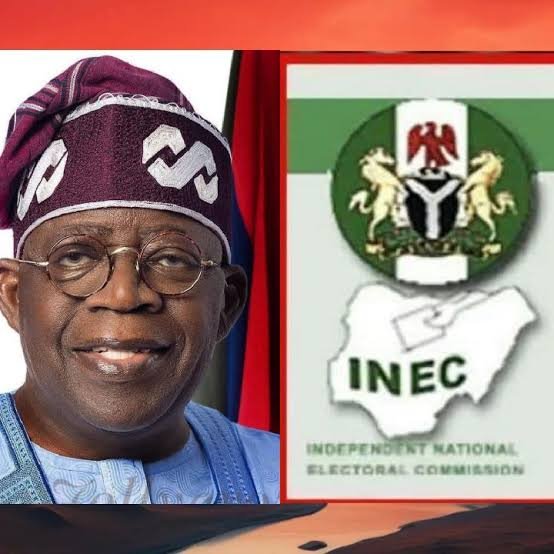
President Bola Tinubu has nominated four national commissioners and two Resident Electoral Commissioners (RECs, the top INEC officials in each state) to fill vacancies at the Independent National Electoral Commission (INEC). He also reappointed Dr Bala Bila as National Commissioner for the North-East. The presidency says the vacancies arise from expiring tenures. All nominees must be screened and confirmed by the Senate.
Prof. Mustapha Aliu (North-West), replacing Prof. Abdullahi Zuru.
Bashir Muhammed Umar (North-Central), replacing Prof. Muhammad Adamu.
Mrs Oluwatoyin Babalola (South-West), now the Osun REC, who would succeed Prof. Cornelius Ajayi, whose tenure ends on October 24.
Dr Bala Bila (North-East), reappointed.
Dr Samuel Akinjide Akinleye, a retired permanent secretary, as REC for Ekiti State.
Zahradden Basiru Sanusi from Jigawa State as REC, replacing Prof. Saidu Ahmed Babura.
Tinubu urged the Senate to speed up confirmation so the vacancies are filled before the general elections, scheduled for January. INEC’s revised timetable puts the presidential and National Assembly elections on Saturday, January 16, 2027, and the governorship and state assembly elections on February 6, 2027. That leaves about three months.
A Constitutional Test That Nominees Must Pass: What the Law Requires of INEC Members (Non-Partisan Standard)
The Constitution sets a clear standard. The Third Schedule says a member of the commission must be non-partisan (not belonging to or favouring any political party) and a person of unquestionable integrity. Section 156(1)(a) also bars anyone who is a member of a political party from being appointed to INEC. The Senate has to confirm each nominee, so the screening is the public’s main check.
We have no information suggesting that any of the six nominees fails this test, and we do not suggest it. We note only that the Senate’s job includes examining each nominee’s record and hearing any objections.
Nominations to INEC Have Stirred Fierce Debate Before: Past Cases of Contested Appointments (Earlier INEC Nominee Controversies)
The best-known case was that of Lauretta Onochie, a presidential aide nominated by then-President Muhammadu Buhari in October 2020 as a National Commissioner for the South-South. Civil society groups petitioned the Senate to reject her because of her alleged membership of the All Progressives Congress (APC). At her screening she said she had left the party in 2019. On July 13, 2021, the Senate rejected her nomination. Its committee said it did so on federal character grounds (the rule that appointments should reflect Nigeria’s states and regions), because a national commissioner from Delta State was already serving. Observers noted that the Senate’s stated reason did not address the concerns about partisanship. [https://placng.org/Legist/finally-senate-rejects-onochie/]
The dispute did not end there. In 2022, ThisDay reported that Buhari asked the Senate to confirm four more REC nominees whom critics described as card-carrying members of the ruling party. The report said civil society groups argued the appointments would undermine INEC’s neutrality and increase mistrust of the electoral process. These are the critics’ claims, and we have not seen the outcome of each case.
INEC’s leadership is under scrutiny today as well. Daily Trust reported that there is growing public debate over INEC’s impartiality since Chairman Joash Amupitan took office, and that some opposition figures demanded his resignation after a dispute over a social media account that INEC denied was his. The same report notes that the chairman has assured Nigerians that every lawful vote will count. That context raises the stakes for each new appointee.
Why Speed and Scrutiny Pull in Different Directions: Causes of the Rush and the Risks (Timing and Pressure)
The timing is driven by expiring tenures. Babalola’s would-be predecessor leaves office on October 24, which is only days away. With elections about three months away, INEC is already preparing, and it inaugurated a 2027 general election logistics committee this week. There is a real need for a full commission.
But there is a risk in rushing. The Senate must be able to receive petitions, check each nominee’s background and ask hard questions. In the Onochie case, public petitions were a key part of the process. The President appoints INEC members, so the Senate’s role is a safeguard, and a hurried process can weaken it.
The Effects of These Appointments on Public Trust and the Vote: What Is at Stake (Consequences for Election Credibility)
If the nominees are seen as independent and qualified, confidence in the electoral process will be stronger. National commissioners help decide policy and oversee election preparation, while RECs run elections at state level. Bila’s reappointment is described as a way to keep institutional memory (knowledge built up from experience) at INEC.
If the appointments are viewed as partisan, the damage could be lasting. The 2022 petitioners warned that partisan appointees would increase mistrust in INEC and in Nigeria’s electoral process. Distrust can reduce turnout and make losing candidates less willing to accept results.
For the country, a credible commission matters beyond one election. Foreign observers, investors and neighbours watch Nigeria’s polls closely, and African Union monitoring delegates have already met INEC in Abuja.
Fast Confirmation Without Skipping the Checks: Practical Steps for the Senate and the Public (Possible Solutions)
The Senate can move quickly and still be thorough. It can publish the nominees’ details, set a clear screening date, invite written petitions and hold the hearing in public. Screening could focus on two simple questions: whether the nominee is non-partisan and whether the nominee is of unquestionable integrity. These are our suggestions.
Civil society groups, professional bodies and parties can also play a part. In 2021, petitions from such groups helped drive the debate in the Senate. Anyone with credible information about a nominee should send it to the Senate Committee on INEC, and it should be examined fairly.
Nominees can help themselves by being open about their backgrounds, including any past political activity, and by promising to act independently. INEC’s chairman has said the commission wants every vote to count, and new members will be judged against that standard.
A Referee Must Be Trusted Before the Game Starts: Our Closing Reflection (Independence, Scrutiny and Confidence)
We believe the Senate should treat these nominations with urgency but not haste. The vacancies are real, and the elections are close. A commission that is short of members would not serve anyone.
But an electoral umpire is only as strong as the trust it commands. The Onochie case and the 2022 REC controversy show how seriously Nigerians take the question of who sits at INEC. We make no claim about these six nominees, whose records have not yet been examined in public. That is exactly what the screening is for.
We urge the Senate to do its work openly and promptly, and we urge Nigerians to follow the hearings and raise any evidence-based concerns. We will report on the screening and the final decision.
Published by Ejoh Caleb