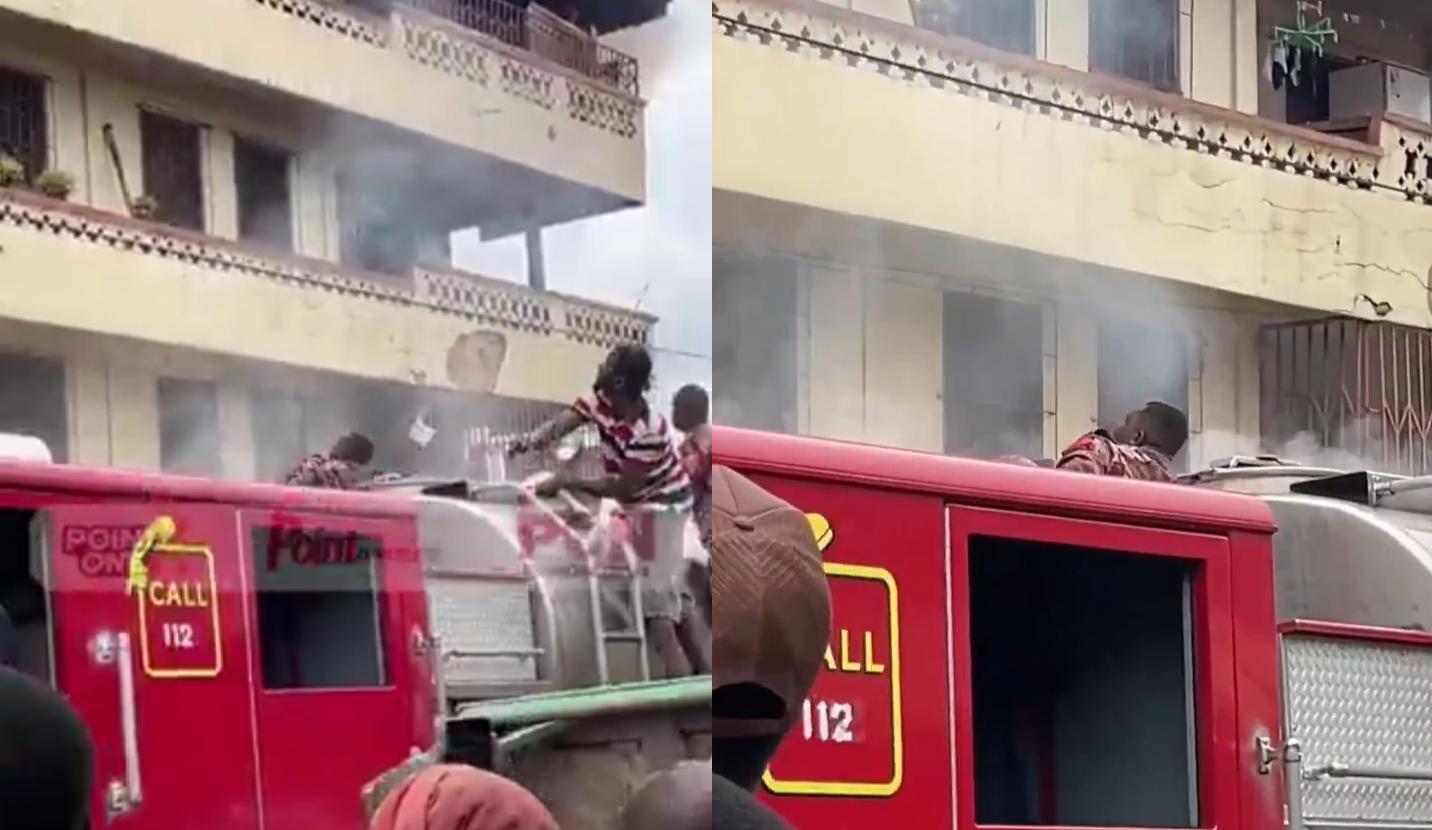
A video circulating online shows personnel from the Ghana National Fire Service (GNFS) standing on a fire truck and throwing sachets of water, the small sealed plastic bags of drinking water commonly sold on Ghanaian streets, into a burning building.
The clip has sparked reactions online, with many viewers questioning why trained firefighters, riding an official fire truck, would resort to using packaged drinking water instead of the truck’s own water supply to fight a blaze.
A Fire Service That Has Faced This Question Before
This is not the first time the GNFS has had to answer questions about whether its trucks carry enough water to do the job. In April 2026, the Service publicly and firmly denied recurring allegations that its personnel sometimes arrive at fire scenes with empty water tanks, telling a Rainbow Radio programme that such claims were false and challenging anyone who made them to provide evidence.
At the same time, the Service’s own spokesperson acknowledged real logistical gaps, pointing out that several populated areas, including Dome, Kwabenya, Ashongman and Taifa, still have no dedicated fire station. He cited a recent fire in Brekusu where engines had to be sent from other towns because no local station existed, delaying the response.
The Service has also had to publicly clarify other viral videos involving its personnel in the past, including a January 2026 incident where footage of firefighters clashing with a civilian at a market fire went viral, prompting an official statement explaining the context behind the confrontation.
Why Firefighters Might Improvise, and What It Costs
Nigerian and Ghanaian fire services alike often operate with limited numbers of fire stations, ageing trucks and tight budgets, which can leave crews stretched thin, especially during large or fast-moving fires. The GNFS itself has acknowledged that broken-down vehicles are repaired only “as a matter of urgency” when funds and time allow, suggesting the fleet does not always operate at full strength. [https://www.ghanaweb.com/GhanaHomePage/NewsArchive/GNFS-denies-claims-of-responding-to-fire-scenes-without-water-2028813]
If a truck’s onboard water supply runs low or is delayed by pump problems mid-operation, firefighters on the scene may feel pressure to use whatever is on hand, including bagged drinking water, rather than stand by and watch a fire spread further.
For the people whose property is burning, the effect of any delay or improvisation in firefighting can be devastating, since even a short gap in an effective water supply can allow flames to destroy more of a building or spread to neighbouring structures.
At a national level, videos like this one feed public doubt about whether Ghana’s emergency services are properly equipped, even when the Fire Service insists its trucks are not sent out empty. Every viral clip showing an unconventional firefighting method adds to a broader conversation about underfunded emergency infrastructure across West Africa, a concern that resonates with Nigerian audiences dealing with similar public trust questions about their own emergency services.
Possible Fixes for Ghana’s Firefighting Gaps
Faster investment in new fire stations for underserved areas, as the GNFS itself has requested from District Assemblies, would reduce response times and ease pressure on existing trucks and crews.
Regular, well-funded maintenance schedules for fire trucks and their water pumps could prevent mid-operation equipment failures that might force firefighters to improvise in the first place.
Clear, timely public communication from the GNFS whenever a viral video like this one raises safety concerns would help separate genuine equipment failures from misunderstandings, and rebuild public confidence either way.
A Video That Deserves a Straight Answer
We think firefighters improvising with whatever water is available, even sachets, shows dedication in the moment. But we also think Ghanaians and their government should not have to wonder whether a fire truck arrived with enough water to do its job.
Viral videos like this one matter because they put a face on a bigger, slower-moving problem: emergency services across West Africa, including in Nigeria, often operate with far less funding and equipment than the risks they are asked to manage. A clear explanation from the GNFS about what happened in this specific case would go a long way, but so would sustained investment that means no firefighter ever has to reach for a sachet of drinking water when lives and property are at stake.
Published by Ejoh Caleb