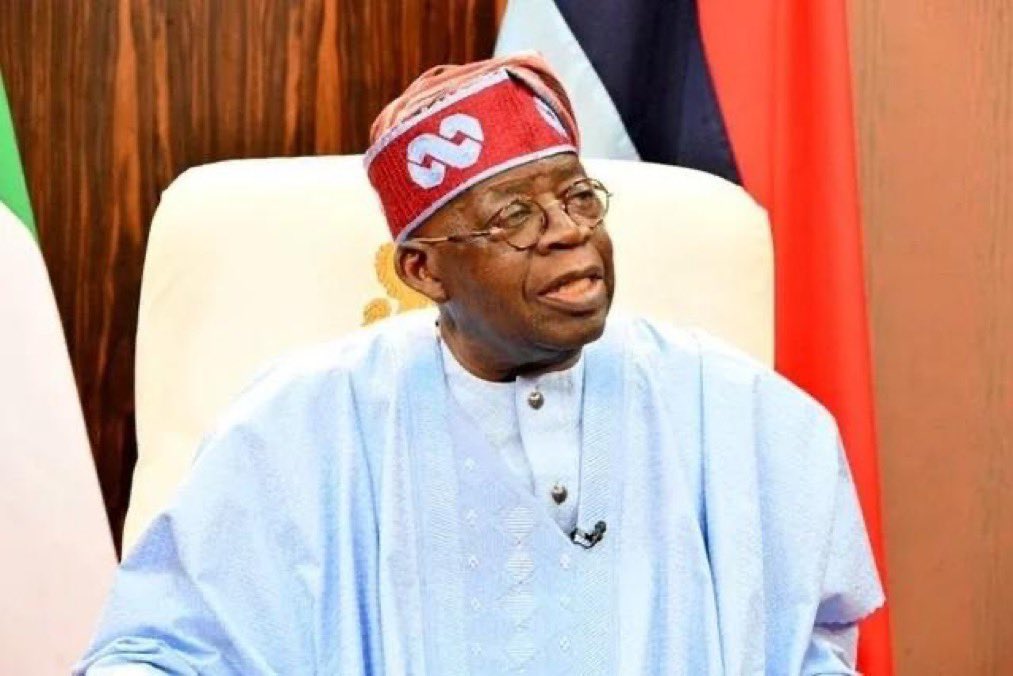
President Bola Tinubu has directed that liquid funds recovered by the Economic and Financial Crimes Commission (EFCC) — Nigeria’s anti-corruption agency — be channelled into the Nigerian Education Loan Fund (NELFUND), the federal government’s student loan scheme, to strengthen its financing.
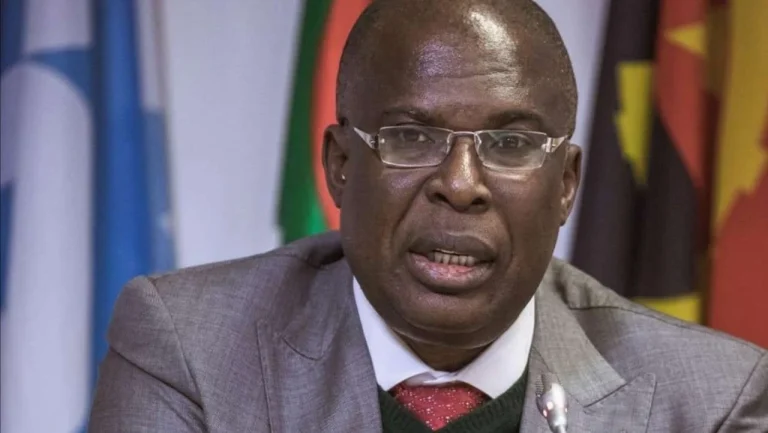
The Minister of Education, Dr Tunji Alausa, disclosed the directive on Wednesday while briefing State House correspondents after a Federal Executive Council (FEC) meeting in Abuja. He said the council also approved a separate directive to transfer unclaimed dividends held under the Capital Market Trust Fund and the Dormant Account Trust Fund to NELFUND. Quoting the president, Alausa said: “The education of our children cannot wait. It is of utmost importance to him, and he will do anything and everything to protect the future of every single Nigerian child, every single Nigerian student.”
What the Money Covers, and What It Does Not
Alausa was careful to clarify the limits of the directive. “Note, and the President was very clear, not seized properties, or recovered looted funds, but liquid funds, from the EFCC will now be transferred to NELFUND,” he said. In other words, the arrangement applies only to recovered cash — money that is already available and not tied up in property, assets, or legal disputes — and not to houses, cars, or other seized property that would need to be sold first.
Tinubu has directed the Ministers of Finance and Education, the Attorney-General of the Federation, and the Debt Management Office to work out the legal framework and modalities for actually moving the recovered funds into NELFUND. Alausa said the goal is to give NELFUND a more stable financial footing, noting the fund currently supports more than 1.2 million Nigerian students and has disbursed over ₦322 billion in institutional fees and student upkeep allowances so far.
Not the First Time Recovered Loot Has Funded Student Loans
This is not the first time proceeds recovered from corruption cases have been directed toward NELFUND. In August 2024, the EFCC donated ₦50 billion to the fund from proceeds of crime it had recovered, a gesture the fund’s management publicly appreciated during a courtesy visit to EFCC headquarters in Abuja. That earlier donation came just months after NELFUND itself was established, when President Tinubu signed the Student Loans (Access to Higher Education) Act into law in April 2024 and the scheme began registering its first batch of 1.2 million students from federal tertiary institutions.
Wednesday’s directive effectively formalises and expands that earlier, one-off gesture into an ongoing policy, rather than a single donation.
Why NELFUND Needs the Extra Funding, and the Cracks Already Showing
The scheme’s obligations have grown rapidly. By September 2025, NELFUND had disbursed over ₦92.8 billion to students nationwide, with over 795,000 completed applications and more than 480,000 students receiving payments. As more students register each academic year, the fund’s financial demands keep expanding, which is the immediate reason cited for tapping recovered EFCC funds and unclaimed dividends as new revenue sources.
But more money flowing into NELFUND does not automatically solve the problems students say already exist within the scheme. Students have repeatedly raised concerns about delays in disbursement and a lack of clear communication about repayment terms. A university-based study found that a significant share of students worry specifically about repaying the loan after graduation and about delays in disbursement, alongside broader anxiety over uncertain job prospects. Separately, an investigation by the National Orientation Agency and NELFUND itself uncovered cases of tertiary institutions allegedly withholding or delaying loan disbursements after receiving the funds, sometimes still demanding that students pay out of pocket despite their loans having already been approved and paid to the institution.
There has also been public controversy over NELFUND’s ₦20,000 monthly student upkeep allowance, with critics pointing to inflation eroding its value and complaining about a lack of transparency when payments are delayed or skipped without explanation. Academic researchers have also drawn a cautionary comparison to the United States, where outstanding student debt has passed $1.8 trillion, warning that if NELFUND is not carefully and transparently managed, Nigeria risks building a similar long-term debt burden for its graduates.
For Nigeria, a Question of Whether Recovered Loot Is Finally Being Put to Good Use
For ordinary Nigerians, the appeal of this directive is straightforward: money stolen from the public is being redirected to something that visibly benefits the public, rather than sitting indefinitely in government accounts or being tied up for years in litigation, which is often the fate of recovered funds in Nigeria. If implemented as described, it gives Nigerians a concrete, traceable use for corruption recoveries — a demand civil society groups have made for years.
But the effectiveness of the policy will depend entirely on how transparently the transferred funds are tracked once they reach NELFUND, especially given the fund’s existing track record of disbursement delays and allegations of institutions mishandling payments meant for students. If recovered public funds disappear into the same opaque processes students already complain about, the goodwill behind the announcement could quickly turn into another source of public frustration rather than confidence.
What Would Make This Work in Practice
Researchers who have studied NELFUND’s design have called for a shift toward more flexible, income-based repayment structures — where graduates repay based on what they actually earn, rather than a fixed schedule — as a way of easing the repayment anxiety many students report. Academic reviewers of the scheme have also stressed that diversifying NELFUND’s funding sources — combining government backing with private-sector partnerships and other funding streams — is critical to protecting it against budget shocks and delays, which is precisely the gap this new directive is aimed at closing.
Beyond funding, the National Orientation Agency has called for continued scrutiny of tertiary institutions found withholding or mismanaging disbursed loans, warning that such institutions remain under the watch of anti-graft agencies. For Wednesday’s directive to genuinely benefit students rather than simply grow NELFUND’s balance sheet, that same level of scrutiny will need to extend to how the newly transferred EFCC funds themselves are tracked and spent.
Our Honest Take
We think redirecting recovered stolen funds toward students’ education is, on its face, one of the more sensible uses of anti-corruption recoveries this government has proposed. It gives Nigerians something tangible to point to whenever the EFCC announces a new recovery, instead of vague promises about funds being “returned to the treasury.” But good intentions have not been NELFUND’s problem so far — execution has. Unless this new funding comes with the same transparency Nigerians are demanding of the EFCC itself, redirecting stolen money into a leaking bucket will not fix the leak; it will just mean more money goes missing along the way.
Published by Ejoh Caleb