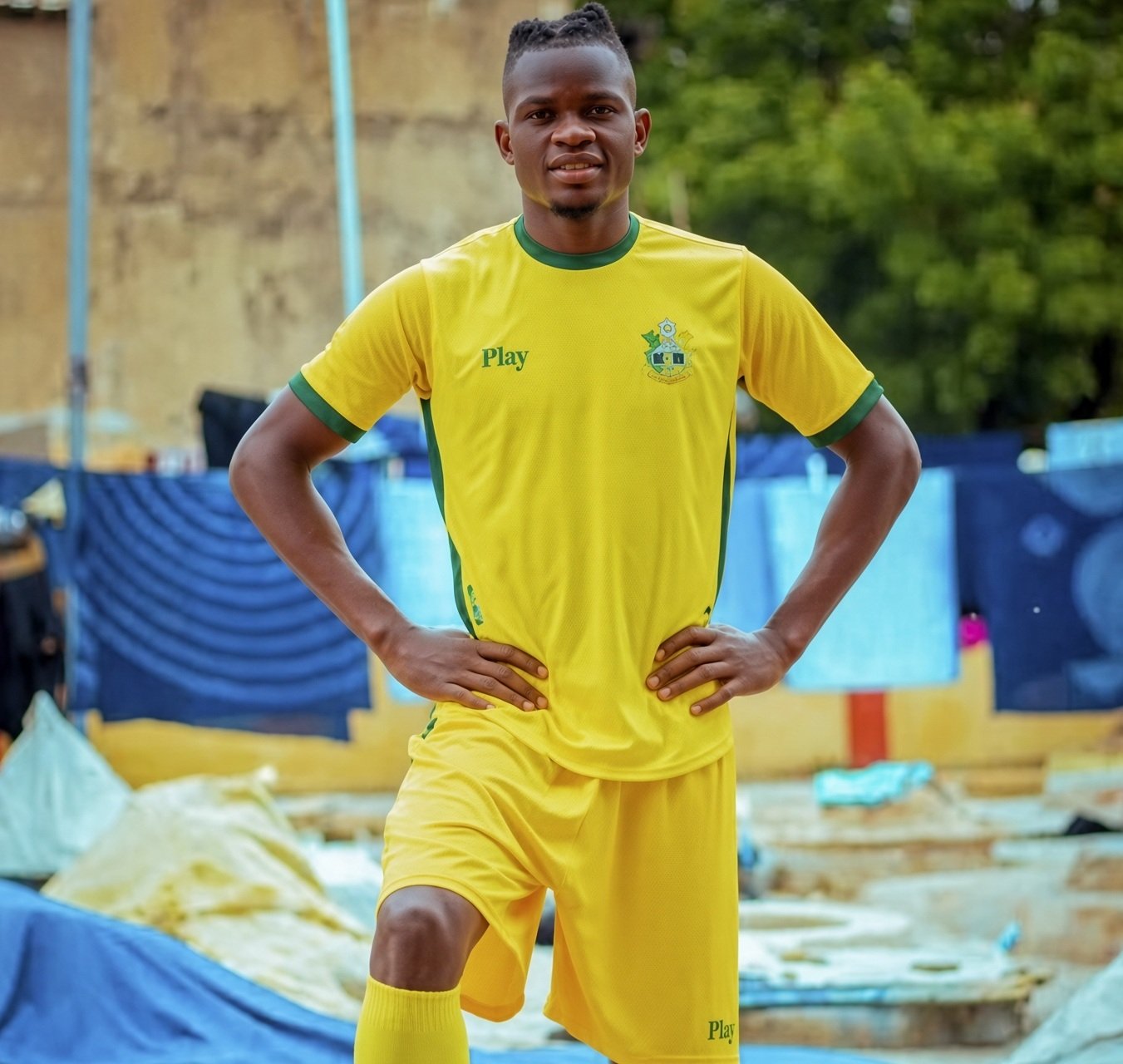
Katsina United has issued a direct statement confirming that defender Chinedu Ozor has died, and firmly refuting widely circulated reports that he regained consciousness after being taken to the mortuary.
Ozor, 30, collapsed roughly 10 to 13 minutes into Katsina United’s pre-season friendly against Niger Tornadoes at the Muhammadu Dikko Stadium in Katsina on Tuesday, August 11. Despite efforts to revive him on the pitch and at hospital, he passed away.
In its statement, titled “A Heartfelt Clarification,” the club’s Media Directorate said it understood why people “desperately wanted” the reports of his survival to be true, but stated plainly that those reports “are not true.” According to the club, in the heartbreaking moments after the incident, Ozor’s family, “overwhelmed by shock and refusing to give up hope,” asked for further medical confirmation before his body was taken to the morgue. The club said that moment of a grieving family’s hope should not be mistaken for a story that Ozor survived. “He did not regain consciousness. He passed away,” the statement read.
The club appealed to the public to stop circulating rumours and unverified information, saying his teammates, friends, and the club itself are grieving, and that his family deserves compassion rather than continued speculation. Katsina United asked that Ozor be allowed to rest and be remembered with dignity.
The circumstances of the medical emergency that caused his collapse have not been officially disclosed.
A Painful, Recurring Pattern in Nigerian Football
Ozor’s death is far from an isolated tragedy. Nigerian football has lost several players to sudden on-pitch collapses over the decades, and the response to those deaths has often followed a familiar cycle of grief, promised reform, and repetition.
The most iconic case remains that of Samuel Okwaraji, a Super Eagles midfielder and law graduate who collapsed and died during a World Cup qualifier against Angola at the National Stadium in Lagos in August 1989, a date many Nigerian football fans still mark each year as one of the darkest in the sport’s history.
More recent cases followed a similar pattern. In March 2010, striker Endurance Idahor collapsed during a league match in Sudan, shortly after scoring a goal, and died before reaching hospital; a postmortem confirmed heart failure. In June 2015, defender David Oniya collapsed just three minutes into a pre-season friendly with Malaysian club T-Team.
The case most directly connected to Ozor’s is that of Chineme Martins, a 23-year-old Nasarawa United defender who collapsed during a league match against Katsina United, the very club Ozor now played for, in March 2020. Martins fell unconscious after a collision and was pronounced dead at hospital after the ambulance at the Lafia Township Stadium reportedly failed to start, delaying his transfer for treatment. Nigeria’s sports minister at the time, Sunday Dare, called the death “regrettably avoidable,” and the NFF directed that all clubs must have full medical equipment and personnel checked before matches could proceed.
That directive took on new weight this year. In a landmark ruling handed down by Nigeria’s National Industrial Court in 2025, more than five years after Martins’ death, the court found Nasarawa United, the NPFL board, the NFF, and the match commissioner all negligent in their duty of care to the player. [] The court found there was no functioning ambulance or working defibrillator at the venue, an under-qualified club doctor, and that Martins had not passed the mandatory pre-season medical assessment required under league rules, despite a family history of heart issues. Fifpro, global football’s players’ union, called it the first ruling of its kind holding a football federation liable to that extent.
That ruling, delivered less than a year before Ozor’s collapse at a venue in the same state, is likely to face renewed scrutiny now that another player has died during a Nigerian club fixture.
A Story That Spread Faster Than It Could Be Corrected
In the hours after Ozor’s initial death was announced, multiple Nigerian sports outlets reported that he had shown signs of movement while at the mortuary and had been rushed back to intensive care at Katsina General Hospital, citing grassroots sports journalists and, in some reports, a statement from his former club, Heartland, posted on X. Those reports spread widely, including in earlier coverage of this story, before Katsina United’s clarification made clear that no revival had occurred.
The episode is a reminder of how quickly an emotionally charged story, especially one involving a family’s private moment of hope, can be reported as confirmed fact before the full picture is available. It also underscores why outlets, this one included, should treat secondhand or single-source claims about a person’s medical status with real caution until a direct, verifiable statement is issued by the party closest to the situation, in this case, the football club itself.
What This Case Raises
Grief can be mistaken for medical fact when reporting moves fast. A family’s private request for one more round of confirmation, born of hope rather than a medical finding, was widely reported as an actual revival, illustrating how sensitive moments can be misread and then amplified.
Verification matters most when a story is emotionally compelling. A story about someone coming back from death spreads faster than a routine correction, which is exactly why claims like this deserve more scrutiny, not less, before publication.
Athletes’ sudden collapses remain a recurring concern in Nigerian football. As the cases above show, this is not a new problem, and the 2025 court ruling on Martins’ death shows the consequences of inadequate medical readiness can carry legal as well as human weight.
The effects of how this story was told extend beyond the immediate tragedy.
For Ozor’s family, the spread of “came back to life” reports risked turning a private moment of desperate hope into public spectacle, compounding their grief with the burden of having to publicly correct the record.
For Nigerian sports journalism, the flip-flopping coverage of this story is a cautionary example of the risks of reporting secondhand claims about someone’s medical status as confirmed developments.
For Nigerian football more broadly, another sudden on-pitch collapse, following Martins’ death in 2020, renews pressure on clubs and the NFF to ensure consistent medical readiness at all levels of competition, not just official league fixtures.
What Should Change Going Forward
Require official, verified sources before publishing developments on a person’s medical status. Reports citing “sources familiar with the incident” or secondhand accounts should be clearly labelled as unconfirmed until a direct statement from the family, club, or hospital is available.
Extend NFF medical-readiness directives explicitly to pre-season and friendly matches, and enforce them. The rules following Chineme Martins’ death focused on league fixtures; Ozor’s collapse at a pre-season friendly, and the recurring pattern going back to Okwaraji, Idahor, and Oniya, suggests those standards need to be both broadened and consistently enforced, not just announced after each tragedy.
Mandate cardiac screening for professional players. Regular, standardised cardiac evaluations, particularly for newly signed players, could help identify underlying risk factors before a collapse occurs.
Give grieving families room before treating their hope as news. Newsrooms should exercise particular caution around unconfirmed claims that touch directly on a grieving family’s private moments, as Katsina United’s statement makes clear happened here.
Our Honest Assessment
Reading the club’s statement, what stands out most isn’t the medical story, it’s the line about Chinedu’s family “refusing to give up hope” and asking for one more check before he was taken to the morgue. That’s an intensely human, painful moment, and it got turned into headlines about a miracle recovery before anyone had actually confirmed one had happened.
I think this is a case where the story moving fast did real harm, not just to accuracy, but to a family already in the worst moment of their lives. Katsina United’s request, to let him be remembered with dignity rather than turned into a viral reversal, is a fair one. My earlier drafts on this story reflected the uncertainty as it stood at the time, but this statement settles it: Chinedu Ozor died on August 11, and that is the story that deserves to be told, plainly and with care.
Published by Ejoh Caleb