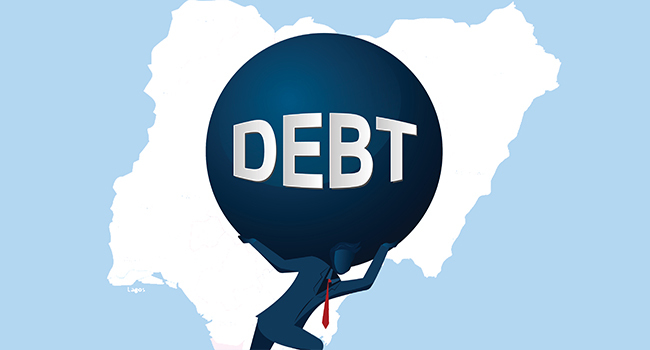
A post has been circulating claiming that Nigeria’s public debt has decreased in dollar terms since President Bola Tinubu took office in 2023. Set against the naira figures, which show a sharp rise, that dollar comparison can look like good news. But the full picture, once you use the right numbers and understand how the currency conversion actually works, is more complicated.
The proper comparison, using the Debt Management Office’s (DMO) own published figures, is this: Nigeria’s total public debt stood at $108.23 billion in December 2023. By December 2025, it had risen to $110.97 billion, using the exchange rate that prevailed at the end of that year. Using today’s exchange rate against the most recent naira debt stock, the figure comes to about $116.7 billion.
So in dollar terms, Nigeria’s total public debt has grown, just far less dramatically than the naira figures alone suggest.
But dollar conversion is not the same thing as the real economic burden of the debt. A large share of Nigeria’s debt is domestic and denominated in naira. When the naira depreciates, converting that domestic debt into dollars makes it look smaller in dollar terms, even though the government still has to repay the full naira principal and interest, in naira, regardless of what the exchange rate does.
How the Naira and Dollar Figures Diverged
According to DMO data, Nigeria’s total public debt stood at N97.34 trillion ($108.23 billion) in December 2023, using an exchange rate of roughly N899 to the dollar at the time.
By December 2024, the debt stock had risen to N144.67 trillion, but because the naira had depreciated sharply over the year, this converted to just $94.23 billion, a figure that was actually lower than the December 2023 dollar total despite the naira amount rising by nearly half.
By December 2025, the debt stock reached N159.28 trillion, which the DMO converted to $110.97 billion using its official exchange rate of N1,435.26 to the dollar at the time. By March 2026, the debt stock had grown only marginally in naira terms, to N159.35 trillion, but because the naira had strengthened to about N1,386 to the dollar by then, the dollar figure rose more sharply, to $114.95 billion. At today’s official exchange rate of roughly N1,362.55 to the dollar, that same naira debt stock converts to approximately $116.9 billion, close to the $116.7 billion figure commonly cited using slightly different rate sources.
This pattern shows how much the dollar figure depends on which exchange rate is used and when, rather than purely on how much new borrowing has taken place.
Why the Naira Side of the Ledger Still Matters
Domestic debt, borrowed and repayable in naira, makes up the majority of Nigeria’s total public debt. As of December 2025, it accounted for 53.27% of the total, up from 51.41% a year earlier.
This matters because Nigeria’s government revenue is collected almost entirely in naira. A weaker naira does not reduce what the government owes on domestic debt or ease its ability to repay it; it only shrinks the dollar figure used for international comparison. Meanwhile, the naira cost of servicing that debt, salaries, interest payments, and everything else funded from the same naira revenue, does not get any cheaper.
The scale of that repayment burden is significant regardless of which currency it’s measured in. The International Monetary Fund (IMF) estimated that interest payments alone will consume 53.7% of the Federal Government’s revenue in 2026, up from 53.2% in 2025 and 40.8% in 2024. President Tinubu himself said in May 2026 that Nigeria would spend $11.6 billion on debt servicing that year, a sharp increase from the $5.21 billion spent on external debt servicing in 2025.
On the other hand, Nigeria’s debt-to-GDP ratio, a measure of debt relative to the size of the economy, has fallen. The IMF projected it at 32.3% in 2026, down from 35.5% in 2025, and separate CEIC data put it at 35.9% as of December 2025, down from a high of 39.5% in September 2024. The IMF’s Nigeria representative, Christian Ebeke, said in June 2026 that the country’s debt remains sustainable and the risk of debt distress is moderate, even as he flagged the high interest-to-revenue ratio as the more pressing concern.
What This Means for How the Debt Story Gets Told
Currency choice shapes the narrative. Whether Nigeria’s debt appears to be “rising sharply” or “barely moving” depends heavily on whether naira or dollar figures are used, and which exchange rate is applied at which point in time.
A weaker naira can flatter dollar figures without helping the country. A currency depreciation can shrink a naira debt’s dollar equivalent, but it does nothing to reduce the government’s actual repayment obligations.
Debt-to-GDP and debt-servicing figures tell different stories. Nigeria’s debt-to-GDP ratio has genuinely improved, but the share of government revenue going toward interest payments has gotten worse over the same period, showing that overall debt sustainability and near-term fiscal pressure are two separate questions.
Public debt conversations often collapse these distinctions. Political messaging, on both sides, tends to pick whichever single figure best supports its argument, rather than presenting the full set of naira, dollar, GDP-ratio, and debt-servicing numbers together.
Published by Chuks Nwachuku