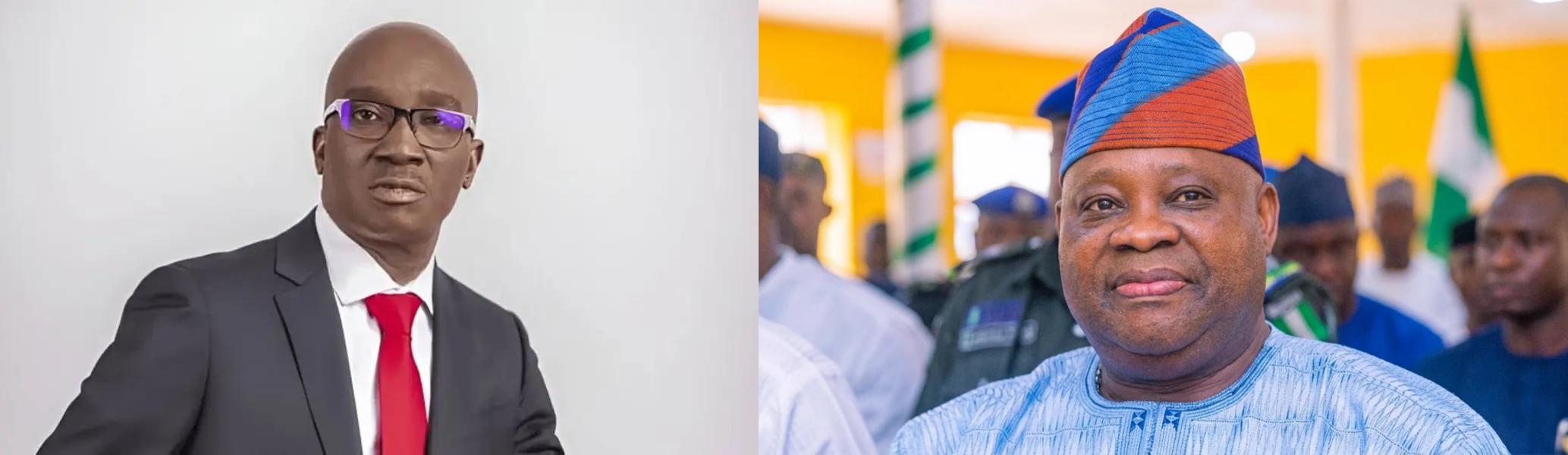
Edo State Governor, Monday Okpebholo, has mocked Osun State Governor, Ademola Adeleke, over his well-known love for dancing, at a campaign rally ahead of the Osun governorship election.
What Okpebholo said
Speaking on Thursday, August 6, 2026, at an All Progressives Congress (APC) rally in Osun State, Okpebholo repeatedly poked fun at Adeleke’s dancing, suggesting it showed he was not serious about governing. He said Adeleke dances before signing documents and before eating breakfast. He also joked about Osun’s bad roads, saying his car’s tyre was “shaking” on the way into the state, and asked whether it was the road or the governor doing the dancing.
The Edo governor was speaking in support of the APC’s governorship candidate, Bola Oyebamiji, popularly called “Ambo.” Kogi State Governor, Ahmed Usman Ododo, was also at the rally. Okpebholo further claimed Adeleke rarely shows up for meetings of APC state governors in Abuja, and linked him to former Edo governor Godwin Obaseki, saying both should be voted out.
Okpebholo also told the crowd that if rival parties offer them money before the election, they should collect it — but still vote APC.
Background: a governor known for dancing, and a tight election
Adeleke has built a public image around dancing at events, from campaign rallies to commissioning ceremonies, and it has become one of his defining traits both online and offline. This is not the first time political rivals have used it against him. Days earlier, Imo State Governor Hope Uzodimma made a similar joke, telling singer Davido — Adeleke’s nephew — to officially “sign” his uncle as a dancer in his music band instead of governor.
The mockery comes just over a week before Osun State votes on August 15, 2026, to decide whether Adeleke gets a second term or hands over to the APC’s Oyebamiji. The contest has already turned heated. Adeleke has accused the APC of being behind killings and attacks on his supporters and has appealed to President Bola Tinubu to prevent rigging. The APC, in turn, has dismissed these claims as signs that Adeleke fears he will lose.
Why this kind of politics happens — and what it does to voters
Personal mockery is a common campaign tool in Nigerian politics because it is easy to spread, easy to remember, and often gets more attention than policy talk. A joke about dancing travels faster on social media than a manifesto.
But this style of campaigning has real effects, both in Osun and for Nigeria as a whole:
It can distract from real issues. While governors trade jokes about dancing, voters may hear less about roads, jobs, healthcare, or security — the things that actually affect daily life in Osun.
It can deepen political division. When rallies focus on insults rather than records, supporters on each side may become more loyal to personalities than to policies, making it harder to hold any winner accountable afterward.
It shapes Nigeria’s global image. International observers and investors watching Nigerian elections often use campaign tone as one signal of political maturity. A campaign season dominated by insults, rather than debate on development, can reinforce doubts about the seriousness of governance conversations in the country.
Telling voters to take money from rivals, as Okpebholo did, normalises vote-buying culture, even when framed as a joke, and can undermine trust in the fairness of the process itself.
What could change this pattern
Stronger civic pressure for issue-based campaigns. Voters and civil society groups can demand that candidates and their allies focus rally speeches on development plans rather than personal jabs.
Media scrutiny of substance, not just soundbites. News outlets covering rallies can pair viral quotes with fact-checks of each candidate’s actual record in office.
Electoral body guidance on rally conduct. The Independent National Electoral Commission (INEC) and party leaderships could do more to discourage remarks that encourage voters to accept money from opponents, since this touches directly on election integrity.
This is politics as entertainment, and it works — for now
I think what stands out here is not the insult itself, but how normal this kind of exchange has become in Nigerian campaigns. Adeleke’s dancing is real and well documented, so the joke lands easily with a crowd. But real leadership contests should be won on delivery, not on who tells the funniest joke about the other. With Osun voting in just over a week, I hope both sides spend more of their remaining time telling voters what they will actually do in office — because that is the part of the story that will still matter long after the laughter from this rally fades.
Published by Ejoh Caleb