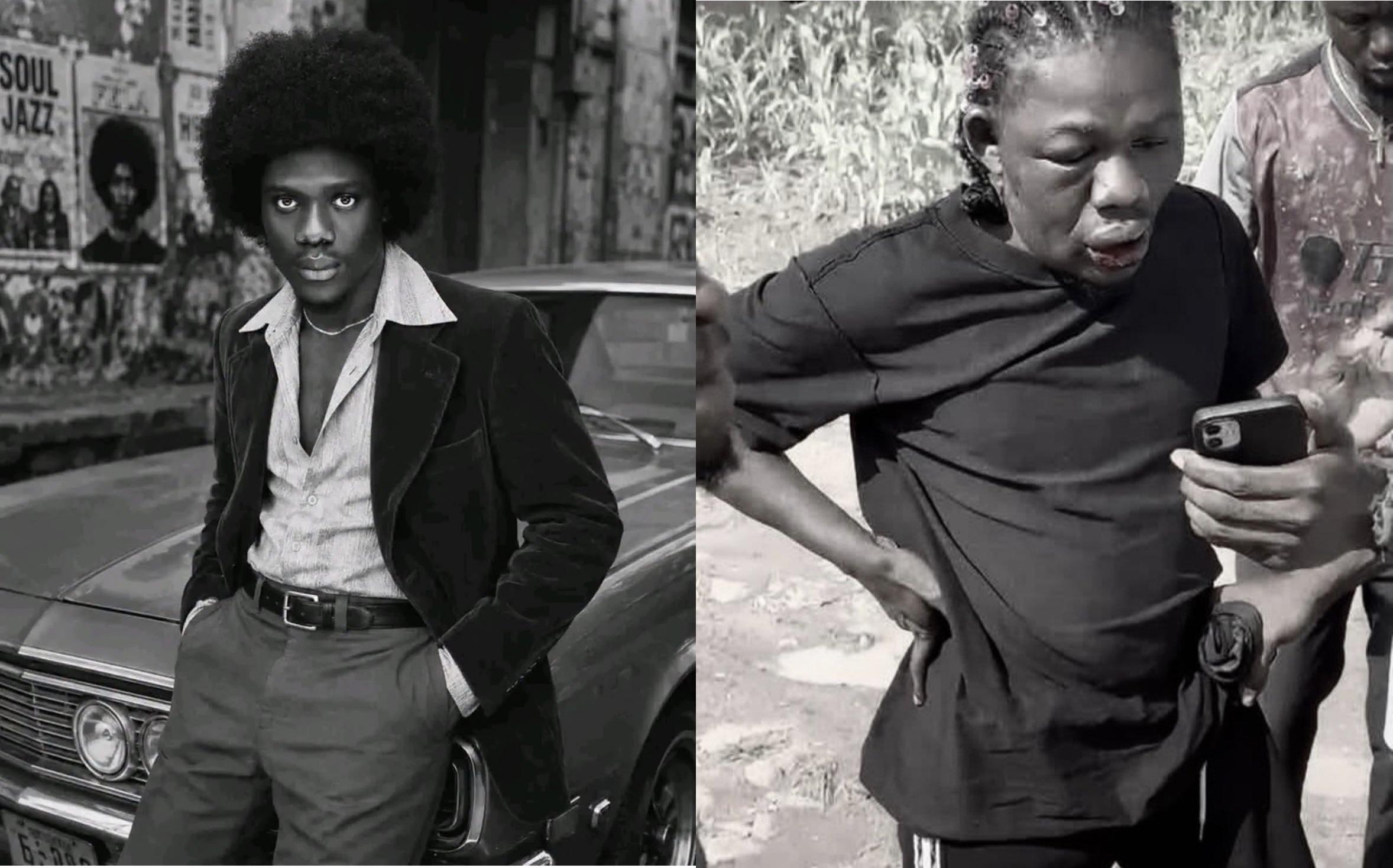
Family, friends, and members of the entertainment industry are demanding justice following the death of Ibrahim Pilasar Mbaya, a 25-year-old University of Jos graduate and model known as “Ibee,” who was allegedly tortured to death over accusations that he stole an iPhone.
According to police and multiple reports, the incident happened on Sunday, July 26, 2026, after Mbaya attended a social event on campus and decided to spend the night at a friend’s off-campus apartment in the Ring Road area of Jos, Plateau State, rather than travel home to Rayfield.
The following morning, his friend allegedly told him that an iPhone 12 had gone missing and accused him of taking it, reasoning that the two of them were the only people in the room. Rather than reporting the matter to the police, the suspects allegedly subjected Mbaya to hours of severe assault.
Police spokesperson SP Alfred Alabo said the Plateau State Police Command received a report at about 11:20 p.m. on July 26 from a “Good Samaritan” that some youths had brought an unconscious man to the Jos University Teaching Hospital (JUTH) under suspicious circumstances. Officers who responded identified the victim as Mbaya, but he was confirmed dead on arrival by the doctor on duty.
Detectives have since arrested three suspects in connection with the killing: Rinji Fwanji, 25; Emmanuel Newyear, 30; and Nensemka Fwanji, 22. Newyear was reportedly identified in a viral video allegedly using a large wooden object to beat Mbaya. Investigations are ongoing, and police say efforts are underway to apprehend others allegedly linked to the incident.
The killing has sparked outrage across Plateau State and beyond, with the University of Jos Alumni Association and the National Association of Nigerian Students (NANS) condemning it as a senseless act of violence and calling for an end to jungle justice.
This is not the first time an accusation has turned into a killing
Cases of “jungle justice” — where a crowd or group of people punishes someone accused of a crime without involving the police or courts — happen often in Nigeria, usually over accusations of theft. Victims are frequently beaten, and sometimes killed, before it is established whether they were actually guilty. The outrage over Mbaya’s death echoes past cases where people accused of theft, sometimes wrongly, were attacked or killed by mobs before any investigation could take place.
Why people resort to mob “justice” instead of the police (the root causes)
Distrust of the police. Many Nigerians believe reporting a crime to the police will lead to delays, bribery demands, or no action at all, so they feel they have to “handle it” themselves.
A desire for instant punishment. Accusations, especially of theft, can trigger strong anger, and some people feel that immediate physical punishment satisfies that anger faster than waiting for a police investigation.
Weak consequences for mob violence. Because it is often hard to identify and prosecute everyone involved in a mob attack, many participants believe they will not be held responsible.
Groupthink and peer pressure. Once one person starts attacking a suspect, others often join in without stopping to question whether the accusation is even true.
How this affects individuals, and Nigeria as a country
For families like Mbaya’s, an accusation that may not even have been true has cost them a son, a friend, and a young man with a future in modelling. No missing phone, however valuable, is worth a human life, and no accusation should ever be treated as a conviction.
At the national level, cases like this damage Nigeria’s reputation for the rule of law and due process. When mob violence replaces police investigation, it signals a breakdown in public trust in the justice system, discourages foreign observers and investors who look at how a country protects its citizens, and puts every Nigerian at risk of being wrongly accused and violently punished without a fair hearing.
What can be done (possible solutions)
Rebuilding public trust in the police, through faster response times and visible accountability, so people feel confident reporting crimes instead of taking matters into their own hands.
Public education campaigns reminding communities that an accusation is not proof, and that only courts can determine guilt.
Swift prosecution of mob violence cases, sending a clear signal that participating in a mob attack carries serious consequences.
Safe, accessible reporting channels for both crime victims and witnesses to mob violence, so bystanders are encouraged to intervene or alert authorities rather than stand by.
Our thoughts
Ibrahim Mbaya did not deserve to die over a missing phone, whether he was guilty or innocent of taking it. That is the heart of the problem with jungle justice: it skips the one step — investigation — that could have told his accusers the truth before it was too late. If the suspects now in custody are found responsible, they must face the full weight of the law, not as revenge, but as a reminder that no Nigerian has the right to become judge, jury, and executioner over an accusation. Until more of us choose to call the police instead of throwing the first punch, more families will keep burying loved ones over things that could have been resolved without a single blow.
Published by Ejoh Caleb