
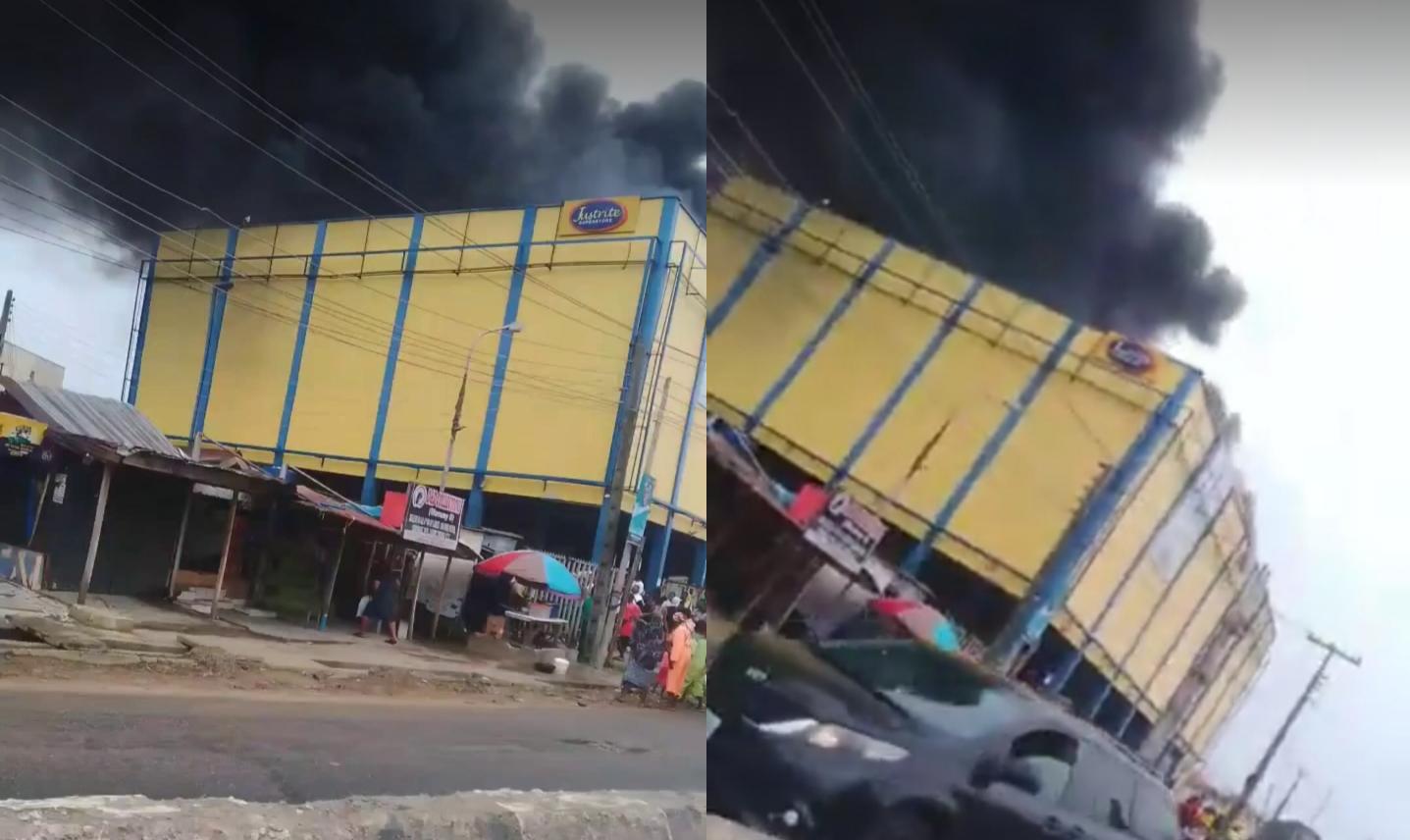
A fire broke out early Thursday morning at Justrite Superstore on Akowonjo Road, in the Egbeda-Akowonjo area of Lagos State, destroying goods worth millions of naira. The blaze started on the second floor of the building, in the section that sells electronics.
The Lagos State Fire and Rescue Service said it received an emergency call at about 8:15 a.m., and firefighters from the Abesan and Agege stations arrived at the scene by 8:28 a.m. — just 13 minutes later. The Controller-General of the service, Margaret Adeseye, said firefighters moved quickly to stop the fire from spreading to other parts of the building and to nearby structures.
The fire has since been put out, and no injuries or deaths have been reported. Recovery and clean-up work were still ongoing as of Thursday.
The exact cause of the fire has not been officially confirmed, but early reports suggest it may be linked to an alternative power source, possibly solar equipment, in the electronics section.
The Lagos State Traffic Management Authority (LASTMA) urged residents and motorists to avoid the Akowonjo and Egbeda axis while emergency teams worked at the scene.
This Is Part of a Bigger, Familiar Problem — Fires Keep Destroying Nigerian Shops
Fires like this one are, unfortunately, common in Lagos and across Nigeria.
Between January 2023 and April 2025, at least 42 market fires struck major commercial areas in 11 Nigerian states, destroying goods worth more than ₦30 billion, with Lagos among the worst-hit states.
Just two days before the Justrite fire, a fire linked to an electrical surge destroyed 17 shops at Sabo Market in Ikorodu, Lagos.
Lagos alone recorded 1,011 fire incidents between January and August 2024, making fire one of the top causes of emergencies in the state that year.
Other major past incidents include a series of fires that tore through Lagos’s Ikotun Market, and a 2024 fire at Afriland Tower in Lagos that killed seven people and raised serious questions about fire safety in the city’s commercial buildings.
Some past market and shop fires in Lagos have been far deadlier than Thursday’s incident at Justrite:
In December 2025, a fire gutted the Great Nigeria Insurance (GNI) Plaza in Balogun Market on Lagos Island. A section of the 25-storey building collapsed during the blaze, trapping traders and market assistants inside. Eight people died, including three brothers from the same family.
In March 2023, a fire at Balogun market’s five-storey shoe section killed one person and injured seven others.
Around the same time in 2023, a fire destroyed about 200 shops at the Akere Spare Parts Market in Lagos and killed a 65-year-old trader named Baba Kazeem.
Most fires at Nigerian shops and markets, like Thursday’s incident at Justrite, end without any deaths. But these past cases show that when a fire spreads quickly in a crowded commercial building, especially a multi-storey one, the human cost can be severe.
Why These Fires Keep Happening
Fire officials and researchers point to a mix of causes behind Nigeria’s recurring shop and market fires.
The most common cause is electrical faults — unsafe or illegal wiring, overloaded sockets, and power surges when electricity supply is restored after an outage. One Lagos Fire Service study found that power surges accounted for the majority of market fire cases studied.
Other causes include general carelessness, such as leaving cookers or electrical appliances unattended, poor storage of flammable goods, and overcrowded shop spaces that make it easy for a small fire to spread quickly.
Illegal structures and blocked walkways around markets and shopping areas also slow down fire trucks trying to reach a blaze, giving fires more time to spread before help arrives.
How Fires Like This Affect More Than Just One Shop
For Justrite as a business, the fire means a direct financial loss — damaged goods, a section of the store that may be closed for repairs, and disruption to daily sales.
For traders and workers in the area, incidents like this often mean lost income, sometimes with little or no compensation from the government afterward, as has happened to traders in other Lagos markets hit by fire.
For Lagos and Nigeria as a whole, the constant stream of shop and market fires adds up to billions of naira in losses every year, weakens confidence in the safety of commercial buildings, and puts pressure on emergency services that are already stretched thin across a fast-growing city. It also raises hard questions about whether Nigeria’s building and electrical safety rules are being enforced, especially in busy commercial buildings that host large crowds of shoppers every day.
What Could Help Prevent the Next Fire
Shop and mall owners should have their electrical wiring and installations regularly inspected by qualified electricians, especially in older or busy commercial buildings.
Businesses should avoid overloading power outlets and should properly maintain any backup or alternative power equipment, such as generators or solar systems.
Government agencies could enforce existing building and fire-safety codes more strictly, rather than only responding after a fire happens.
Commercial buildings should keep clear walkways and access roads so fire trucks can reach the scene quickly.
More shops and malls should invest in fire extinguishers, smoke detectors, and staff trained in basic fire response, so small fires can be put out before they spread.
Our Take
What stands out to me about this fire is not that it happened, but how familiar it feels. Nearly every month, a market or a store somewhere in Lagos catches fire, and the reasons are almost always the same: bad wiring, overloaded power, or equipment nobody properly maintained. I am glad no one was hurt at Justrite this time, and I give credit to the fire service for responding in just 13 minutes. But quick responses cannot be the only plan. If shop owners and regulators keep treating fire safety as something to worry about only after the smoke clears, this same story will keep repeating itself, and one day, luck may not be on anyone’s side.
Published by Ejoh Caleb