
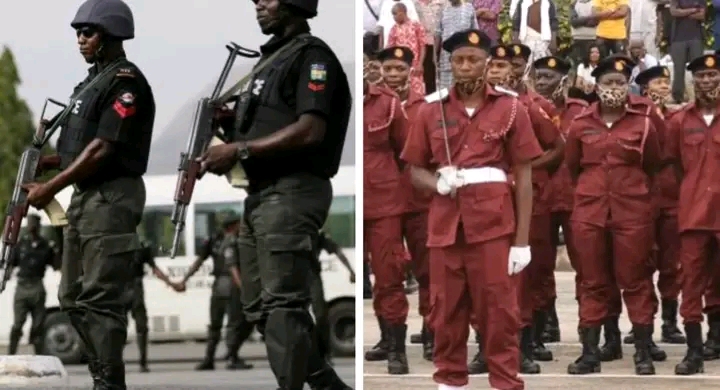
We asked for State Police, but we never bargained for such a major constitutional restructuring to be carried out in haste and so close to national elections.
Two fundamental questions must be answered.
First, if the Federal Government is transferring a significant portion of its security responsibilities to the states, will the revenue allocation formula also be reviewed to reflect these new obligations?
Second, what safeguards will prevent State Police from becoming a vehicle for legitimising armed groups? We have heard allegations of the Federal Government integrating so-called repentant terrorists into the military. We have also heard reports of state governments negotiating with armed groups and paying ransoms in exchange for temporary peace. What mechanisms will ensure that State Police do not become a means for governors to absorb such elements into official security structures?
Equally important are the questions of recruitment and training. Who will qualify to become State Police officers? What standards will govern recruitment? Who will oversee training, vetting, and accountability?
It is not difficult to imagine where the tensions could arise. Some fear that regional vigilante groups or politically connected actors could dominate recruitment in different parts of the country, raising concerns about impartiality, professionalism, and loyalty to the rule of law rather than to political interests.
We are dealing with an issue that demands extreme caution. Poorly designed reforms could deepen insecurity rather than solve it.
Any serious nation would approach a structural change of this magnitude carefully, especially one that places greater coercive power in the hands of institutions whose independence and accountability must be beyond question.
What many states require today is not necessarily another heavily armed police force, but a constitutional framework that better coordinates the security outfits they already operate. Such a framework could strengthen community policing, neighbourhood watch systems, intelligence gathering, and cooperation with the Nigeria Police Force whenever additional support is required.
We should proceed gradually rather than rush into a reform whose long-term consequences may be difficult to reverse.
Nigeria’s greatest security need is not simply more guns—it is more eyes, more ears, and more boots on the ground. Every village, forest, farm, and neighbourhood should have trained personnel connected through an effective nationwide communication and intelligence network to a professional national police capable of responding with overwhelming force whenever necessary.
Decentralising intelligence gathering and community policing is one thing; decentralising the use of lethal force is quite another.
Published by Chuks Nwachuku