
By Ejoh Caleb | Visiotalks
Published: November 24, 2026
Key Takeaways
- Osun police say they rescued a 16-day-old baby boy in Akure, Ondo State, and arrested three suspects over an alleged child trafficking syndicate.
- Police say the baby’s 18-year-old mother was deceived into believing he had died. They say she was given a fake bundle to throw into a river.
- Police say all three suspects confessed to their roles and will be charged after investigations. None has been convicted.
- Police have not said whether the baby has been reunited with his mother or placed in care.
- Several child-selling cases have reached Nigerian courts this year.
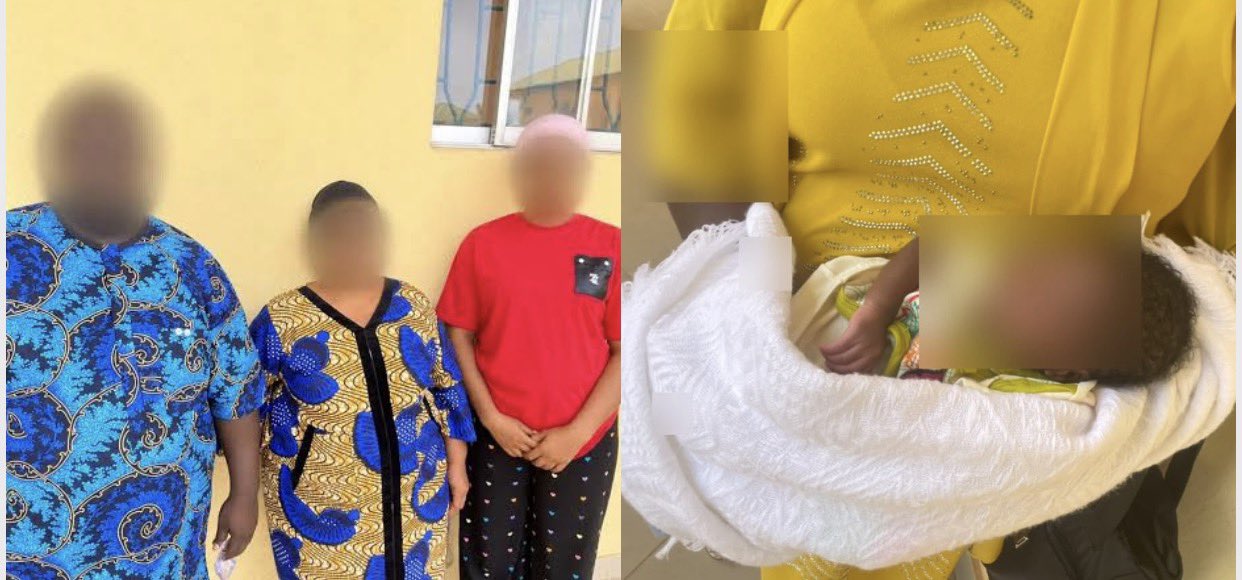
The Osun State Police Command says it has rescued a 16-day-old baby boy who was allegedly sold for ₦1.5 million, and has arrested three suspects. The baby was found in Akure, Ondo State, on November 18, 2026. Police spokesman Abiodun Ojelabi announced the case on Monday, November 23. The suspects are accused but have not been convicted.
A Newborn Recovered, and a Mother Misled About His Fate
The police say the baby’s mother, aged 18, gave birth at a private hospital in Kajola, Osogbo, on November 2. She was admitted on November 1 and discharged on November 3. The police say a 30-year-old friend, Comfort Olayinka, had contacted a woman in Abeokuta, Ogun State, before the birth. She allegedly said the young mother could not care for the baby and needed someone to take him.
The case is painful for a young mother. According to the police, she believed her baby had died. They say she was given a folded object that looked like a baby, wrapped in a bag, and told to throw it into the Lafenwa River.
The Police Account, Step by Step, and What Has Yet to Be Tested
Police say the friend and the mother travelled to Ogun State on November 5 and handed the baby to a 46-year-old man, Oladipo Olamide. He allegedly said he ran a non-governmental organisation caring for less privileged people. Police say the friend then lied to the mother that the baby had died. They received a complaint on November 13. Officers arrested Mr Olamide in Abeokuta on November 17, and he allegedly confessed to selling the baby to a woman, Bolanle Ruth.
On November 18, he led the team to Akure, where the baby was recovered and Mrs Ruth was arrested. She allegedly confessed to paying ₦1.5 million. Police say she told them Mr Olamide had promised to arrange the paperwork from a government agency, and that he never did. These are police accounts of what the suspects said. Police say all three have confessed to their roles and will be charged after investigations. Confessions to police still have to be tested in court.
Commissioner of Police Ibrahim Zungura warned that people involved in child trafficking would face the full weight of the law.
Where Reports Differ and What Police Have Not Said
Reports differ on one important point. A report by the News Agency of Nigeria said the mother connived with her friend to sell the baby. Other outlets quote the police as saying she was deceived, and she is not among the three suspects. Readers should rely on the police statement and wait for the court record. A young mother who handed over her baby under a false promise is a different matter from a seller.
Several things are not stated. Police have not said whether the baby has been reunited with his mother or placed in temporary care. They have not said whether the hospital had a role, or whether the woman in Abeokuta who was first contacted is being investigated.
Earlier Baby-Selling Cases and What the Courts Have Done
Courts have dealt with similar cases this year. On November 11, 2026, a Federal High Court in Calabar convicted a couple, aged 28 and 22, who pleaded guilty to conspiring to sell their one-year-old son. Each was sentenced to five years on the first count and two and a half years on the second, running together. In April 2026, the same court sentenced Esther Ini Udo and Eyo Stephen Udo to 15 years each, with a ₦2 million fine, for buying and selling babies.
In April 2026, NAPTIP also secured the conviction of a woman for conspiracy and the sale of a newborn in Cross River State. It said she and a nurse deceived a pregnant woman into undergoing premature delivery before selling her baby. In January 2026, troops and NAPTIP arrested seven suspects in Calabar while they negotiated the sale of a day-old baby for ₦3 million. On November 19, NAPTIP sealed an Abuja hotel over an alleged newborn sale.
An older but larger case came in October 2025. NAPTIP rescued 26 children from an orphanage in Benue State, out of over 300 suspected to have been trafficked and sold. These cases differ in detail, but they show that selling children is a real and recurring crime.
Poverty, Pregnancy Stigma and Fake Adoption Promises: How Such Schemes Find Their Targets
Reports suggest that traffickers target women who feel alone or unable to cope. A young or unmarried mother may fear shame or lack money and family support. Someone who offers to “find a good home” can seem like a helper. In this case, police say the offer came from a friend, which made it easier to trust.
Fake adoption promises also attract buyers. The police say the buyer expected official papers. A person who wants a child but does not know the legal route can be misled by someone claiming to run an NGO. Weak checks on such organisations and on handovers from hospitals leave gaps for criminals.
The National Cost: Stolen Childhoods, Broken Trust and a Growing Trade
The wider harm is large. A trafficked baby loses a family, a name and a legal identity. A mother who is told her child has died suffers a deep and false grief. When children are moved across state lines, tracing them becomes harder, as NAPTIP noted in the Benue case, where many rescued children’s identities had been changed.
NAPTIP has described child trafficking and illegal adoption as becoming a national crisis. The trade damages trust in hospitals, orphanages and charities, and it tarnishes legitimate adoption. It also costs the country its young people, who should be growing up safely at home.
Protecting a Young Mother While Holding Traffickers to Account
A teenage mother is a vulnerable person. She needs care, not blame. Police say she was lied to, and what she needs now is support, medical attention and, if the courts agree, safe contact with her child. Pressure on young women to give up their babies should be met with counselling and financial or family support, not shame.
At the same time, the law must apply to anyone who knowingly sold or bought a baby. The Child Rights Act 2003 criminalises buying, selling or hiring a child. Fair justice means looking at what each person knew and did. The suspects have the right to a fair trial. The baby’s rights come first, and any decision on his care should be made by the proper child welfare authorities.
Visiotalks Analysis: Warning Signs That an Adoption Offer Is Not Genuine
Here are five warning signs that a baby “adoption” may be a trafficking scheme.
- Money changes hands for a baby. Legal adoption is not a sale.
- There is no official paperwork or court process. Genuine adoption goes through approved government channels.
- A newborn is handed over quickly or secretly. Pressure to act fast is a red flag.
- An “NGO” cannot show proof of registration. Anyone offering to care for children should be checkable with the authorities.
- A mother is told her baby died, but nobody shows a hospital record or certificate. A death should come with proper documents and a hospital confirmation.
- A woman who is pregnant and worried about caring for her baby can speak to a hospital social worker or the state government’s welfare office before making any decision.
Frequently Asked Questions
Has anyone been convicted? No. Police say three suspects will be charged after investigations.
Is selling a baby a crime in Nigeria? Yes. The Child Rights Act 2003 and the Trafficking in Persons (Prohibition) Enforcement and Administration Act 2015 both cover it.
Was the mother part of the plot? The police statement says she was deceived. One news agency report used different wording. She is not among the three arrested.
Where is the baby now? Police have not said whether he is with his mother or in care.
How should a person adopt a child legally? Through an approved government channel, such as the state social welfare office. A private deal for money is not adoption.
Practical Steps for Hospitals, Families and the Authorities
Hospitals can check who collects a newborn and record the handover. They can also refer young or unsupported mothers to social workers before discharge. Government can register and inspect NGOs and orphanages, and can make the legal adoption route clearer and faster.
Police and NAPTIP can share information across states, since this case ran through Osun, Ogun and Ondo. Prosecutors can move cases quickly, as the Calabar court did this month. Families and friends can support a young mother instead of pushing her to give up her child. Anyone who suspects a baby is being sold can report it to the police or NAPTIP.
A Baby Is Not for Sale, and a Young Mother Deserves Support
We are glad that a 16-day-old baby has been found. We also think of his young mother, who was reportedly told her child was dead. We hope the authorities will treat her with care and tell her the truth about her baby.
We believe the law must be firm against those who sell children, and fair to everyone involved. The three suspects must have a fair trial. But we also owe girls and young women more than warnings. They need friends who can be trusted, clinics that protect newborns, and legal paths for adoption. Our country is safer for children when we offer help openly, not secretly for money.