

A family disagreement has sparked widespread debate online after a woman reportedly ended her 14-year marriage upon discovering her husband was involved with another woman during a lengthy spiritual exercise she had undertaken in hopes of conceiving a child.
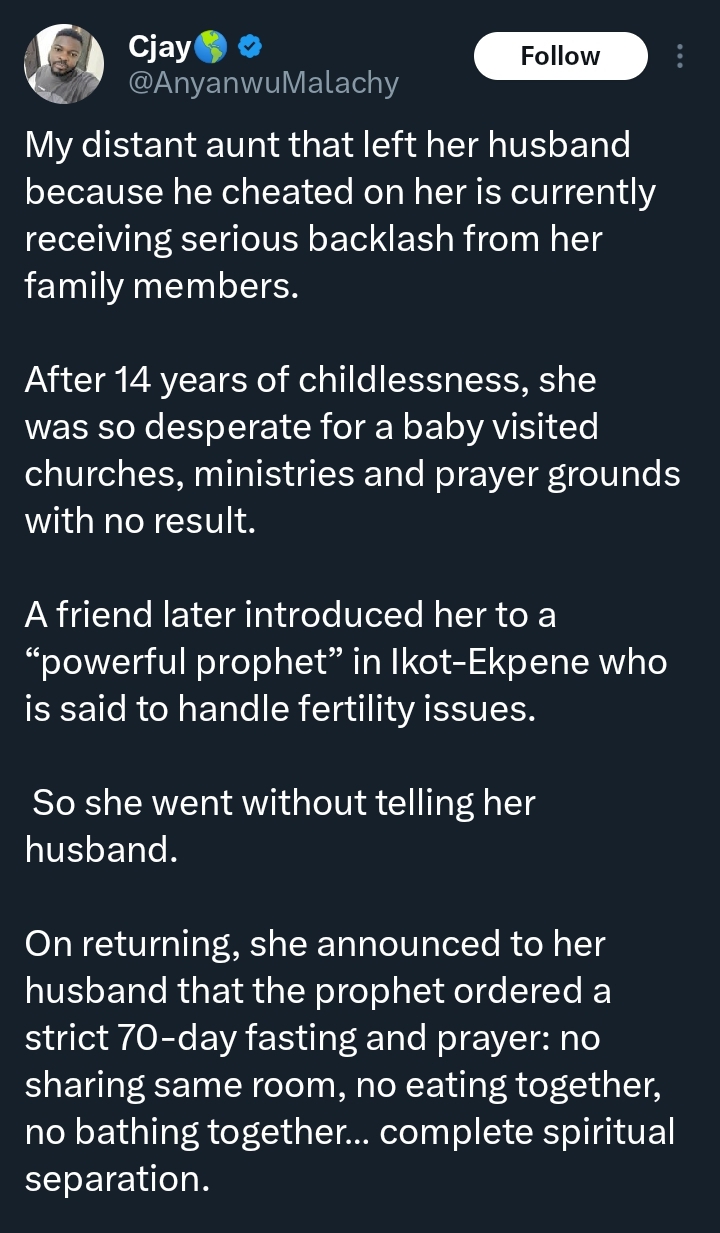
According to a story shared by an X user, the woman had endured years of emotional pressure due to infertility and was eventually introduced to a prophet who allegedly instructed her to observe a strict 70-day fast that required complete separation from her husband. The arrangement reportedly included avoiding shared meals, sleeping in separate rooms, and limiting close interactions.
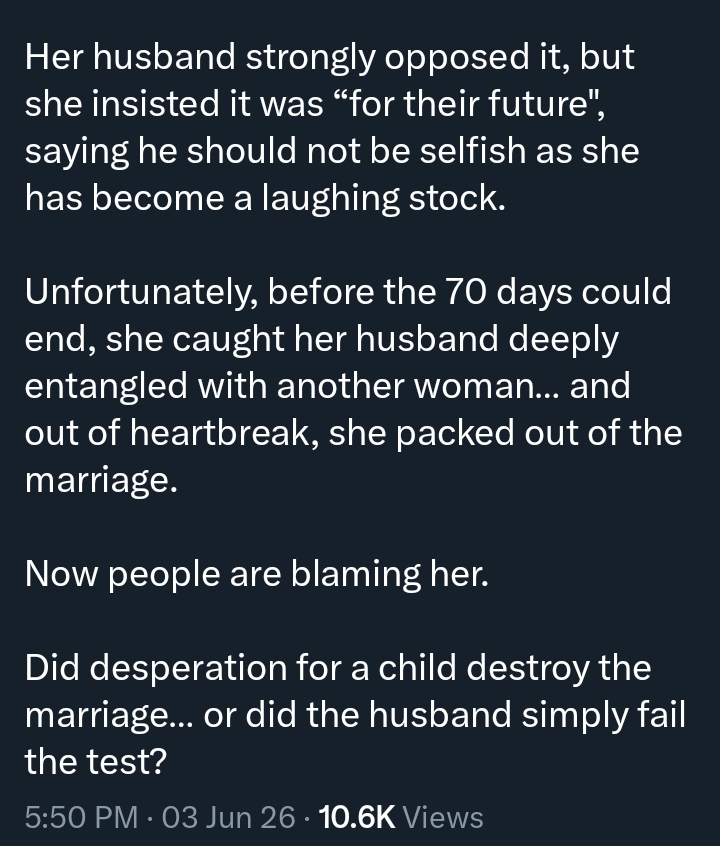
The husband was said to have objected to the conditions, questioning their necessity, but the woman allegedly insisted on following the instructions in pursuit of a breakthrough.
Before the fasting period ended, however, she reportedly learned that her husband had become involved with another woman. Feeling betrayed, she allegedly left the marriage.
The situation has divided opinions online and within the family. While some sympathise with the woman, arguing that infidelity remains a breach of trust regardless of the circumstances, others contend that making such a major spiritual decision without her husband’s full agreement placed significant strain on the relationship.
Social Media Reactions
“If the husband never agreed to those conditions, then both of them contributed to the crisis. Marriage decisions should be mutual.”
“Fourteen years without a child is a heavy burden. Instead of supporting his wife through it, he chose another woman. That’s heartbreaking.”
“The prophet won’t live with the consequences. Couples should communicate and make decisions together.”
“Cheating is still cheating. If he was unhappy with the arrangement, he should have addressed it openly rather than seeking someone else.”
“This is a lesson that spiritual guidance should never replace understanding and agreement between spouses.”
The Bigger Debate
The story has reignited discussions about the pressures faced by couples struggling with infertility, the role of religious and spiritual interventions in marriages, and the importance of mutual consent when making major decisions that affect both partners.
Many commentators argue that the core issue extends beyond the fasting period itself, touching on trust, communication, commitment, and how couples navigate difficult seasons together. Others believe the prolonged separation created avoidable tension, while some insist that no circumstance justifies infidelity within a marriage.
As the debate continues, opinions remain sharply divided over whether the woman was justified in leaving, whether the husband’s actions were understandable, or whether both parties share responsibility for the breakdown of the relationship.
marriage.
Published by Ejoh Caleb