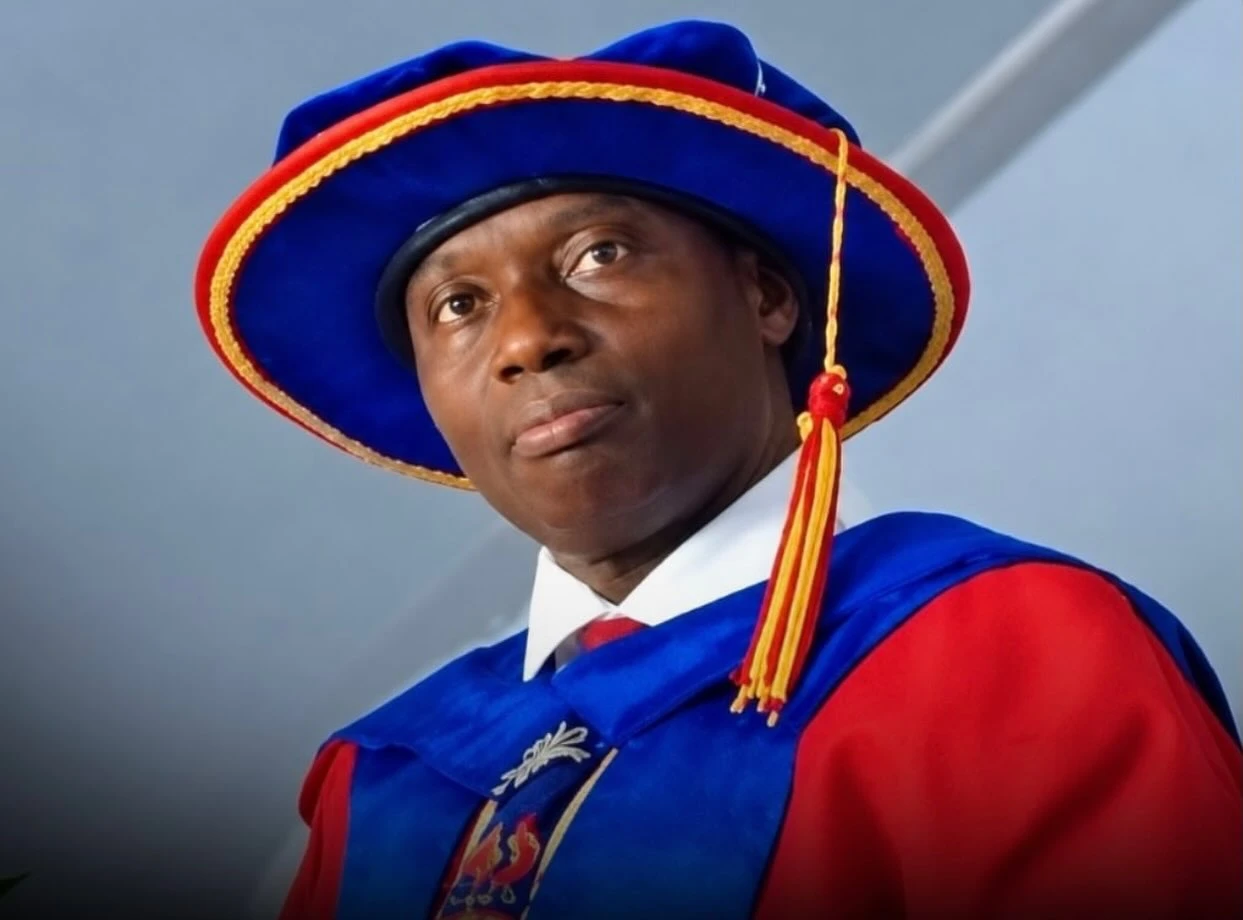
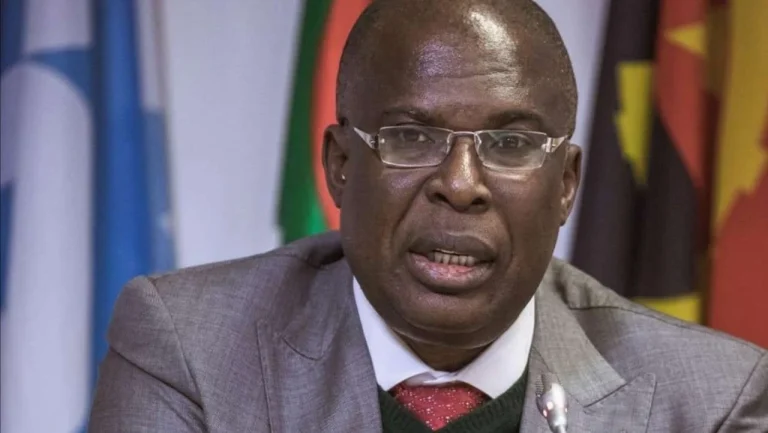
Nigeria’s Economic and Financial Crimes Commission (EFCC), the country’s top anti-corruption agency, has asked former Bayelsa State Governor Timipre Sylva to report to its office for questioning. The case involves an alleged $14.86 million fraud connected to funds meant for building a refinery.
EFCC spokesman Dele Oyewale confirmed the directive on Monday. He said Sylva, who was declared “wanted” by the commission in November 2025, should turn himself in. A person declared “wanted” means the police or the EFCC publicly ask the public for help finding someone who has refused to appear for questioning or trial.
The EFCC accuses Sylva of conspiracy and dishonest conversion of $14,859,257. The money was part of funds the Nigerian Content Development and Monitoring Board (NCDMB) — a government body that promotes local investment in the oil and gas sector — put into Atlantic International Refinery and Petrochemical Limited to build a refinery.
The timing has drawn attention because the summons came out just hours after Sylva announced his resignation from the ruling All Progressives Congress (APC). In his resignation letter, which he copied to the EFCC, Sylva accused the party of abandoning its founding values and criticised President Bola Tinubu’s government. He also claimed the EFCC had become more like a political tool of the APC than an independent state institution.
The EFCC rejected that claim. “He has been declared wanted; he should make himself available to the commission,” Oyewale said, insisting the demand is tied only to the existing investigation.
Sylva has denied any wrongdoing in the fraud case. He has not yet publicly responded to the fresh summons.
This is not the only legal trouble Sylva faces. He is separately listed as a defendant in a 13-count federal charge accusing him and six others of treason, terrorism-related offences, conspiracy, and money laundering, linked to an alleged plot to overthrow the Tinubu government. Investigators claim he financed the plot through a company called Purple Waves Limited, moving about ₦785 million through it. Sylva denies involvement and remains at large in that case, which is still before the court. In May 2026, a federal court granted the EFCC an interim forfeiture order — a court ruling that temporarily hands disputed property to the government until a case is decided — covering nine properties linked to him.
Not the First Big Name: How Nigeria’s Anti-Graft Agency Has Chased Other Ex-Governors
Sylva’s case fits a pattern that has played out many times in Nigeria. Since the EFCC was created in 2003, it has prosecuted at least 33 former governors, with only six convictions so far. Many others were investigated or invited for questioning but never formally charged.
The most recent high-profile example is former Kogi State Governor Yahaya Bello. The EFCC declared him wanted in April 2024 over an alleged ₦80.2 billion fraud, later raised to about ₦110.4 billion. EFCC operatives even stormed his Abuja residence trying to arrest him, but he was reportedly whisked away by his successor before he could be detained. The commission later asked Interpol to place him on a watch list across North Africa to stop him fleeing the country, and his trial has dragged on for years with repeated court absences.
That case shows how a “wanted” declaration against a powerful former official does not always lead to a quick arrest or trial. It also shows how political allies and legal delays can slow down accountability for years, something worth watching as the Sylva case develops.
What Drives These Cases, and Who Really Pays the Price
Cases like this usually stem from weak oversight of how public funds move through government agencies and the companies they invest in. When money meant for a specific project, like a refinery, passes through multiple hands with limited independent checks, it becomes easier for such funds to disappear or be diverted, at least according to the allegations investigators bring in these cases.
Politics often becomes tangled up with these prosecutions too. Sylva’s claim that the EFCC is acting on behalf of the APC, and the commission’s swift denial, reflects a long-running debate in Nigeria over whether anti-corruption enforcement targets people fairly or mainly those who fall out of favour with the ruling party.
The effects reach beyond the individuals involved. For Bayelsa State and the NCDMB, unresolved allegations over refinery funds mean a project meant to boost local refining capacity and create jobs may remain stalled or under a cloud of doubt. For Nigeria as a whole, cases like this shape how international investors, lenders, and oil industry partners judge the country’s ability to manage public funds honestly. Every unresolved “wanted” case against a former governor adds to a perception that accountability in Nigeria can be avoided by powerful people, which can discourage foreign investment and weaken public trust in state institutions built to fight corruption.
Steps That Could Make Nigeria’s Fight Against Corruption Work Better
Faster, more transparent prosecutions would help close the gap between naming someone a suspect and actually holding them accountable. Courts and the EFCC could set firmer timelines for arraignment once a person is declared wanted, rather than letting cases stretch across years.
Stronger tracking of how development funds move from agencies like the NCDMB into private companies could catch problems earlier, before large sums are allegedly diverted. Independent audits at each stage of a big infrastructure project, rather than only after money has already left government hands, would make it harder for funds to go missing without early warning.
Finally, clearer separation between political disputes and law enforcement decisions would help the public trust that cases like this are about the money, not about who has fallen out with the ruling party. Publishing consistent, detailed timelines of EFCC cases, from invitation to trial to verdict, would let Nigerians judge for themselves whether the process is fair.
Where We Stand on This
We think Sylva’s case is a useful test of whether Nigeria’s anti-corruption system can move faster than it did with Yahaya Bello and others before him. A “wanted” declaration should not become a symbolic label that sits unresolved for years while a former official remains free. At the same time, we recognise Sylva has not been convicted of anything, and his claim that the EFCC’s timing looks political deserves scrutiny rather than dismissal, especially given how often such accusations surface in Nigerian politics. What matters most now is whether this case, like so many before it, ends in a courtroom with real answers, or quietly fades from the headlines the way many past ones have.
Published by Ejoh Caleb