
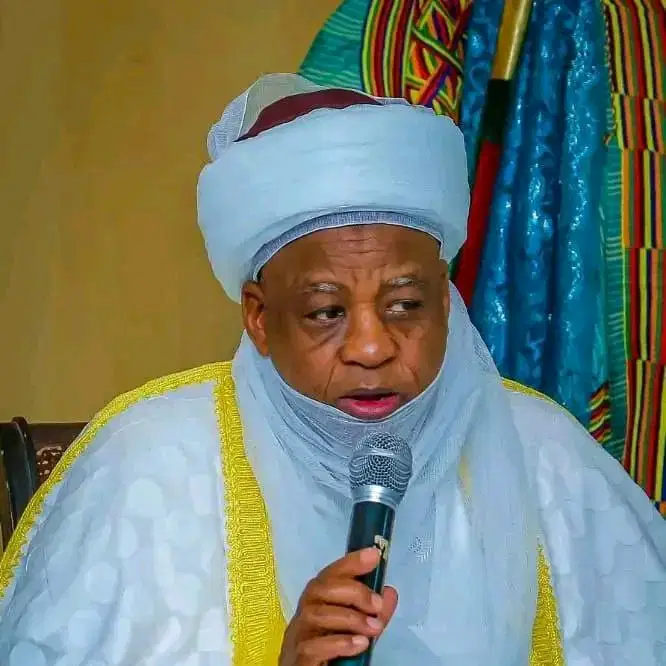
I’m raising concerns about insecurity in northern Nigeria and the role of the Sultan of Sokoto, but some important distinctions are needed to keep the discussion grounded in how the situation actually works.
1. The Sultan’s Role and Limitations
The Sultan of Sokoto is a highly respected religious and traditional leader, but he does not hold any formal security or military authority. He cannot deploy forces, arrest suspects, or directly dismantle armed groups. His influence is mainly moral and advisory—through public statements, interfaith dialogue, and engagement with government institutions.
Because of this, his impact on terrorism is indirect rather than operational.
2. Nature of Insecurity in Northern Nigeria
Violence in states like Sokoto, Zamfara, Katsina, and Borno is complex and driven by multiple factors, including insurgency groups, armed bandit networks, cattle rustling economies, and local conflicts. These groups are not uniform in ideology or composition, and their motivations go beyond religion alone, even though some insurgent factions use religious rhetoric.
Security analysts generally treat the crisis as a mix of criminality, insurgency, and resource-based conflict rather than a single religiously driven campaign.
3. Public Statements and Perception
Religious leaders in Nigeria—including both Muslim and Christian authorities—often issue statements condemning attacks, calling for peace, and urging government action. However, visibility of these statements can vary depending on media attention, timing, and which incidents are being highlighted.
This can create the perception that some voices are louder or more silent at different moments, even when condemnation is occurring consistently across the board.
4. Comparing Leadership Responses
Comparisons between different religious figures can be misleading because their roles and audiences differ. Some leaders speak primarily as community advocates, while others operate in broader national reconciliation roles where messaging is often more restrained to avoid escalating tensions.
5. Ethnicity, Religion, and Oversimplification
Linking violence strictly to religion or ethnicity tends to oversimplify a highly complex security landscape. Many of the victims of armed groups in northern Nigeria are Muslims themselves, and conflicts often cut across communities in ways that are not strictly religious in nature.
Conclusion
The core issue in Nigeria’s insecurity is multifaceted and cannot be reduced to a single religious or ethnic explanation. While questions about leadership response are valid in public discourse, understanding the structural limits of religious authorities and the complexity of armed violence is essential for a balanced view.
Published by Chuks Nwachuku