
A post on X by @justmercy__ has gone viral after she shared a personal workplace experience involving an unexpected period incident and how her manager responded.
She wrote:
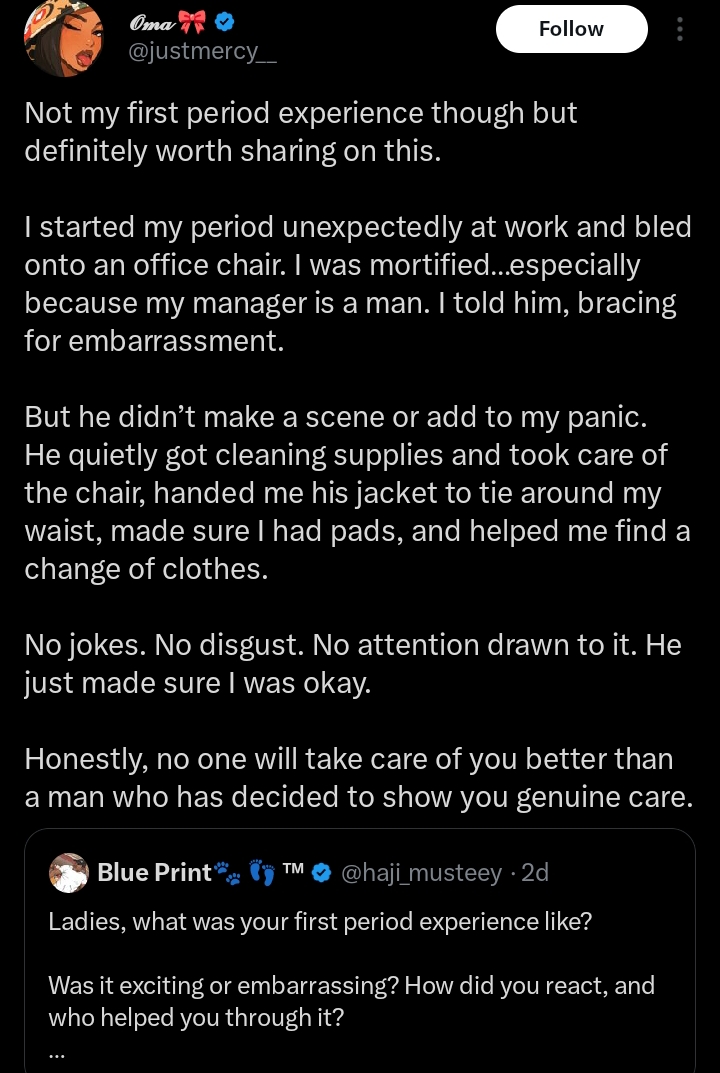
“Not my first period experience though but definitely worth sharing on this.
I started my period unexpectedly at work and bled onto an office chair. I was mortified… especially because my manager is a man. I was honestly panicking and didn’t know how to even tell him.
I eventually gathered courage and told him, expecting embarrassment or awkwardness.
But he didn’t react the way I feared. He stayed calm, didn’t raise his voice or make it awkward. He quietly got cleaning supplies, helped sort the situation without drawing attention, and even gave me his jacket to tie around my waist so I could move around comfortably.
He also made sure I had sanitary pads and helped me find a way to change without stress.
No jokes. No shame. No unnecessary attention. He just handled it like it was normal and made sure I was okay first.”
She ended her post with a personal reflection:
“Honestly, that kind of calm care in a stressful moment really stayed with me.”
🔁 Reactions Online
The post sparked mixed reactions across X:
👍 Supportive users said:
“This is what basic human decency looks like. Gender aside, that’s a good manager.”
“Situations like this show why emotional intelligence matters in leadership.”
“He handled it professionally and respectfully. More people should be like this.”
🤔 Others added nuance:
“This isn’t about ‘men taking better care’ — it’s about being a decent human being.”
“Let’s not turn kindness into gender comparisons. Anyone can be supportive in that situation.”
⚠️ Critical responses also emerged:
“Care and empathy are not gender-specific. Good people exist across genders.”
“We shouldn’t generalize one experience into ‘men are better caretakers’ narratives.”
The discussion eventually shifted from the incident itself to broader conversations about workplace empathy, professionalism, and how people respond to sensitive or embarrassing situations regardless of gender.
Published by Ejoh Caleb