By Ejoh Caleb | Visiotalks
Published: November 24, 2026
Key Takeaways
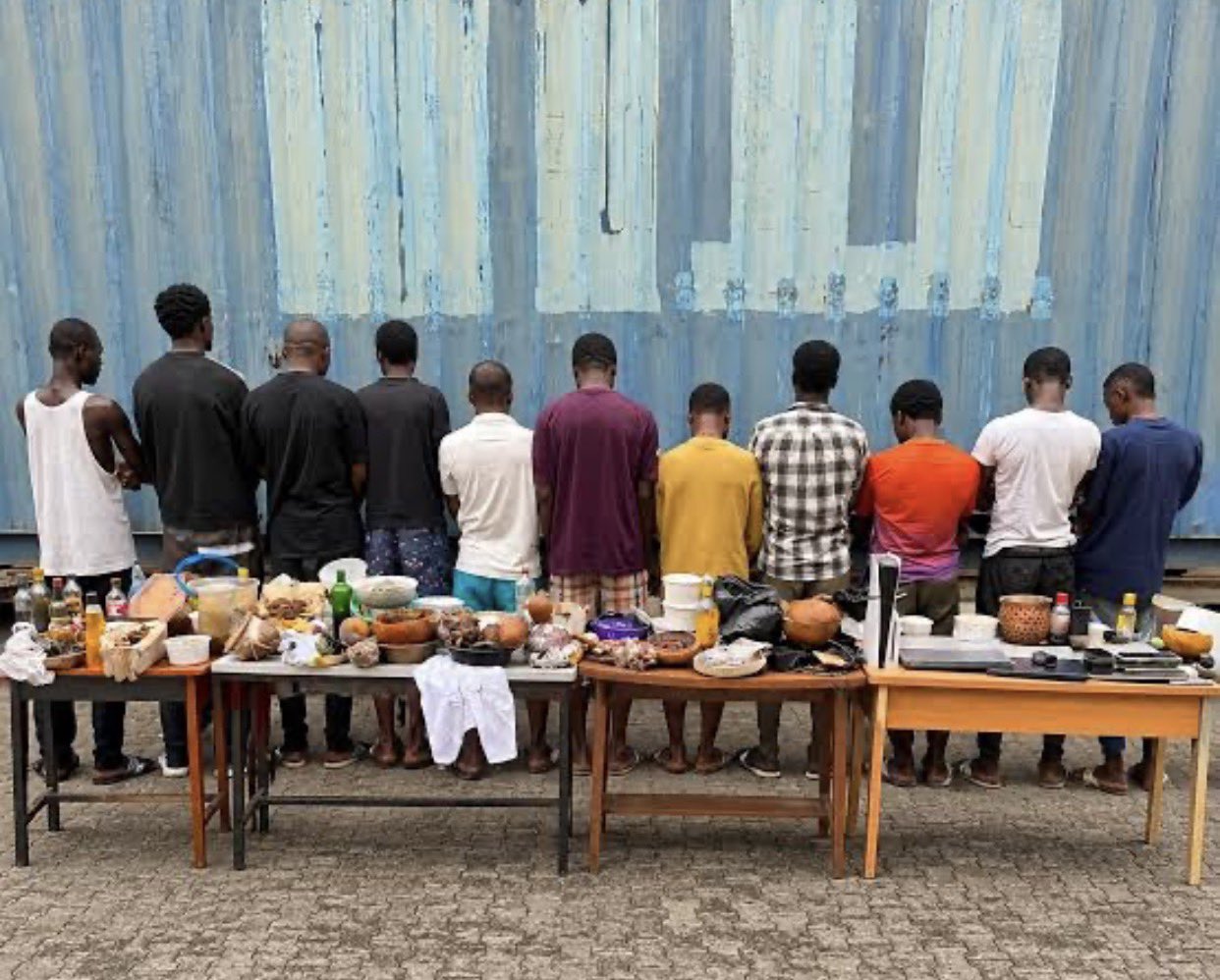
- The Police Special Fraud Unit (PSFU) says it arrested 11 men aged 23 to 32 at a house in Oloke-Meji, Onikolobo, Abeokuta, Ogun State.
- Police say they recovered phones, laptops, a 2014 Lexus RX 350, charms, blood-stained items and suspected human remains.
- Police say the suspects were remanded. The alleged leader, known as “Update”, is on the run.
- Police have not explained how the remains relate to the case, or said whether tests confirm they are human.
- The suspects have not been convicted.
The Police Special Fraud Unit (PSFU), Lagos, says it arrested 11 suspected internet fraudsters in a raid on an alleged “Yahoo academy” in Abeokuta, Ogun State. Police spokesman DSP Ovie Kenneth Ewhubare issued the statement on Monday, November 23, 2026. The suspects were arrested at House 10, Second Hill Estate, Oloke-Meji, Onikolobo, following intelligence-led investigations.
What Police Say They Found and What They Have Not Explained
Police say they recovered 11 iPhones, three Samsung phones, eight laptops and a 2014 Lexus RX 350. They also report finding charms, blood-stained fetish items and suspected human remains. The suspects were all male, aged between 23 and 32. The police said they were remanded in custody.
The statement leaves important questions open. QNC News reported that it did not explain how the remains were connected to the alleged fraud, or whether forensic tests had been carried out. Freedom Online reported that police have not said publicly whether the remains relate to any missing-person case or other offence. Until laboratory tests and investigators say more, readers should treat the items as “suspected” and not draw conclusions about how they got there.
The Alleged Recruiter Who Remains at Large and the Network Police Describe
Police say a man known as “Update”, identified as Goriola Oluwaseun Olanrewaju, rented the apartment in 2021 and recruited young men into what they call a “Hustle Kingdom”. That is a popular term for an informal training group for online fraud. He is at large. Police also say the suspects admitted using the identities and personal details of foreign nationals to defraud victims online.
PSFU Commissioner Eloho Okpoziakpo said the raid showed the value of credible public information and intelligence-led policing. He said police are also working to trace and recover proceeds of the alleged crimes. The same unit had uncovered an alleged counterfeit footwear factory in Makun, Sagamu, less than two weeks earlier. Police say investigations are continuing, and the suspects’ admissions have not been tested in court.
Earlier Raids and Ritual Cases Show the Same Troubling Mix
Police have made similar claims before, though each case is different. In March 2021, the EFCC announced the arrest of 37 internet fraud suspects in Ado-Ekiti, and said the place was a hideout for fraudsters. In June 2022, Ogun police arrested two young men called “yahoo-yahoo” boys over the killing of a 40-year-old man for a money ritual, according to the police spokesman at the time.
In July 2026, Osun police paraded a herbalist who allegedly killed a Ghanaian friend. He told reporters he used to make ritual preparations for “Yahoo boys”, though he claimed they were the ones who brought human parts. In August 2026, Oyo police arrested 10 suspects over alleged possession and use of suspected fresh human parts for wealth rituals. A ThisDay commentary noted that there is no evidence that such rituals bring money or success.
These cases are separate, and none proves what happened at this house. They show why police and the public take any report of human remains seriously.
Easy Money Promises, Peer Influence and Belief in Rituals: What Draws Young People In
Many young Nigerians face unemployment and pressure to earn quickly. A group that promises fast cash and a “kingdom” of friends can look attractive, especially when a recruiter shows off cars and phones. The AP and FRONTLINE investigation published last week said some young Nigerians drift into scamming because the practice has become normal in their communities, and some people blame a lack of economic opportunity.
Beliefs about money rituals also play a part. Some people think charms or sacrifices bring wealth. Commentators say there is no evidence for this, and that the belief can lead to harm. We do not know what the items found in this house were used for, or whether the suspects believed in them.
The Cost to Victims Abroad, Young Nigerians and the Country’s Reputation
The harm reaches many people. Victims abroad can lose money, and identity theft can leave lasting damage. The AP and FRONTLINE report described a Canadian teenager blackmailed by a Nigerian scammer. Cases like these can lead to arrests, extraditions and more suspicion of honest Nigerians abroad.
The cost at home is also high. Young men who join such groups risk prison and may be lost to the country’s productive economy. Families can be torn apart, and communities may live in fear if reports of ritual items prove true. A country that wants to be known for talent and technology suffers when the world focuses on fraud.
Fighting Crime Without Profiling Every Young Person With a Phone
Strong enforcement has clear benefits. Raids like this can break up organised groups, protect victims and recover stolen money. The police say they are tracing proceeds, and that can deter others.
There are risks too. Many young Nigerians own laptops, phones or cars through honest work, such as freelancing, trading or software jobs. If police treat every young person with a gadget as a suspect, honest people can suffer. Suspects here have the right to fair treatment and a fair trial, and the police should keep to the law. Prevention matters too. Education, jobs and clear career paths can reduce the pull of quick-money groups. Both approaches are needed.
Visiotalks Analysis: Five Questions to Ask Before Linking Ritual Items to a Crime
When police report charms, blood-stained items or “suspected human remains”, we suggest five questions.
- Have tests confirmed what the items are? “Suspected” means not yet confirmed.
- Can the remains be identified? A confirmed identity is the first step to understanding a death, if any.
- Is there a link to a missing person or a death? Police have not said.
- Who is responsible for each item? Items in a shared house do not prove that each person had a role.
- What will the court decide? Remand is not a verdict.
These questions are also a guide for readers. They help separate the facts the police have confirmed from the details that remain open.
Frequently Asked Questions
Are the remains confirmed to be human? Police say “suspected”. We found no report of confirmation.
Has anyone been convicted? No. The 11 men were remanded in custody. The alleged leader is still at large.
What is a “Hustle Kingdom”? Police use the term for an organised internet fraud group that recruits and trains young people.
Did the suspects confess? Police say they admitted using the identities of foreign nationals to defraud people. These admissions have not been tested in court.
Is owning a laptop or an iPhone a crime? No. Police recovered these items as alleged tools of the fraud. Owning devices is not evidence of wrongdoing.
Practical Steps for Police, Parents and Communities
Police can complete forensic tests and say publicly what the remains are, and whether they link to any missing person. They can also share court details and protect the rights of the accused. Prosecutors can move the cases carefully and quickly.
Parents can talk openly with young people about quick-money offers and keep an eye on sudden secrecy or unexplained wealth. Landlords can check who rents their property and report concerns to the police. Communities can create job and skills opportunities for young people, and can report disturbing items or missing persons to the police.
Real Opportunity Is the Best Answer to Quick-Money Schemes
We note the police’s work, and we also note how much remains unknown. The suspects are accused, the remains are only “suspected”, and the alleged recruiter is still free.
We believe the right path is careful investigation and a fair trial. Young Nigerians who commit fraud harm real people, and the law should hold them to account. But we also owe young people better choices than the promise of a “kingdom” built on deception. Our country needs jobs, skills and honest role models to lead them away from quick-money schemes. That is how we can protect both victims and the next generation.