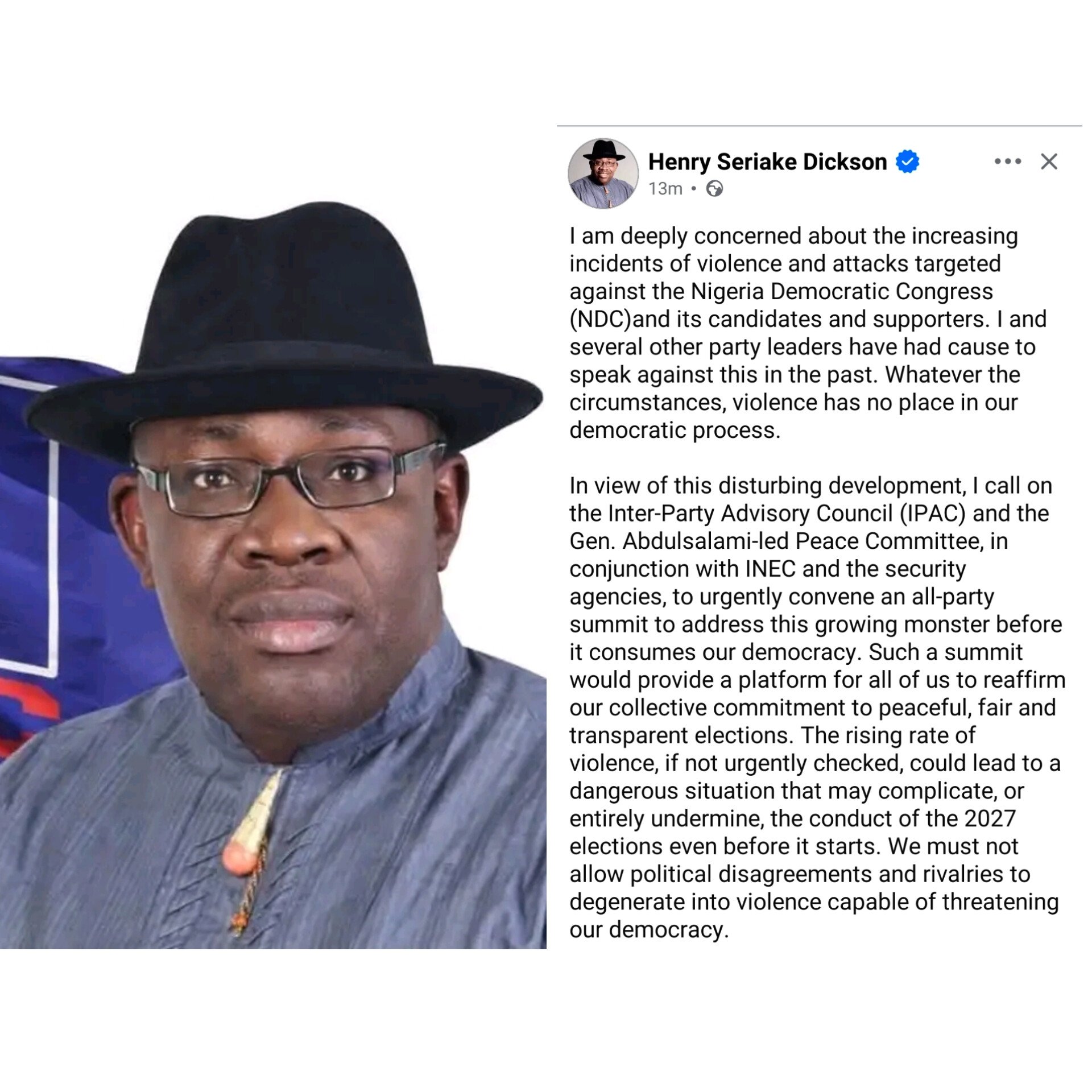
Senator Seriake Dickson, the National Leader of the Nigeria Democratic Congress (NDC), has asked for an urgent all-party summit over attacks he says are targeting his party. He wants the Inter-Party Advisory Council (IPAC), the National Peace Committee led by General Abdulsalami Abubakar, the Independent National Electoral Commission (INEC) and security agencies to convene it. In a statement signed on Sunday, November 15, 2026, he warned that unchecked violence could threaten the peaceful conduct of the 2027 general elections.
A Party Leader Asks Rivals and Referees to Sit Together
Dickson said he was deeply concerned about growing violence against the NDC, its candidates and supporters. He said he and other party leaders had spoken against it before. He said the summit would let parties and public institutions renew their promise of peaceful, credible, transparent and fair elections. He also insisted that political rivalry should not turn into violence.
The statement also dealt with party business. Dickson asked NDC candidates to identify, check and train polling agents (party representatives who watch voting and counting). The call is one party leader’s request. It is not an official finding about who is responsible for any attack.
Recent Incidents Behind the Warning, and What Each Side Says
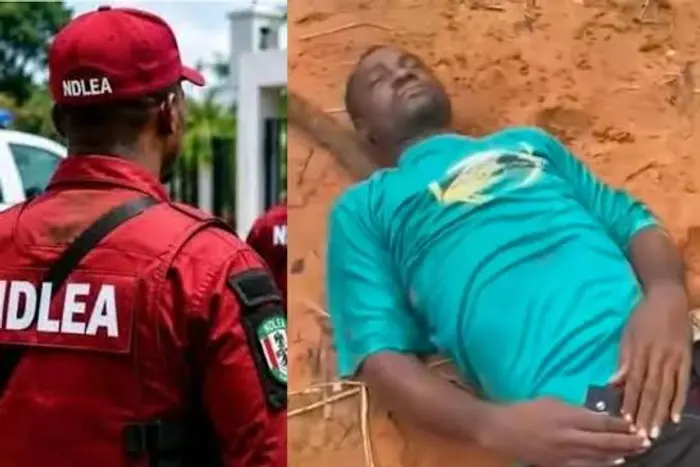
On Saturday, November 7, one person was killed and five were injured at a rally in Asaba, Delta State. The rally was organised by supporters of NDC presidential candidate Peter Obi. Police said they had earlier received intelligence about possible violence and had invited the organisers to a security meeting. The Delta police commissioner urged parties to avoid road processions and to work with police. The NDC called the attack premeditated, and it reported that campaign vehicles were destroyed.
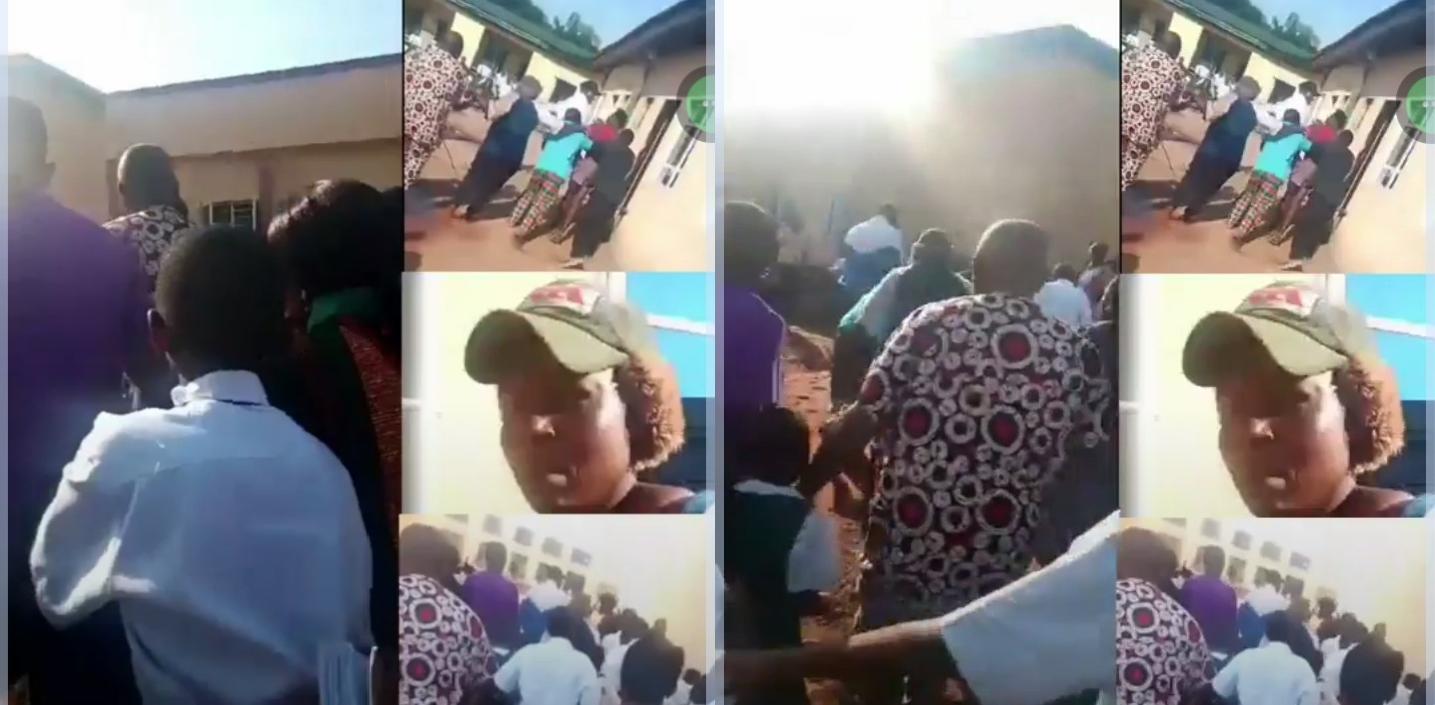
On Thursday, November 12, suspected thugs stormed an NDC town hall meeting in Oregun, Lagos. Many people were reportedly injured. AFP reported that men armed with sticks and machetes attacked supporters and journalists, and that police used tear gas. The Lagos police confirmed an investigation, and one report said a suspect had been arrested.
The NDC’s spokesman blamed the ruling All Progressives Congress (APC). The Lagos APC denied sponsoring the attack and challenged the NDC to give evidence to security agencies. The APC presidential campaign council condemned the attack and asked for arrests and prosecution. The accusation against the APC has not been independently established. Some reports, citing unnamed sources, said the attackers demanded money, and an unnamed police source said organisers did not inform security agencies. These claims are unconfirmed.
The problem is not limited to one party. Daily Trust also reported that Atiku Abubakar’s campaign convoy was ambushed in Kebbi, and that Omoyele Sowore was attacked in Ado-Ekiti. These reports have not been confirmed by officials in the sources we checked.
Past Election Seasons Show How Violence Rises as Voting Nears
Nigeria has seen this before. ACLED recorded that violence against political party supporters rose from early 2021 and reached its highest level since 2019 in the last quarter of 2022, before the 2023 vote. Death counts differ by monitor. The Nigeria Civil Society Situation Room estimated 626 killed in six months before and during the 2019 elections. The European Union observers cited 150 deaths linked to the 2019 election. The 2011 post-election riots killed more than 800 people, according to Human Rights Watch as cited by ACLED.
The 2023 elections were seen as calmer. The Kimpact Development Initiative recorded 238 incidents and 24 deaths. Leadership reported at least 39 deaths, so counts depend on who is counting. Before that vote, the National Peace Committee had candidates sign a peace accord on September 29, 2022. General Abdulsalami later warned them to stop insulting each other, saying the verbal war was heating the polity. A peace accord helps, but it does not settle everything.
How Rivalry, Thuggery and Weak Enforcement Feed Political Violence
AFP noted that violence in Nigerian elections is often carried out by “thugs” with links to rival politicians. Money, anger and the high stakes of winning office can push some people to hire or tolerate such groups. Campaign rallies and processions are easy targets because crowds gather in open places.
Weak enforcement also matters. Accord Party’s Lagos chairman said police often do not act, in his view, and that party members are sometimes denied venues at the last minute. That is one party official’s opinion. But when attackers are not prosecuted, others may think violence carries little risk.
What Is at Stake for the Country: Safety, Credible Results and Public Trust
Violence hurts ordinary people first. Citizens can be injured or killed at rallies, and many may stay home on voting day. The presidential and National Assembly elections are set for January 16, 2027, and governorship and State Assembly elections for February 6. Fear in the weeks before can shape who is willing to run, campaign or vote.
The damage also reaches public trust. If people believe an election was won through fear, they may reject the outcome. That can fuel court cases, protests and further tension. A country that wants investors, strong institutions and stable governance needs elections that people believe in. This is why INEC and the security agencies are being asked to act, whatever party is hurt.
Peace Summits and Prosecutions: Weighing What Each Can and Cannot Do
Dialogue has real value. A summit can bring party leaders to the same table, set shared rules and reduce angry rhetoric. It also signals that leaders can control their followers. Accord’s chairman and the APC campaign council have both called for investigations, which suggests wide interest in a calmer campaign.
But dialogue has limits. Commentators questioned the value of accords after violence continued in the 2022 season, and said signatures alone are not enough. Promises must be backed by arrests, fair trials and punishment of offenders, whoever they support. Dialogue and enforcement work best together.
Steps That Can Turn Promises Into Protection
IPAC, the National Peace Committee, INEC and the police can set a date for the summit soon and publish its results. Police should investigate every reported attack fast, share updates and charge suspects where evidence supports it. All parties should publicly order their supporters to stay peaceful and should discipline anyone who breaks the rules.
Parties should notify police before rallies and agree on routes and times. Police can then provide cover. Journalists and observers should be protected too, since AFP reported that reporters were attacked in Lagos. Citizens can report incidents with facts and avoid sharing unverified claims that could inflame tension.
Peace Is a Campaign Promise Every Party Must Keep
We note Senator Dickson’s call. We also note that the NDC’s claims are its own, that the APC denies involvement, and that investigators have not yet shown who ordered any attack. What is clear is that people have been hurt at political events, and one person was reported killed.
We believe no party owns the right to safety. Every voter, candidate and journalist should be able to take part in this election without fear. A summit is a good start only if it leads to action. We hope political leaders will back words with discipline, and security agencies with fair and fast investigations. Peaceful campaigns can make our elections stronger, and our democracy depends on them.
Published by Ejoh Caleb