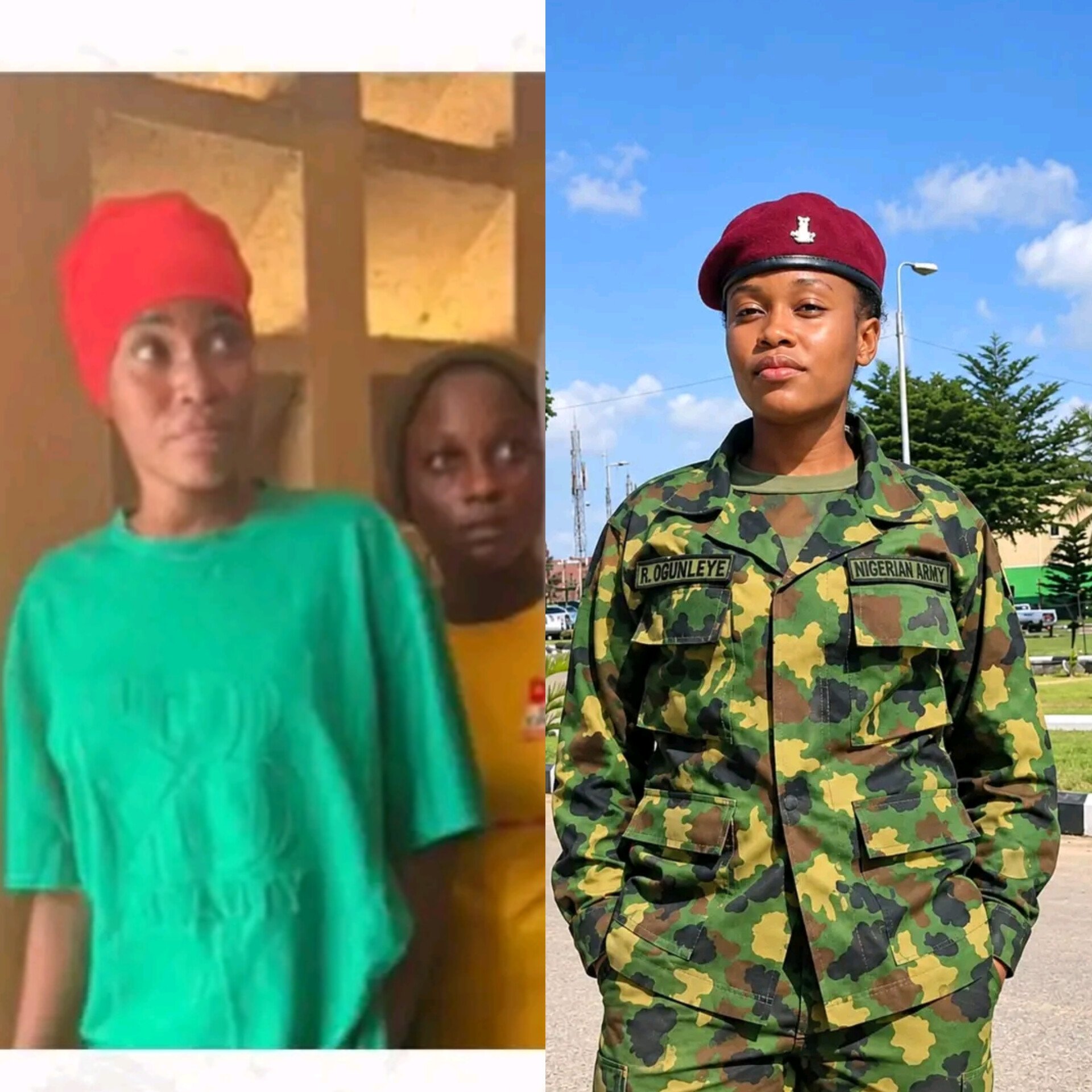
A former soldier, Ruth Ogunleye, has been convicted over TikTok videos about the head of the Nigerian Defence Academy (NDA), Major General Oluyemi Thomas Olatoye. The Federal High Court in Kaduna delivered the judgment on Tuesday, November 10, 2026. Police said the videos were posted on or about August 14, 2026. Ms Ogunleye pleaded guilty to two of five charges. The court gave her one year in prison on each count, to run together. It then suspended that term for three years and fined her ₦500,000. Many reports call this a two-year sentence, but the terms run together.
A Guilty Plea, a Suspended Sentence and Strict Conditions: The Court’s Decision Explained
The judgment came from a plea bargain (a deal where the accused admits some charges and the prosecution drops others). Police first filed five charges. Ms Ogunleye admitted two, and the other three were withdrawn. A suspended sentence (a jail term that is only served if the person breaks the rules) hangs over her for three years.
The conditions are wide. She must publish an apology in two national newspapers within 14 days. She must delete the videos within 48 hours of her release from custody. She may not speak or write about the Commandant, or contact him, directly or through others. This promise lasts for life. If she breaks the rules, she can be brought back to court and made to serve the jail term, but only after the court finds that a breach happened. The Commandant’s lawyer gave this warning, not her own lawyer.
It is important to separate what is proven from what is alleged. The court accepted her guilty plea on two counts. It did not hear a full trial. The Commandant’s lawyer argued that the plea shows her claims were untrue. That is his reading. The things she said about the Commandant were never tested in open court.
From a Harassment Complaint to a Criminal Charge: How the Dispute Unfolded
This is not the first time Ms Ogunleye has made public claims. In 2024, she accused a senior Army officer, Colonel I.B. Abdulkareem, of sexual harassment. The Army said its investigation found he did not commit the offence. It also said she was discharged on medical grounds after a medical evaluation. She disputed this and asked the Army to publish its probe report. These are competing claims, and neither side’s account was settled in court.
The new case began in August 2026. The NDA said her video came from a dispute with a staff member over a social media matter. It said she then brought the Commandant into it through false claims. The Academy asked the public not to treat unverified posts as fact. According to the prosecution, police received a complaint on September 7. She was arrested in Lagos on September 12 and was remanded on September 14. Charges were filed on October 5, and the plea deal was dated November 9.
One count was about a video captioned “Maj General Yemi Olatoye is responsible for my death.” Another, according to the charge, claimed she had private photos of the Commandant and threatened to post them. These are the prosecution’s allegations. The reports do not say which counts she admitted.
Earlier Cases That Show the Tug-of-War Between Free Speech and a Good Name
Nigeria has seen many cases like this. In December 2024, lawyer Dele Farotimi was arrested over claims in his book about senior lawyer Afe Babalola. He alleged that Mr Babalola had corrupted judges. That was an allegation, not a proven fact. The police filed cybercrime charges, and a magistrate court also heard a defamation case. Mr Babalola later forgave him after traditional rulers stepped in, and the courts struck out the charges in early 2025. No verdict was given on the truth of the claims.
Journalists have faced similar action. Daily Trust reported that the Committee to Protect Journalists counted at least 25 journalists prosecuted under the Cybercrimes Act between 2015 and 2024. It also listed Daniel Ojukwu, arrested in 2024 after an investigative report, and James Alefia, remanded in November 2025 after a cyberbullying petition. These cases ended differently from Ms Ogunleye’s. Hers ended in a conviction. Others ended without one. Yet all of them show how often criminal law is used for online speech.
The Law Behind the Charge and the Questions Over Its Wording
Ms Ogunleye was charged under Section 24 of the Cybercrimes Act. This section covers cyberstalking (using phone or internet messages to harass, threaten or spread false claims about someone). In 2022, the ECOWAS Court (a regional court of West African states) called the old section vague and repressive. It ordered Nigeria to fix it. The law was amended in 2024.
Here the wording matters. Reports say she was charged with sending false claims meant to cause “annoyance, insult, injury, hatred and ill will.” Daily Trust says the 2024 version dropped those words. It now speaks of false messages meant to cause a breakdown of law and order or a threat to life. We have not seen the charge sheet. Reports may have used the older wording by mistake. Readers should know that this question is still open.
In a separate case, the ECOWAS Court said SERAP failed to prove that the amended Section 24 violates free speech. So the amended law has not been struck down.
What Drives Online Fights Like This: Anger, Fast Sharing and Weak Complaint Channels
Several things feed these cases. Social media lets anyone reach thousands of people in minutes. A claim can spread before anyone checks it. The damage to a person’s name can be quick, even if the claim is later shown to be false. This is the harm the law is meant to stop.
Weak complaint systems also play a part. A person who feels ignored by an institution often goes online. In Ms Ogunleye’s earlier case, she said she was not heard, and the Army said it had acted properly. We cannot settle that dispute here. But when people do not trust official channels, public posts become the first choice. Mental health is another issue. The Army said she was medically vulnerable, while she disputed parts of its account. We make no judgment on her health. We only note that people in distress may post things they would not post otherwise.
The Wider National Effects: Trust, Press Freedom and Public Debate
The case matters beyond two people. The NDA is a premier military training institution, and its head is a symbol of the armed forces. False claims against its leader can hurt public trust in the military. That is a real national concern, and the NDA said so in its statement.
There is a second national effect. Rights groups say that frequent cybercrime prosecutions make people afraid to speak. Daily Trust reported that Nigeria fell ten places to 122nd in the 2025 World Press Freedom Index. It also reported 110 verified attacks on the press in 2024. If citizens fear arrest, they may stay quiet even when they have true information. That weakens accountability. It also hurts how the world sees Nigeria. A healthy country needs both protection from lies and room for honest criticism.
Weighing the Gains and Risks for People With Less Power
Ms Ogunleye is a former junior soldier. She made harassment claims against senior officers. People in her position often have less power than those they accuse, so the outcome should be judged fairly.
On the positive side, she avoided prison for now. She also avoided a long trial, and her lawyer chose to seek a deal. The Commandant gained a clear legal remedy against claims he says are false. Every person, rich or poor, deserves protection from false and harmful claims.
There are also risks. The lifetime ban on speaking about the Commandant is very strong. Other women or junior staff who face harassment may fear the same outcome if they speak out and cannot prove it. She was also held in custody before the plea. We have no evidence she was pressured. Still, plea deals made while a person is detained can be hard for the public to judge. Genuine victims may fear speaking, and that would be a real loss.
Practical Steps That Protect Reputation and Free Speech Together
First, Parliament should define key terms in Section 24 in plain words. Vague terms such as “breakdown of law and order” leave too much room for guesswork. Media Rights Agenda has made this point. Second, courts and lawyers could favour civil defamation claims and apologies over jail. The Farotimi case shows that peaceful settlement is possible.
Third, the Army and other institutions should make harassment complaint systems fair, private and trusted. They should also publish findings where they can, so that the public is not left to guess. Fourth, police and schools should teach people how to check claims before posting. Finally, people who feel wronged should use legal and institutional channels first, as the NDA urged.
Holding Two Truths Together
We believe two things can be true at once. False claims can badly harm a person’s name, and the law must give real protection. The conditions in this judgment were agreed by both sides and approved by the court. That is a fair outcome for the Commandant if the claims were false, and it spares Ms Ogunleye prison for now.
But we also worry about the wider picture. Laws on online speech must be clear and used with care. Our country needs strong institutions that listen to complaints, so people do not turn to social media first. We also need honest debate. Protecting reputation and protecting free speech are both part of building a fair Nigeria. We should work for both.
Published by Ejoh Caleb