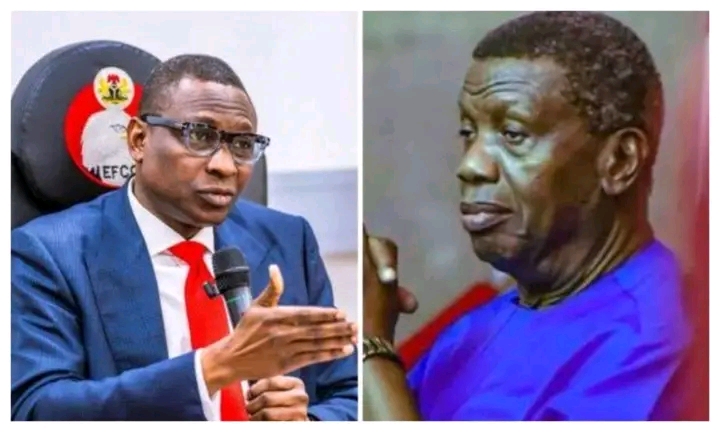
The Chairman of the Economic and Financial Crimes Commission (EFCC), Ola Olukoyede, says the General Overseer of the Redeemed Christian Church of God (RCCG), Pastor Enoch Adeboye, ordered the return of billions of naira donated to a church project after the money was traced to proceeds of crime. He spoke on Saturday, November 7, 2026.
Olukoyede addressed pastors and church workers at a meeting organised ahead of the RCCG’s annual Holy Ghost Congress, in the early hours of the day, at Redemption City, Simawa, Ogun State. He said the church was told of the findings, and Adeboye then directed that the money be returned within 24 hours.
What Olukoyede Said and What He Did Not Say (Proceeds of Crime Means Money Obtained Through Unlawful Acts)
Olukoyede said a church member donated billions of naira to an RCCG project, and the EFCC later found that the money was linked to financial crime. He did not name the donor, the project or the exact amount. One report adds that the donor was under investigation over financial transactions worth tens of billions of naira, part of which the commission traced to the church.
Reports quote Adeboye as telling a subordinate to return the money, and as saying that the church would not keep funds that were not clean and the government could decide what to do with them. At the event, Adeboye also assured the EFCC chairman that the church would not shield anyone found wanting on financial misconduct.
The account comes from the EFCC chairman. We found no separate statement from the RCCG on the amount or the donor, and no word on whether the donor will be prosecuted. The word “alleged” applies to the criminal source of the money until a court decides.
A “Saddest Day” and a Warning From Inside the Church (A Disclosure Means Making Something Known)
Olukoyede is himself a senior pastor in the RCCG. Vanguard reported that he described as one of the saddest days of his life the moment he ordered the detention of a senior RCCG pastor over alleged financial crimes at his secular workplace. That report does not say the pastor was the donor, and we do not suggest it.
He also said wealthy individuals and politicians use churches to hide proceeds of corruption, according to the Peoples Gazette. He told pastors to investigate the sources of donations before accepting them, and to keep clean financial records.
A Second Case, Told Without Names: The Church Linked to a Ponzi Scheme (A Ponzi Scheme Pays Old Investors With New Investors’ Money)
Olukoyede contrasted the RCCG’s response with another church allegedly linked to a Ponzi scheme. He said its leader first resisted the commission’s intervention and refunded a substantial amount only after the EFCC threatened legal action.
Another report adds that investors lost billions of naira in that scheme. The church and its leader were not named, so the public cannot check the claim. We did not find earlier named cases of churches returning crime-linked donations. That is a gap the EFCC could help close by sharing more details where the law allows.
Why Churches Can Become a Target for Dirty Money: Trust, Cash and Weak Checks (Due Diligence Means Careful Checking Before Accepting Something)
Churches are trusted places, and large donations are celebrated. A person who gives generously often earns respect, and few leaders feel comfortable asking where a gift came from. That makes a church a useful cover for someone who wants to appear honest.
Olukoyede also pointed to internal pressures. He cautioned church members against materialism, unhealthy competition and leadership struggles, saying such tendencies could expose religious institutions to financial misconduct. He raised concern over allegations about contracts for church projects and the buying of church positions. When projects are big and oversight is weak, the risk rises.
What Is at Stake: Trust in Religion, Victims of Fraud and the Nation’s Fight Against Corruption
If churches take illicit money without asking questions, they can end up helping criminals look respectable. Victims of fraud, whose money may have been used, lose twice, once to the crime and again if the funds are not returned. Church members may also lose trust in leaders if scandals emerge.
The nation also has a stake. Nigeria’s fight against corruption depends partly on whether money can be hidden in respected institutions. If a church returns such funds, as Olukoyede says happened here, it shows that cooperation between agencies and faith groups can work. Reports note the story came days after President Bola Tinubu ordered that illicit funds recovered by the EFCC go to the National Education Loan Fund, which gives the returned money a public use.
Credit and Questions: Weighing a Swift Refund Against What Remains Unknown
There is good reason to credit a quick refund. Returning the money within a day, if accurately described, shows the church chose integrity over the benefit of a large gift. Olukoyede said it was an example for other institutions.
Some questions remain. How did the money pass into church accounts, and did any internal checks flag it? Is the donor facing charges? How much was returned, and to whom? The EFCC has not said, and the public has only the chairman’s account and the church’s reported response. Naming more details, where the law allows, would strengthen public confidence.
Practical Steps for Churches and Donors: Checks, Records and Early Reporting
Churches can set simple rules for large donations, such as asking for the donor’s identity, recording the source and referring unusual gifts to an independent finance committee. Pastors can keep proper accounts, as the EFCC chairman urged, and share summaries with members.
If a church suspects a donation is linked to a crime, it can contact the EFCC early. Members can ask questions about how project funds are used and how contracts are awarded. Donors, for their part, can expect and accept such questions as normal practice.
Clean Hands at the Altar: Our Reading of a Rare Public Disclosure
We welcome the EFCC chairman’s openness, and we note the reported response of the RCCG’s leader. If the account is accurate, a church returned money it should not have kept, and that sets a useful example.
We also hold that the claims remain the chairman’s own. We have not seen the donor’s name, the amount or any charge, and we do not suggest guilt on anyone’s part. The unnamed Ponzi church deserves scrutiny too, but without names the public cannot judge.
We urge churches across Nigeria to question large gifts, keep honest books and report suspicious money. We urge the EFCC to say more about what happened to the money and the donor, within the law. Faith institutions hold a special kind of trust, and that trust depends on clean hands.
Published by Ejoh Caleb