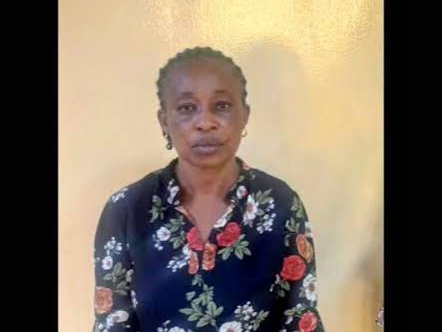

Usman Nuhu, popularly known as Ogbegbe, a dismissed Assistant Superintendent of Police (ASP), has told a Delta State High Court in Asaba that he did not kill Oghenemine Ogidi, a 28-year-old aspiring musician. Ogidi was known as “OG Million” and was shot on April 26, 2026, at Effurun Motor Park in Uvwie Local Government Area of Delta State. He gave evidence on Wednesday, October 21, during the defence phase of the trial. Nuhu is charged with murder, and four other dismissed officers are charged with negligent acts causing harm. All five pleaded not guilty.
According to a source, Nuhu appeared lean and shaky, told the court that he used a stone near the deceased to apply pressure on his body so that he would confess, and claimed he was beaten with floor tiles at the Ekpan Police Station. The court reportedly reminded him that his statements were under oath. The second defendant also told the court that police forced him to admit that he was present when the killing happened, which he denies.
What the Prosecution Says Happened and What the Court Has Heard So Far: The Case in Brief (Background to the Trial)
According to the prosecution, the incident began when Ogidi was stopped while handling a parcel said to contain a Beretta pistol with four rounds of ammunition. Reports differ on his errand. One account says he had gone to collect a waybill for a friend and insisted he knew nothing about the pistol. Another says he was trying to send the parcel to a recipient in Sapele. The court will have to decide what is proved.
Prosecution evidence presented in court said that Nuhu allegedly shot Ogidi at the motor park after his rifle failed to fire at first. It also said Nuhu later took him to the police station, where he allegedly shot him again in the right leg. The prosecution said the co-defendants told investigators that Nuhu fired without provocation and ignored interventions by the Area Commander. A viral video of the incident sparked widespread outrage. The Inspector-General of Police approved the dismissal and prosecution of the officers.
The prosecution closed its case after calling six witnesses, and all five defendants have now concluded their defence cases. Nuhu’s lawyer said they did not file a bail application for him, partly for his own safety and because the offence is murder, a capital offence. The court granted bail to the other four, each on a ₦2 million undertaking with a surety who has a National Identification Number and lives within the court’s jurisdiction. The case is adjourned to November 17 for the parties to adopt their final written addresses, after which the court will fix a date for judgment.
Police Killings Rarely Reach a Verdict, but Some Have: Past Cases and What They Show (Earlier Prosecutions of Officers)
The best-known precedent is the killing of Bolanle Raheem, a pregnant Lagos lawyer shot on Christmas Day 2022 at the Ajah underbridge. In October 2023, the Lagos High Court, led by Justice Ibironke Harrison, convicted police officer Drambi Vandi of murder and sentenced him to death by hanging. Africanews reported that death sentences in Nigeria are common, but that none had been handed to a police officer in many years, and many saw the ruling as a rare act of accountability. Some critics argued the death penalty should be abolished, and Vandi had the right to appeal. That case reached a verdict in under a year, which is unusual.
Many complaints never get that far. A 2026 report said cases of police brutality, extortion and extrajudicial killings continue despite sanctions such as dismissal. The Delta case already stands out, since the officers were dismissed, charged and tried within about six months, and the prosecution is led by the state’s Director of Public Prosecutions.
How a Roadside Arrest Can End in Death and Why Custody Is Dangerous: Possible Causes Behind the Tragedy (Causes and Risk Factors)
We cannot say what happened until the court rules, so we will not name a cause. The prosecution’s account describes a suspect who was already restrained and was shot anyway. If the court finds that to be true, it would point to a breakdown of discipline and command control. The prosecution says the co-defendants told investigators that the Area Commander’s interventions were ignored.
A second risk is pressure to get confessions. The defendants’ claims in court, that they were beaten or forced to say things, are allegations and not findings. They do raise an old and serious concern in Nigeria, which is that suspects can be pressured into statements. Nigeria has an anti-torture law, and courts weigh whether statements were freely given. Whether that happened here is for the judge to decide, and it deserves a careful look.
A third risk is easy access to heavy weapons. The incident reportedly involved an AK-47 rifle at a busy motor park, and the video shows how a lone officer’s decision could end a life in seconds.
A Family’s Loss and a Test of Public Trust in the Police and the Courts: Effects of the Case (Consequences)
The first effect is on Ogidi’s family and friends. A young man with a music career was killed in public, and they have waited months for a verdict. They also had to hear the defendants’ claims in court.
The second effect is on the defendants. If convicted, they face severe penalties, and the murder charge against Nuhu is a capital offence. They are entitled to a fair trial and to have their claims about torture examined, whatever the verdict.
The third effect is on public trust. A viral video of an alleged killing by an officer fuels fear and anger toward the police. A fair, open trial and a reasoned judgment can rebuild some trust. A flawed process, or an unexplained delay, can do the opposite.
For the country, the case is a test of whether police accountability is possible. The Raheem case showed it can be, but the ongoing reports of abuses show it is still the exception.
Making Sure Justice Is Both Fair and Real: Practical Steps for the Court, the Police and the Public (Possible Solutions)
First, the court should rule on all the evidence, including the defendants’ claims of mistreatment. If a defendant says he was beaten, the judge can ask what evidence supports it and how it affects the weight of any statement. Separately, the police authorities and the prosecutor can examine whether any officers at the Ekpan station committed torture, and publish what they find.
Second, protect fair process for everyone. That includes proper legal advice for defendants, careful handling of the evidence and prompt final addresses. The defence counsel’s concern about Nuhu’s safety in custody should also be taken seriously by the correctional authorities.
Third, prevention. Body cameras for officers on stop-and-search and arrest duty, clear rules on when firearms may be used, and a duty on commanders to stop unlawful acts would reduce the chance of a repeat. These are our suggestions, and police leaders and rights groups would need to design them.
Fourth, support for the victim’s family. The state can make sure they are informed of each step, protected from harassment and, if the court finds liability, receive proper compensation.
Fifth, transparency. The police and state governments can publish regular figures on complaints, dismissals and prosecutions of officers, so the public can see whether cases like this one are exceptions or part of a growing pattern.
Both a Life and a Fair Trial Matter: Our Closing Reflection (Accountability, Due Process and the Rule of Law)
We welcome the fact that this case has reached a courtroom, with a prosecution that has called its witnesses and a defence that has had its say. For a killing that stirred such anger, that is a meaningful step.
We also stress that the judge has not ruled. The defendants deny the charges, and their claims of being beaten in custody must be examined with care, as must the prosecution’s evidence. A just verdict depends on both.
Whatever the outcome, we urge the authorities to treat it as a lesson about restraint, discipline and the duty to protect suspects in custody. We also urge Nigerians to wait for the court’s decision. We will report on the final addresses on November 17 and on the judgment.
Published by Ejoh Caleb