
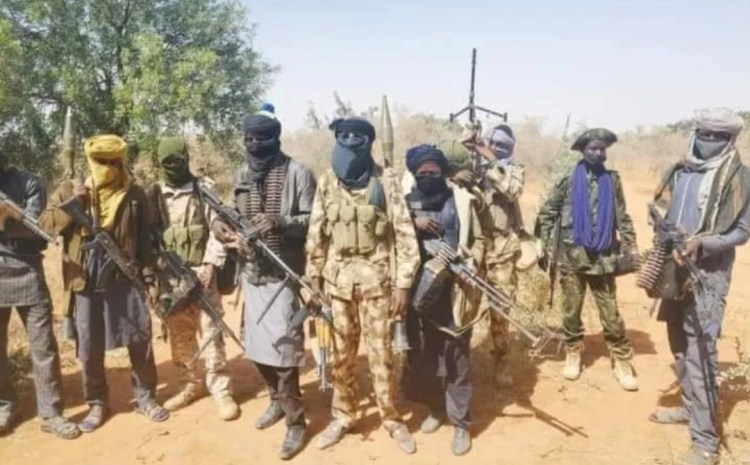
Eight residents of Awon community in Kachia Local Government Area of Southern Kaduna have reportedly died in captivity, six months after being abducted by bandits (armed gangs that raid villages for ransom). They were among 11 residents taken on April 20, 2026. One later escaped. The dead are reported to include a mother, Joy Samuel, her newborn baby and her two daughters, aged 14 and three, along with 34-year-old Yusuf Bawa, his five-year-old son and two others.
Journalist Reuben Buhari confirmed the latest deaths in a post on Thursday, October 22, saying Samuel’s three-year-old daughter, Silvia, had also died. According to the reports, a bandit leader confirmed the deaths to a woman who recently escaped, and only two of the abducted residents are said to remain alive. None of this has been officially confirmed, and the account of how each person died comes from secondhand information.
What Is Known About the Abduction and the Demands: A Timeline of Months in Captivity (Background)
Reports say the abductors initially demanded ₦300 million and 23 motorcycles, rejected the community’s offer of several million naira, and threatened to deny the captives food until the ransom was paid. Joy Samuel reportedly died on August 28 after giving birth in captivity, and her baby also died. In September, CSW reported that the demand had dropped to ₦9 million plus four motorcycles for the seven captives who were still alive. On October 12, Buhari said that Silvia had spent 168 days in captivity and that two other 14-year-old girls were also among those being held.
CSW also said the captives were taken to the same forest camp where 37 worshippers abducted from churches in nearby Ariko on Easter Sunday, April 5, had been held. [https://www.christianity daily.com/news/three-abductees-die-in-kaduna-camp-holding-37-kidnapped-worshippe.html] That claim comes from an advocacy group, and we could not verify it.
Captivity Has Killed Before, Even When Ransom Was Paid: Past Cases and What Research Shows (Earlier Cases of Deaths in Captivity)
This is not the first time victims have died while held. In April 2021, kidnappers killed three students abducted from Greenfield University in Kaduna while demanding ₦800 million. Parents later said they paid ₦150 million and eight motorcycles for the release of the surviving students. In Kogi State in early 2026, bandits released the last three residents of Olle-Bunu community only after collecting motorcycles as additional ransom, despite earlier payments.
A study cited in that report, by SBM Intelligence, found that ransom payments do not guarantee survival, with at least 32 victims killed in captivity even after payments were made. It also noted that demands keep rising in naira terms, partly because of the weaker currency, forcing communities to give up cash, vehicles and motorcycles. The scale is large. A shadow report on the Sustainable Development Goals found at least 7,825 people were abducted in 1,713 incidents between July 2025 and June 2026. An advocacy group counted 34,773 civilian kidnappings between October 2019 and September 2025. These counts use different methods, and none is an official figure.
How Poor Communities Become Targets and Why Captives Die: Causes Behind the Tragedy (Causes)
The first cause is a ransom economy. Armed groups have learned that kidnapping pays, and Awon’s demand of ₦300 million was far beyond a rural community’s means. The community offered several million naira, which the bandits rejected. When the demand is impossible to meet, captives stay in the forest.
The second cause is the conditions of captivity. Reports say the captives were threatened with denial of food, and that two victims died from illness and severe hunger. A woman who gave birth in a forest camp had no medical care. Children and newborns are especially vulnerable.
The third cause is the security gap in rural Southern Kaduna. We found no official account of what rescue efforts were made, and the community appears to have been left to negotiate with the bandits. This is a gap that needs an answer from the authorities.
Grief Without Closure and Fear That Spreads: Effects on Families, Communities and the Country (Consequences)
The first effect is on the families. Parents, spouses and relatives have lost loved ones, including young children, after months of waiting. One father was reported to have lost his wife, newborn son and later his daughters. Their grief is made worse by not knowing what exactly happened.
The second effect is on the community. Awon and nearby villages now face the fear that payment may not save a captive, and that negotiating can also fail. Farmers and traders may abandon work, and churches have been targeted as well.
The third effect is on the remaining captives. If two people are still alive, as reported, they are in urgent danger.
For the country, repeated deaths in captivity damage trust in the state’s ability to protect its citizens. They also show that the ransom economy is not slowing, and that rural communities carry the heaviest burden.
Protecting Rural Communities and Reaching the Captives Still Alive: Practical Steps for Government, Security Agencies and Communities (Possible Solutions)
First, verification and action. The Kaduna State Government, the police and the army should state publicly whether they can confirm these deaths, what they know about the remaining captives and what steps are being taken to free them. If two people are alive, a rescue effort should be a priority.
Second, protect captured women and children. We urge the authorities and humanitarian groups to consider how food and medical help can reach captives safely, and to make rescue plans that take account of the risk to children. The details are for security professionals to decide.
Third, strengthen early warning and presence. Rural communities need reliable ways to alert security forces, patrols near vulnerable villages and quick response when abductions happen. The Awon abduction happened while residents were reportedly walking in the community, and the long gap before any resolution shows the need for faster response.
Fourth, address the money. Governments can trace ransom flows, disrupt the sale of looted goods and prosecute those who finance and supply the groups. We suggest this as a direction and not a detailed plan.
Fifth, support survivors and families. Counselling, medical care and help with funeral costs should be available to the families and to the woman who escaped.
Behind Every Number Is a Child Who Should Be Alive: Our Closing Reflection (Duty to Protect and Duty to Tell the Truth)
We mourn the people of Awon who have reportedly died. A newborn, a toddler, a mother and children did not survive months in a forest camp, and no explanation can ease that loss.
We also say plainly that these deaths have not been officially confirmed, and that we are relying on a journalist’s report and an escapee’s account. That is why the authorities must speak. If the reports are true, this is among the clearest signs yet of what happens when rural communities are left to face armed groups alone.
We urge the Kaduna State Government, the police and the army to answer, to act for any captives still alive, and to explain how communities will be protected. We also urge readers not to share the photos of the victims. We will update this story when officials respond.
Published by Ejoh Caleb