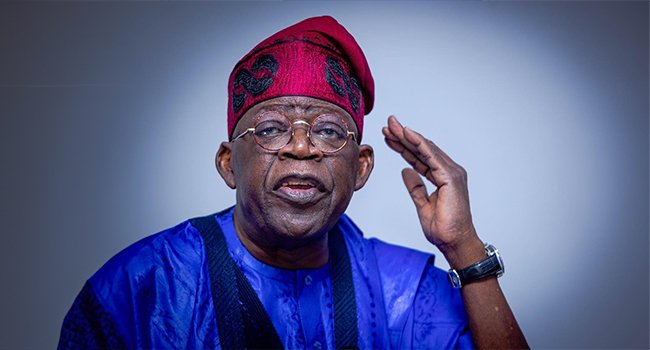
President Bola Tinubu has declared three days of national mourning for Nigerian Air Force (NAF) personnel who died in Monday’s military aircraft crash in Ondo State. He also directed that flags be flown at half-mast across the country. Half-mast means flying the flag halfway up the pole as a sign of respect for the dead. The directive was in a statement by his Special Adviser on Information and Strategy, Bayo Onanuga, on Monday, October 5.
The aircraft was an NAF ATR-42 on a routine mission from Benin City, Edo State, to Lagos. It crashed near a naval base in the Igbokoda area. According to the statement, it carried 25 passengers and seven crew members.
What the President said (the message to the Air Force and the nation)
In a condolence message to the Chief of Air Staff, Air Marshal Sunday Kelvin Aneke, and all NAF personnel, Tinubu called it “a painful moment” for the Armed Forces and the nation. He said Air Force personnel risk their lives every day to secure Nigeria. He also commended the Air Force for starting a search and rescue operation, and ordered a thorough investigation to prevent a repeat.
The statement says the Air Force will release the names of the dead after contacting their families. The reports we found do not give the exact dates of the three days, and they do not give an official number of dead.
What is known about the recovery (the situation at the crash site)
A civil aviation official said bodies were being recovered from the wreckage, and that the aircraft came down in a swamp. Reports said no survivors had been found at the time, and that military gear recovered from the site increased fears about those on board. The Ondo State governor had earlier said no survivor had been found as of Monday evening.
One question remains open. The mourning statement speaks of Air Force personnel, but it also describes 25 “passengers.” We do not know who they were, and whether they included civilians. The Air Force’s list of names should answer this.
What mourning means in practice (the meaning of the declaration)
National mourning is a period when the government sets aside days to honour the dead. In practice, it means flags at half-mast at public buildings, messages of condolence and, often, funerals with military honours. It is a public sign that the loss is shared by the whole country, and not only by the families.
The declaration also reflects how serious the government regards the crash. But it does not answer the questions many Nigerians are asking about what caused it.
How other countries marked similar losses (comparable cases)
Ghana offers a recent parallel. After the August 2025 crash of a Ghanaian Air Force helicopter, President John Mahama declared three days of national mourning. Flags were flown at half-mast, and a government delegation received the remains. The flight recorder was recovered by investigators a day after the crash. The victims’ remains were so badly damaged that burials had to wait for identification. That case shows how identification can take time, which is why families may wait before names are released.
At home, Nigeria has gone through this before. In February 2021, an NAF Beechcraft King Air crashed after reporting engine failure, killing all seven on board. In May 2021, another aircraft crashed in Kaduna, killing 11 people, including Chief of Army Staff Ibrahim Attahiru. The Accident Investigation Bureau said it helped because the NAF invited it, and that whether the NAF made the findings public was not the bureau’s decision. The ICIR has counted 14 military air crashes between 2015 and 2023, with 35 lives lost.
Grief for families and the force (effects of the loss)
For the families, the days ahead are filled with waiting for confirmation, identification and funerals. For the Air Force, the loss of so many people at once affects morale, and it also affects units that depended on them.
For the nation, the mourning is a moment of unity, but also a point where trust is tested. Many Nigerians have heard before that investigations would follow military crashes. Whether the public sees the results will shape how they judge this response.
Honouring the dead and answering the questions (possible solutions)
The Air Force should release the names of all on board as soon as families have been informed, and make clear who the passengers were. It should support the families with care, benefits and dignified burials, with military honours where appropriate.
The investigation should recover and study the flight recorders, bring in independent experts where needed, and publish a report. The government can also review the maintenance and safety record of military transport aircraft, and set clear rules for civilian passengers on military flights, if any were aboard.
Honour must be matched by answers (our view)
We join the nation in mourning those who died. Behind each name is a family who is waiting, and the President’s call to remember their sacrifice is right.
But we believe that honour is not complete without answers. Flags at half-mast and words of tribute matter, yet what families and citizens most need is the truth about what happened, and proof that earlier lessons were learned. If the Air Force and the government publish the names quickly and the findings openly, this mourning can lead to real change. If not, the same grief may return.
Published by Ejoh Caleb