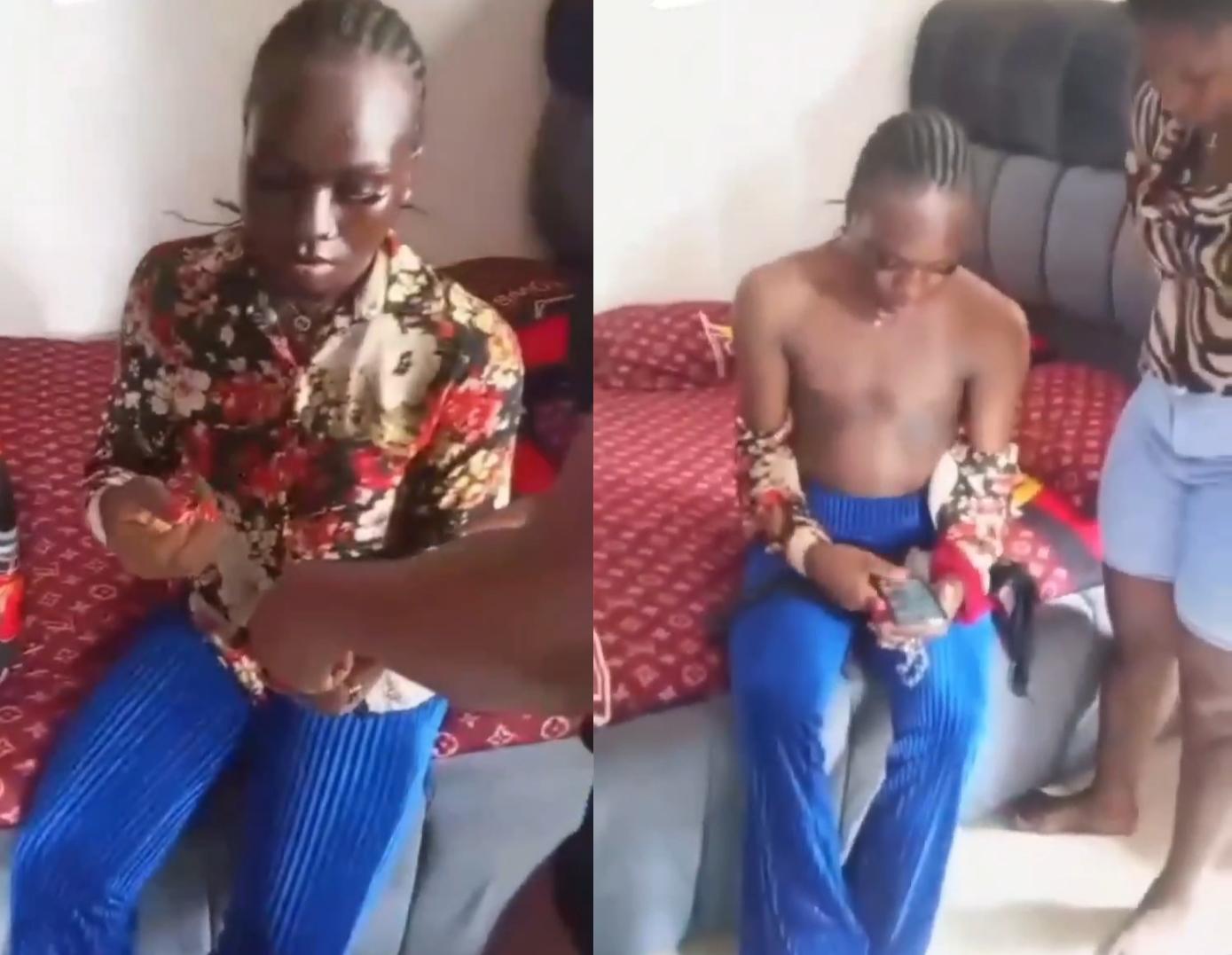

A keke (tricycle) rider, identified as Friday Ani, has reportedly died after being assaulted by a government task force in Garriki, Enugu. Residents say it happened over where he dropped a passenger near the newly built terminal. A man who called himself a keke rider told the video’s source that Friday picked up a passenger along the expressway. As they approached the terminal, the passenger paid and jumped out. The task force allegedly saw this and descended on him. The man claimed they beat Friday into a stupor and that he died that night.
A statement from the Nigeria Democratic Congress (NDC) governorship candidate in Enugu, Sir Chinyeaka Ohaa, gives more detail. It names the rider as Friday Ani, from Umuatugbuoma, Akegbe-Ugwu, in Nkanu West Local Government Area. It says he died on the night of Wednesday, September 30, after a member of the Garriki Terminal task force hit him on the head because a passenger got off his keke outside the terminal. His body was reportedly taken to St Martin’s Mortuary in Enugu.
Anger on the road (the protest in Garriki)
Keke riders reportedly staged a protest at Garriki on the morning of Thursday, October 1, over Friday’s death. The NDC statement says keke riders across Enugu have complained of heavy taxation and harassment by revenue collectors and touts. It asked Governor Peter Mbah to bring the terminal task force and other enforcers to order.
A policy that was already causing friction (moving vehicles into terminals)
The state government has been moving commercial vehicles from roadside loading points into designated terminals to reduce traffic. In mid-September, unions and transport operators said an earlier traffic disruption near the Ogbete Main Market was not a tax protest. They said it came from disagreements over how the policy was enforced and how loading spaces were shared. A union representative said some operators were not shown their assigned spaces before enforcement began. The unions supported the move to terminals but asked for dialogue on space allocation.
Complaints that have come up before (past cases of task force abuse in Enugu and beyond)
This is not the first time keke riders in Enugu have complained about task forces. In July 2023, riders held a protest over alleged harassment and extortion by tricycle task force members. They said they were made to pay ₦3,500 as a fine for loading passengers away from their parks. After a meeting, the Enugu State Government dissolved all tricycle task forces until further notice and said it would review them so that thugs could not take over the exercise. That shows protests have led to action before, but complaints have returned.
In 2024, a video showed a clash between keke riders and officials of Enugu’s Directorate of Vehicle Inspection Services (VIO), with a man lying by the roadside. The VIO director called the video fake and said the rider got up and was carried away. That case was disputed, so it should not be compared directly with this one.
Elsewhere, Pelumi Onifade, a young journalist, was arrested in Lagos in October 2020 while covering the #EndSARS protests. His body was later found in a morgue, and the circumstances of his death remain unclear. A coroner’s inquiry sought information from the Lagos task force. These cases show how hard it can be to establish what happened when people die in contact with enforcement officers, and that the answers do not always come quickly.
Why these clashes keep happening (causes)
Several problems come together. Enforcement teams are often paid or pressed to deliver results, which can lead to harassment and fines. Operators say they sometimes do not know where they are allowed to drop or load passengers. Task force members are not always trained in handling disputes without force. Complaints are also not always investigated, which may leave enforcers feeling safe from consequences.
For keke riders, a lost day is a lost income. Anger builds when they feel they are being fined or beaten for doing their work.
A life lost, a livelihood at risk (effects on families and the country)
The first effect is on the family. If Friday’s death is confirmed to have come from the beating, they have lost a breadwinner. For other riders, the case adds to fear of enforcement and may reduce trust in government.
Nationally, the case touches on the right to life, which the Constitution protects. Tricycles are a key part of urban transport across Nigeria, and many families depend on them for income. When enforcement leads to deaths and protests, it disrupts movement and trade. It also hurts the image of a state that wants its transport reforms to succeed.
Better enforcement without violence (possible solutions)
The police should open an independent investigation and release the findings. A medical report on the cause of death should be made public. If the allegations are proved, the person responsible should be prosecuted, and the family should receive support and compensation.
For the longer term, the state can set clear rules and signs showing where passengers may be dropped or loaded, and ensure every operator knows their assigned space. Task force members should wear identification and be trained to arrest or fine without force. Government can also keep regular dialogue with unions and set up a simple way for riders to report abuse.
Order must not cost a life
We believe the state has a right to organise its roads. Moving vehicles into terminals can reduce traffic and make cities work better, and many operators say they support that goal. But no policy is worth a person’s life, and dropping a passenger in the wrong spot cannot justify a beating.
We also urge caution. The facts are still emerging, and the government, police and the task force have not yet spoken. If the claims are true, the state must act firmly and openly. If they are not, it should say so with evidence. Either way, silence helps nobody. A clear, public response would calm tempers and show riders that the rule of law applies to enforcers as well.
Published by Ejoh Caleb