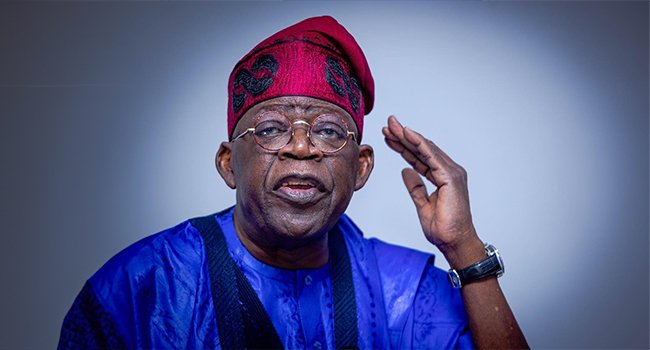
President Bola Tinubu was expected to return to Nigeria this weekend after several weeks in Europe on a working vacation. Sources in the presidency have now confirmed that his return has been delayed. The reason for the sudden change was not known as of Sunday morning.
Later reports say he is now expected back on Tuesday, September 29, and will arrive through Lagos. This means the delay is only a few days. Even so, it is the second time his return date has moved.
A short trip that keeps getting longer (how the vacation timeline changed)
Tinubu left Nigeria on August 30 for what the presidency called a three-week working vacation. He went to London first and later moved on to Paris. In Paris, he met French President Emmanuel Macron and businessman Vincent Bolloré. On September 21, the presidency said he had extended his stay “by a few days” and would be back at the weekend. That promise has now also slipped.
The presidency describes the trip as a “working vacation.” This means the president is resting but is still expected to handle government matters from abroad. It is a common phrase, but it is not a legal term. That matters because the law treats a president’s time away in a specific way, as the next section explains.
When a president is away, what does the law say? (Section 145 of the Constitution)
The Constitution is the country’s highest law. Section 145 covers a president who goes on vacation or cannot do his job. He must send a written notice to the Senate President and the Speaker of the House of Representatives. Until he says otherwise, the Vice President acts as president.
The section also has a 21-day rule. If the president does not send the notice within 21 days, the National Assembly can step in. A simple majority in both the Senate and the House can order the Vice President to take over the president’s duties until the president is ready to return.
Tinubu has now been away for about a month. That is well past 21 days. The presidency has not said publicly whether he sent the written notice before leaving.
A leadership gap with no clear owner (the problem of both leaders being abroad)
The issue is made harder by the fact that Vice President Kashim Shettima is also outside the country. He is on official duty at the UN General Assembly in New York. So the person who would normally act as president is not in Nigeria either.
The political reaction has been mixed. Senate President Godswill Akpabio has said there is “no vacancy” in the presidency, meaning the office is not empty. Meanwhile, a group of House members wants parliament recalled to settle who is in charge. These two positions show that leaders themselves do not agree on how to read the situation.
Lessons from the past (earlier cases of a president’s absence)
Nigeria has faced this test before. In May 2017, then-President Muhammadu Buhari left for a medical trip to London. His letter to the Senate said Vice President Yemi Osinbajo would “coordinate the activities of government.” The Senate objected to that wording. It insisted that Osinbajo must be called Acting President, because that is the title Section 145 gives.
This case shows that words matter in a handover. A vague title can leave doubt about who has the power to sign bills, approve spending, or make key decisions.
Buhari’s later trips raised a second argument. In 2019, his lawyers said he only needed to hand over power if he went on leave or stayed away for more than 21 days. Critics, including Chief Edwin Clark, rejected this. They said the Constitution has no such condition, and that the word in Section 145 is “whenever” the president goes on vacation. The question was never fully settled in practice, and it has returned with Tinubu’s trip.
What the delay means for Nigeria (effects on government, business, and public trust)
The presidency says daily life and business are running as normal. That is likely true for most people in the short term. But decisions that need the president’s signature or approval may have to wait. Laws, appointments, and major spending plans can all be held up when the top office is unclear.
There is also a cost to the country’s image. Investors and foreign partners watch closely who holds power in Africa’s most populous nation. Unclear answers make them nervous. At home, a lack of information also feeds rumours, and that erodes public trust. Tinubu is expected back just two days before Nigeria marks its 66th Independence Day, so the pressure for a clear explanation will only grow.
Ways to prevent this confusion in future
First, the presidency should say plainly why the return was delayed. Silence leaves room for guesses.
Second, it should confirm whether the Section 145 notice was sent, and to whom. A one-paragraph statement would answer a question many Nigerians are now asking.
Third, the National Assembly can clarify what the law expects when both the president and the vice president are abroad at the same time. Lawmakers can do this through debate, or the courts can rule on it.
Fourth, every president should send a clear written handover each time he travels for a long period, using the exact words of the Constitution. That would remove any doubt over titles and powers, as happened in 2017.
Leadership owes the public a clear answer
We believe every president has the right to rest. Nobody is arguing against that. But the office of president belongs to the people, and they have a right to know who is holding it at any time. A delay of a few days is not a crisis on its own. The silence around it is what turns a small change into a big question.
We also note that the presidency has told the public very little so far. A short and honest statement would have calmed nerves. If Tinubu lands on Tuesday as expected, we believe the presidency should explain the delay and confirm how power was handled while he was away. Clear communication is one of the simplest ways for any government to earn trust, and it costs nothing.
Published by Ejoh Caleb