
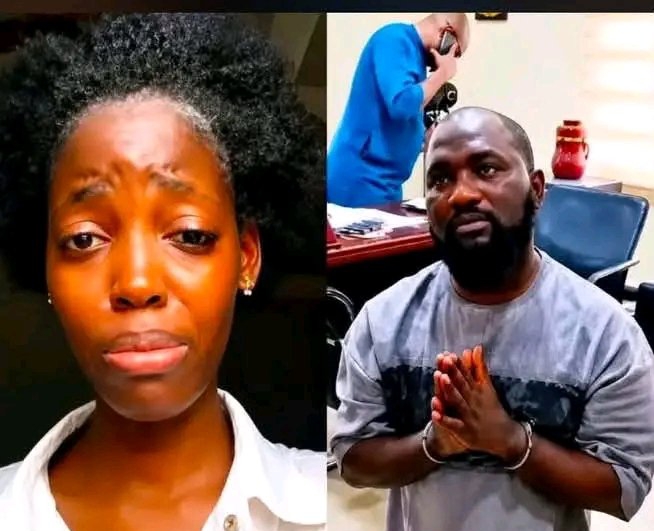
A Delta State High Court has remanded Ifeanyi Ogbonna, a content creator popularly known as “Odogwu Asaba,” at the Ogwashi-Uku Maximum Correctional Centre. The court granted the remand application on Friday, September 4, 2026.
The case involves the alleged rape and death of 20-year-old Favour Agbro. Awele Ideal, the lawyer representing Favour’s family on a pro bono basis, announced the development in a statement, saying the remand followed the release of autopsy and toxicology test results to the police investigation team. She said those results, together with other evidence gathered during the probe, have now been included in the investigation report prepared for prosecution.
“He has now been Remanded at the Ogwashi Uku Maximum Correctional Center, from there he shall be brought to court until the completion of his trial which now lies with the Ministry of Justice,” Ideal said, adding that responsibility for the case now sits with the Attorney General and Director of Public Prosecutions.
According to earlier police reports, Favour travelled from Warri to Asaba after Ogbonna advertised an online mentorship programme promising to help her monetise her TikTok and Facebook pages. She was reportedly taken to a hotel, where she later alleged she was raped, before she died after taking a toxic substance. The Delta State Police Command confirmed in July that Ogbonna, then in custody, would be charged to court over the allegations. It’s important to note that Ogbonna has not been convicted of any offence, and the allegations against him remain unproven before a court of law.
A Case That Echoes Nigeria’s Long, Uneven Fight to Convict Powerful Men of Sexual Violence
High-profile sexual assault cases in Nigeria have a track record of dragging on for years, with outcomes that are far from guaranteed even after an arrest generates national outrage. Nollywood actor Olanrewaju Omiyinka, known as Baba Ijesha, was arrested in 2021 over the assault of a minor and was not convicted until July 2022, more than a year later. Even after the Court of Appeal upheld part of that conviction in 2024, reports later circulated in 2025 that he had been released from prison, showing how contested and drawn-out these cases can become even once a verdict is reached.
Nigeria’s conviction record in sexual violence cases generally remains weak. Research by the International Centre for Investigative Journalism found only 65 rape convictions across the entire country between 1973 and 2019, despite far higher numbers of reported cases. The 2015 Violence Against Persons Prohibition (VAPP) Act was designed to address that gap by broadening the legal definition of rape and creating a public register of convicted offenders, but the law is only binding nationwide in the Federal Capital Territory; individual states, including Delta, must separately adopt their own versions to fully apply it locally.
Why Cases Like This Keep Happening, and What They Cost the Country
Cases like this often start with a promise: a well-known online personality offering mentorship, training, or a path to internet fame and income to young people struggling to find opportunities elsewhere. That promise can carry real weight for someone like Favour, a nursing student looking to build a career in content creation, especially when it comes from someone with a large online following and an appearance of trustworthiness.
The effects of a case like this reach well beyond the two families directly involved. For young Nigerians drawn to the social media economy as an escape from limited job opportunities, cases like this raise hard questions about how much trust to place in online “mentors,” however popular they appear. For the country as a whole, each high-profile case that moves slowly through the courts, or ends in a way the public sees as unjust, deepens a broader loss of confidence in Nigeria’s ability to protect victims of sexual violence and hold offenders accountable, regardless of their online fame.
What Could Help Prevent Cases Like This
Faster turnaround on forensic evidence, such as the autopsy and toxicology results that took weeks to reach investigators in this case, would help move cases through the courts more quickly, reducing the uncertainty that can wear down grieving families and stall justice. Full nationwide adoption of the VAPP Act, rather than a state-by-state patchwork, would close gaps that currently leave sexual violence survivors with uneven legal protection depending on where they live.
Greater scrutiny of “mentorship” and monetisation programmes advertised by online personalities, especially those that require young people to travel to meet a stranger in person, could help prevent similar situations before they happen. Wider public awareness campaigns, aimed specifically at young people chasing opportunities in the social media economy, could help them recognise warning signs and know where to seek help if an arrangement turns unsafe.
Where This Case Leaves Nigeria’s Justice System to Prove Itself
We think this case will be closely watched, not only because of Ogbonna’s online fame, but because of what it says about how seriously Nigeria’s justice system treats sexual violence when the accused is a public figure. A remand is not a conviction, and Ogbonna deserves a fair trial like anyone else. But Favour’s family, and the many young Nigerians who saw themselves in her story, deserve a process that moves with real urgency, not one that stretches on for years the way past cases have. How this case is prosecuted from here will say a great deal about whether Nigeria’s courts can consistently deliver justice in cases like this, or whether outcomes will keep depending on how much public attention a case manages to attract.
Published by Ejoh Caleb