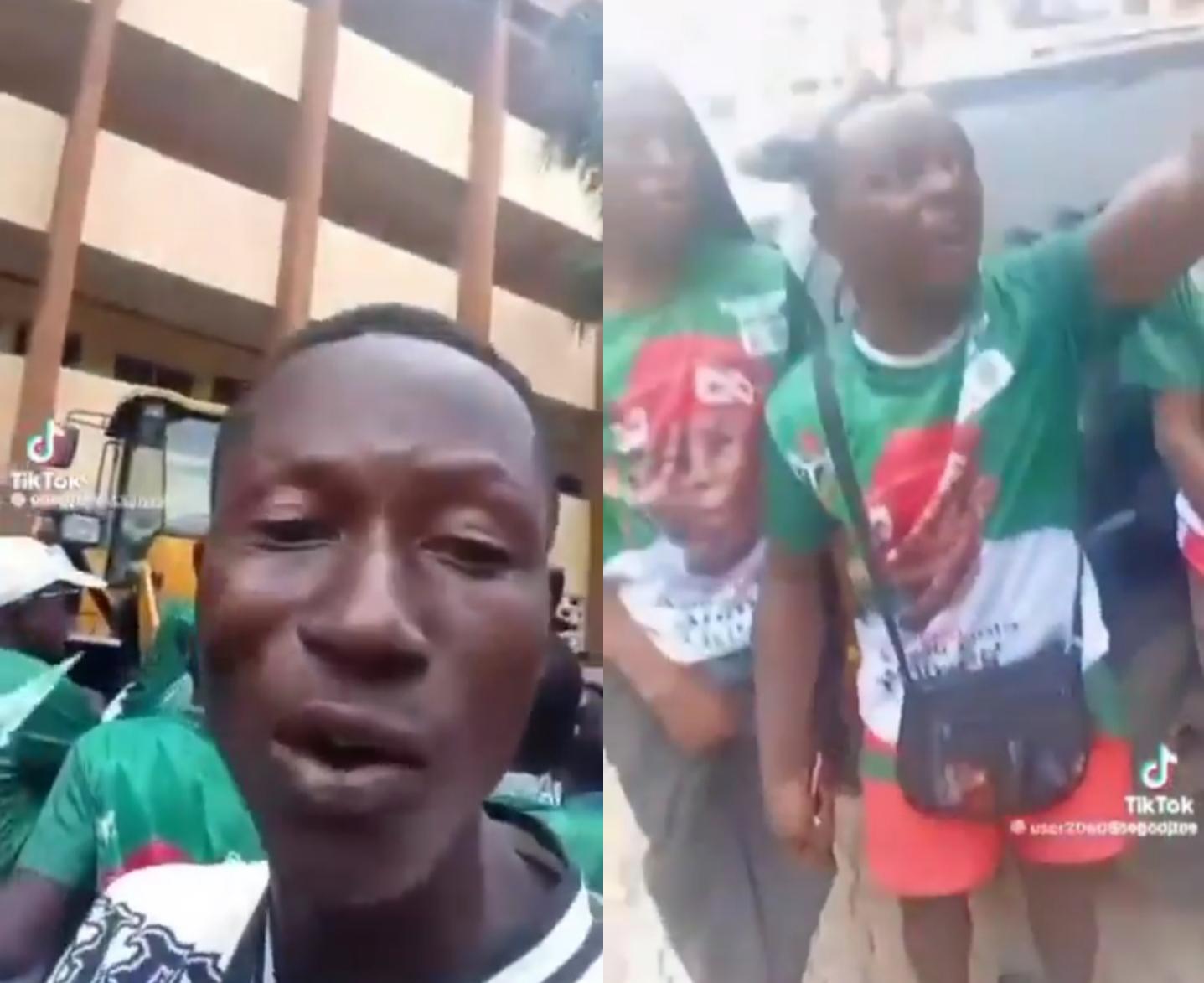
A video circulating online shows a group of people who say they were hired to dance and campaign for the All Progressives Congress (APC) for an entire day, only to be paid ₦1,500 each at the end of it — and they are not happy about it.
The Complaint
In the video, members of the hired crowd are seen complaining bitterly, saying they spent the day dancing and campaigning for the party before being handed just ₦1,500 (roughly $1) each once the event wrapped up. The specific location of the rally and the local APC chapter or organisers involved have not been independently confirmed beyond what is shown in the clip.
A well-known but rarely admitted practice
Hiring crowds for political rallies is an open secret in Nigerian politics, one that has been documented for years and cuts across every major party. Reports have found that “mobilisers” are commonly paid to gather large numbers of people for rallies, with individual participants typically receiving anywhere from a few hundred to a few thousand naira depending on the state, the party, and how the money is distributed down the chain. Commentary on the practice has noted that all of Nigeria’s major parties — APC, PDP, Labour Party, and NNPP — have been known to pull in crowds with little to no real connection to the candidate or message being promoted, relying instead on people’s economic need. In one notable case, a scuffle at a Kaduna rally was blamed on hired-crowd organisers who reportedly disappeared with the funds meant to pay the very people they had recruited, leaving them unpaid and angry. Even hired counter-protesters have described being paid a flat fee, in one case ₦5,000, specifically to show up and drown out anti-government demonstrations.
The Economics Behind It
The practice persists largely because of Nigeria’s high unemployment and cost-of-living pressure, which makes even a small guaranteed payment appealing to people with few other options that day. For political parties, a large, visible crowd creates the appearance of popular support and generates footage and photos that can be used for wider campaign messaging, regardless of whether the people in the crowd actually support the party’s agenda.
Who Feels It, and How
For the individuals hired, the effect is often exactly what this video shows: a full day’s labour — dancing, chanting, marching — for a payment that barely covers transport and food, let alone fair compensation for a day’s time. At a broader level, the practice distorts the public’s sense of a party’s real support base, since a large rally crowd may reflect more about local unemployment than genuine political enthusiasm. It also breeds resentment that can spill into public view, as this video shows, undermining the very image of support the rally was meant to project.
A Path to Something Fairer
Some commentators argue the more honest path is for parties to be transparent about paying participants for logistics like transport and refreshments, rather than dressing up paid attendance as organic support. Labour and civil society advocates also point to the deeper issue: until Nigeria’s unemployment and underemployment crisis eases, mobilisers will continue to find a ready pool of people willing to take whatever a rally pays, however little.
Our Reaction
There’s a bitter irony in a crowd hired to project excitement for a party ending the day angry at how little they were paid by that same party. We think this video captures something bigger than one underpaid rally — it’s a reminder of just how many Nigerians are hustling for whatever ₦1,000 or ₦1,500 they can get in a single day, and how political machinery, across every party, continues to lean on that desperation rather than fix it.
Published by Ejoh Caleb