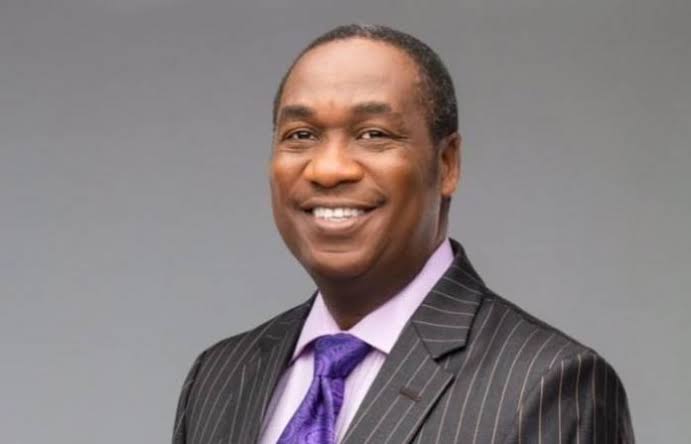
Lagos State Deputy Governor Obafemi Hamzat has vowed to clamp down on individuals who stop luxury vehicles and allegedly engage in criminal activity along the Lekki-Epe Expressway, declaring the practice a crime.
Hamzat made the declaration during an interview on Nigeria Info FM, after the show’s host, Jimi Disu, drew his attention to the activities of “these boys stopping luxury cars” along the road. “On behalf of those of us who use the Lagos-Epe road, I’d like to call your attention to, you know, the incidences of all kinds of funny people, and there are menace to society, on that axis. From Lekki all the…” Disu said, pressing the deputy governor to use his influence to “stop this nonsense” occurring along the axis.
Responding, Hamzat described the activity as criminal. “That is criminal. And therefore, we will not allow it. So, we will take a lot of them off the street,” he said.
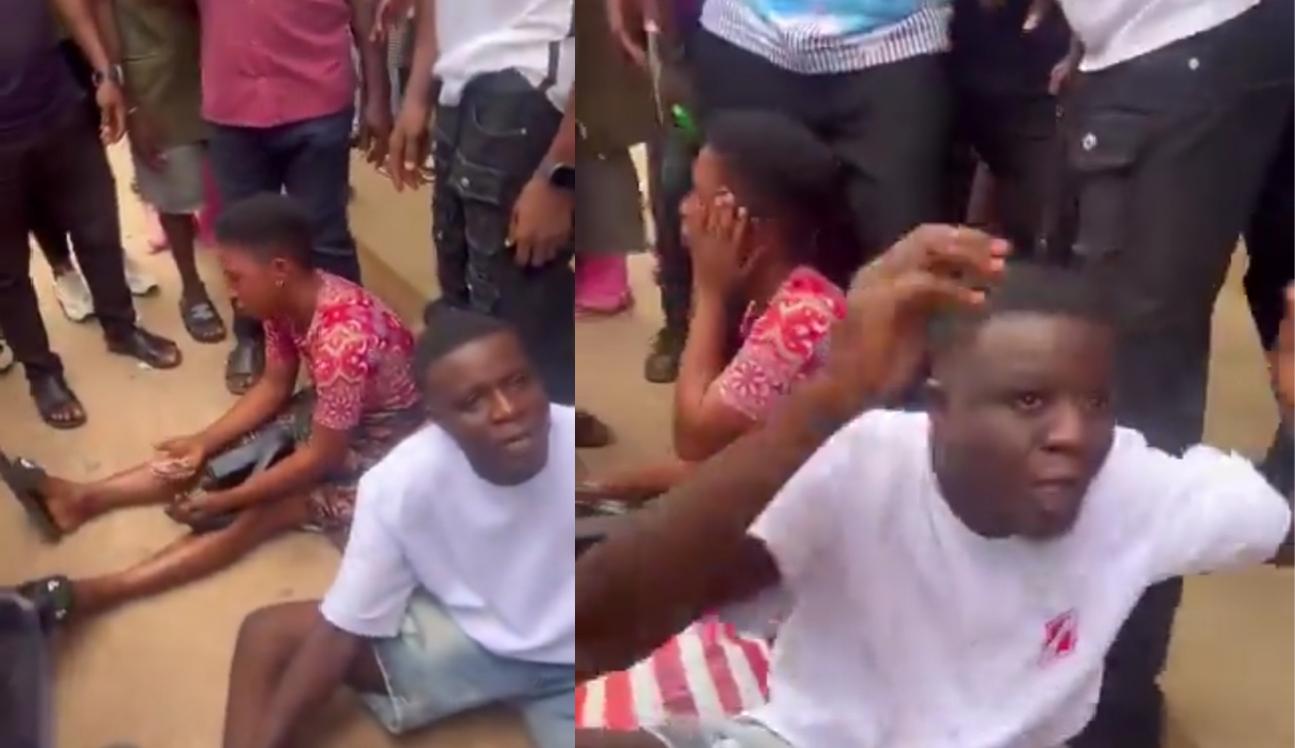
Hamzat disclosed that several people had already been arrested in connection with the activities, crediting surveillance cameras installed along the road with helping identify suspects. “Well, a lot of people have been arrested, really. If you commit… a lot of cameras are also on that road and people have been seen. And I can show you people, some people are in the Magistrate Court today,” he said. Asked when the arrests took place, Hamzat said: “They were arrested last week or so. I think towards the end, no, over the weekend.”
The deputy governor did not specify how many people had been arrested, what specific charges they faced, or whether those arrested were the young people filming and drawing crowds toward luxury cars, commonly called “car spotters,” or the “area boys” who use the resulting crowds to extort money from drivers.
Have Car Spotters Themselves Ever Been Arrested?
That distinction matters, because the two roles in this extortion pattern are not the same, and public reporting so far suggests only one of them has actually faced arrest.
Car spotting itself, filming rare or luxury vehicles for platforms like TikTok and Instagram, began as a hobby, with well-known Lagos spotters such as YL_The Car Guy, Lekki Guy, Olutimi In Lagos, and Autotherapy Doctor building followings by documenting supercars cruising through Lekki and Ikoyi. The problem is that a crowd of spotters converging on a car, camera phones raised, functions like an alert system, telling nearby “area boys” that a wealthy target has arrived. It is those area boys, not the spotters filming the cars, who then trap the vehicle and demand money.
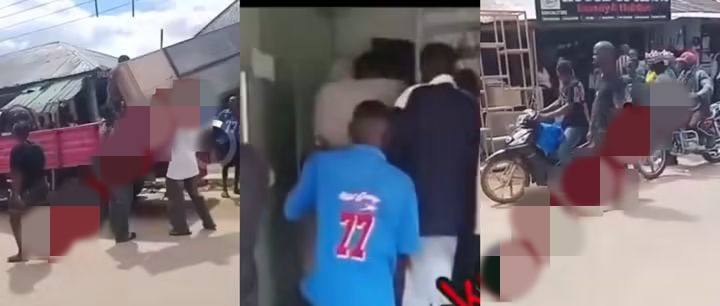
Public records of arrests along the corridor so far appear to target that second group, not the spotters themselves. In March 2026, the Lagos State Task Force arrested 25 suspected hoodlums across locations including Chisco Roundabout, Elegushi, Ikate Roundabout, and Marwa Bus Stop, following a wave of motorist complaints about harassment and extortion. In April 2026, multiple hoodlums were arrested after a video showing a machete-wielding attack near Chisco and Osakpa went viral. Just days before Hamzat’s interview, the Lagos State Rapid Response Squad carried out a fresh midnight enforcement operation along the Lekki-Ajah Expressway, arresting suspects that Commissioner for the Environment and Water Resources, Tokunbo Wahab, described as “constituting a nuisance and posing a threat to motorists and other road users.” None of these operations, based on public reporting, have specifically targeted or named car spotters as suspects; the language used by officials each time refers to “hoodlums,” “miscreants,” or people “intimidating, harassing, and extorting drivers,” not to the content creators filming the cars.
This raises a real question about Hamzat’s declaration that “car spotting” itself is criminal: if enforcement so far has focused on the extortionists rather than the spotters, it remains to be seen whether his comments signal a genuinely new target for Lagos law enforcement, or whether “car spotters” is being used loosely to describe the wider group of people along the corridor, spotters and extortionists alike.
A Crisis That Has Been Building for Months
Hamzat’s comments arrive amid a well-documented rise in extortion and harassment targeting motorists, particularly those driving luxury vehicles, along the Lekki-Epe and Lekki-Ajah corridor.
The crisis drew wide public attention in August 2026, after DJ Salt of Life, Hannah Aderibigbe, the younger sister of Afrobeats star Ayra Starr, said suspected hoodlums damaged her car after mistaking her for her famous sister; a crowd surrounded her vehicle and demanded money regardless. TikTok streamer Habeeb Hamzat, known as Peller, and skit maker Samuel Bankole have both separately reported hoodlums damaging their vehicles on the same expressway after refusing to pay. Despite these repeated enforcement operations, the harassment has continued, with the Lagos Police Command previously assuring residents it was “on top of the situation” even as new incidents kept emerging.
Why Car Spotting Has Become a Security Flashpoint
Content creation has turned wealth-spotting into a signal for extortion. What began as a hobby, filming rare or luxury cars for social media views, now functions as an unintentional alert system, drawing crowds that hoodlums exploit within seconds.
Repeated enforcement hasn’t broken the underlying economics. Despite multiple arrest operations this year alone, the incentive for both spotters chasing viral content and hoodlums chasing quick cash has remained strong enough to sustain the pattern.
Enforcement has so far targeted the extortionists, not the spotters. If Hamzat’s government intends to treat the act of filming and spotting itself as criminal, that would represent a shift from the pattern of arrests reported so far, which have focused on those who harass and demand money, not those who film.
The Lekki-Epe corridor combines heavy luxury traffic with congestion. The expressway’s mix of high-end residential areas, traffic bottlenecks, and roundabouts creates ideal conditions for crowds to form quickly around a stopped vehicle.
The effects of this pattern extend well beyond individual drivers.
For Lagos residents and visitors, the reputation of the Lekki-Epe corridor as unsafe for luxury or even ordinary vehicles undermines confidence in one of the state’s most prominent commercial and residential areas.
For content creators and car spotters themselves, increased government attention and the prospect of “car spotting” being formally criminalised could end a hobby-turned-hustle that some have relied on for income and online following, even though it is the area boys, not the spotters, who have driven the violence so far.
For Lagos State’s government, repeated, high-profile incidents involving public figures and viral content creators keep the issue firmly in the public eye, adding pressure on officials to show enforcement actually works rather than producing another round of headlines.
What Could Break the Cycle
Clear legal classification of what exactly is being criminalised. If car spotting itself is to be treated as a crime, as Hamzat’s comments suggest, the state needs to clarify whether that means filming, alerting crowds, or specifically the resulting extortion, since public arrest records so far suggest only the latter has been enforced.
Consistent, visible enforcement rather than periodic crackdowns. Since repeated arrest operations this year have not stopped new incidents, sustained patrols rather than reactive, headline-driven sweeps may be needed to change the underlying dynamic.
Public awareness campaigns aimed at content creators. Direct messaging to car-spotting influencers about the real-world harm their content enables, drawing crowds that hoodlums then exploit, could reduce participation in the practice more effectively than enforcement alone.
Faster response times to reported incidents. Given how quickly a spotting incident can escalate into extortion, cutting down response times for reports along the corridor could prevent confrontations from advancing to damage or violence.
Where We Land
Hamzat’s comments reflect growing political pressure to address a problem that has embarrassed the state on social media repeatedly this year, from Ayra Starr’s sister’s ordeal to repeated incidents involving TikTok personalities. His claim that “a lot of people” are already before the Magistrate Court suggests the state does have something concrete to point to.
But based on what’s been publicly reported, those arrests have consistently targeted the hoodlums who extort drivers, not the spotters who film them. If Hamzat genuinely intends to criminalise car spotting as an activity in itself, that would be a meaningful escalation from what Lagos has actually enforced so far, and it raises a fair question about how the state plans to distinguish a content creator filming a Rolls-Royce from the crowd of extortionists that gathers because of it.
Published by Ejoh Caleb