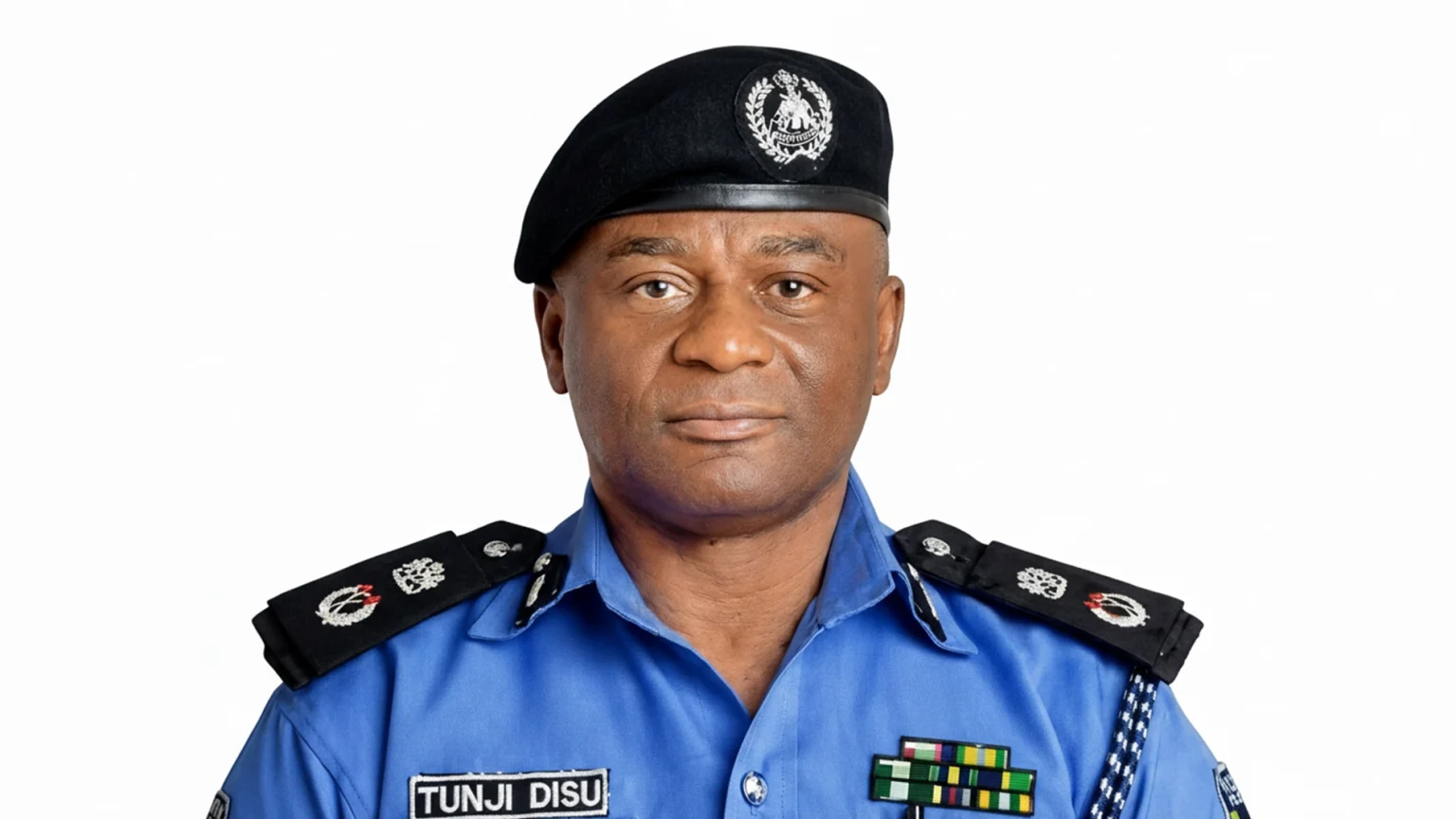
Inspector-General of Police, Tunji Disu, has warned that any police officer who helps rig or compromises the Osun State governorship election will be punished publicly, according to a video of his remarks ahead of the August 15 poll.
What the IGP said
In the video, Disu tells officers being deployed to Osun that they must carry out their election duties diligently, warning that any officer found helping to rig the election or compromising the process would face public punishment.
This warning fits into a broader set of public assurances Disu has been making in the days leading up to the election. Speaking to civil society organisations in Abuja on Friday, he described the Nigeria Police Force as a professional, apolitical institution with no candidate or party interest of its own, saying the police exist only to ensure the lawful choice of the people prevails. He also said anyone caught vote-buying, intimidating voters, snatching ballot boxes, or engaging in thuggery would be dealt with according to the law, regardless of political affiliation or status.
Background: a high-stakes, closely watched election
The August 15 election, in which Governor Ademola Adeleke faces the APC’s Bola Oyebamiji, has been described by civil society groups as a major test of public trust in Nigeria’s electoral process ahead of the 2027 general elections. Yiaga Africa’s executive director has flagged the neutrality of security agencies, particularly the police, as one of the public’s biggest concerns going into the vote, noting that 13 of Osun’s 30 local government areas have been classified as high-risk due to killings and violent attacks.
The police have already deployed a minimum of four officers to each of Osun’s 3,673 polling units, one of the largest security operations the state has seen. Disu has also removed the substantive Commissioner of Police in Osun from day-to-day command of election security, appointing a separate CP Election, Erale Samuel Etaifo, to oversee the operation instead — a move explicitly framed around ensuring neutrality.
Even so, trust remains fragile. Adeleke’s campaign has publicly called on Disu to guarantee a peaceful, impartial election and raised concerns over the reinstatement of the Osun Commissioner of Police. Separately, the Accord Party has accused Disu of ordering the continued detention of one of its members despite what it says was a lack of evidence against him.
Not the first time police have faced rigging accusations
Disu’s warning does not exist in a vacuum. Allegations of security personnel manipulating Nigerian election results have surfaced repeatedly in recent years, even as successive police leadership has denied them. Nigeria’s previous Inspector-General, Kayode Egbetokun, publicly rejected claims that police influence vote counts, insisting officers only secure the process while INEC handles collation. Those denials followed lingering controversy from the 2023 general elections, when independent observers found INEC officials behaved unprofessionally or showed partisan bias in a share of monitored polling units, with vote-count discrepancies documented in states like Rivers.
Closer to this specific election, Deji Adeleke — businessman, university proprietor, and elder brother of Governor Ademola Adeleke — said publicly last month that corps members and police officers, not the INEC chairman, are usually the ones altering figures at individual polling units in exchange for cash payments. He made the remark while discussing the sheer number of polling units in Osun state, arguing no single INEC official could physically supervise all of them.
Why a warning to police, not just politicians, matters
Nigerian elections are often contested less over vote counts and more over trust in the people guarding the process. When security agencies are seen as compromised, no result — however accurate — is fully believed. That is the core tension Disu’s warning is aimed at:
Public confidence depends on visible neutrality. A warning aimed at police officers themselves, not just political actors, signals an acknowledgment that officers have, in past elections, been accused of colluding with parties in power.
“Punished publicly” is itself a strategic message. Promising visible consequences, rather than quiet internal discipline, is meant to reassure voters and opposition parties that compromised officers won’t simply be reassigned quietly.
It raises the stakes for the police force’s own credibility. If violations do occur and go unpunished, or unpunished publicly, it could deepen the very distrust the warning was meant to prevent.
What would strengthen this promise
Independent verification of any disciplinary action, so the public — not just the police force itself — can confirm that officers found compromising the process actually face consequences.
Clear, published criteria for what counts as “compromising” the election, so the warning isn’t seen as selectively applied depending on political pressure.
Continued engagement with civil society and election observers, building on Disu’s meetings with groups like CISLAC, to maintain outside scrutiny of police conduct on election day itself.
A promise that will be judged after the votes are counted
I think warnings like this matter less for what they say beforehand than for what happens after, if something goes wrong. Nigerians have heard election-eve pledges of neutrality before. What will actually test this one is whether, if allegations of police misconduct surface on August 15 or in its aftermath, the “public punishment” Disu promised actually happens — and happens visibly enough that Osun voters, and the rest of the country watching this as a rehearsal for 2027, can see it for themselves.
Published by Ejoh Caleb