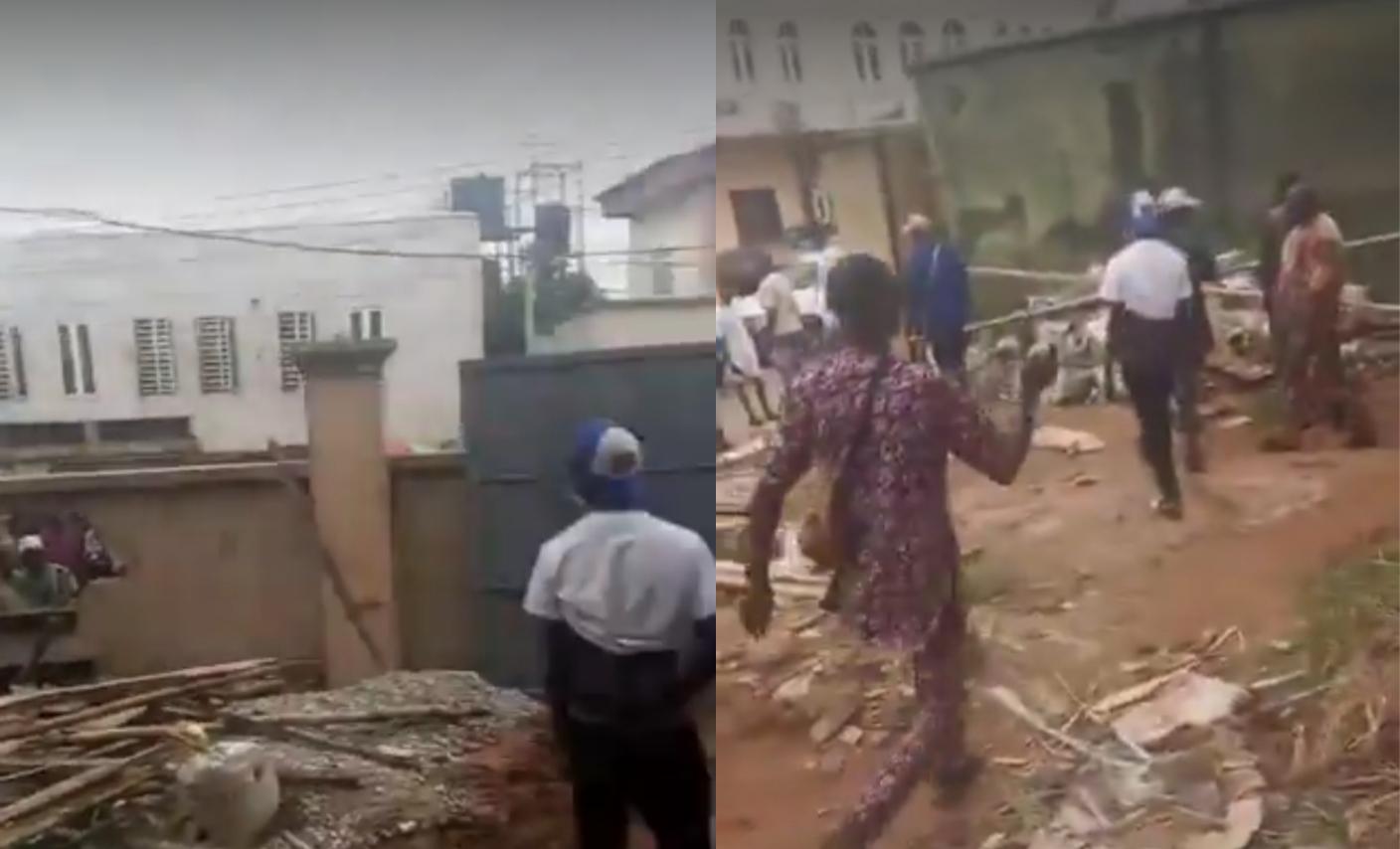
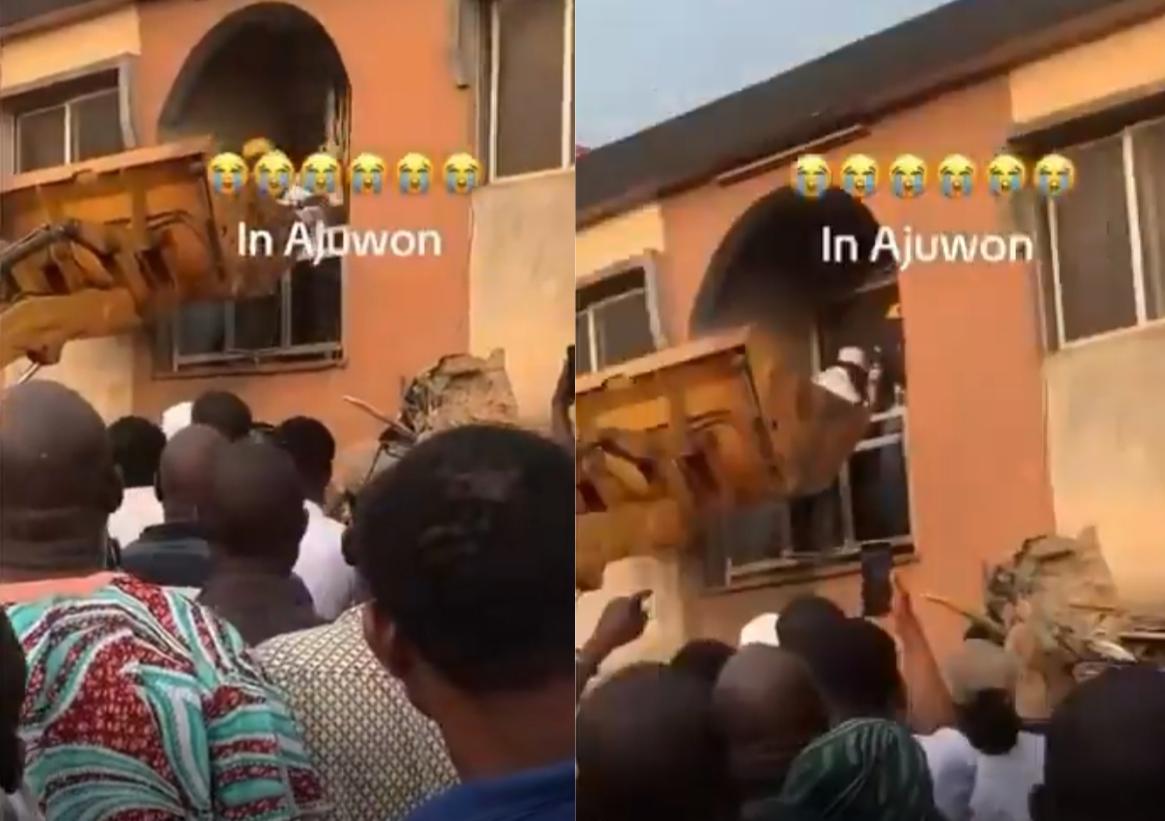
A two-storey building on Baale Road in the Ajuwon area of Ifo Local Government, Ogun State, sank straight into the ground on Monday afternoon, shortly after a heavy thunderstorm. Instead of falling sideways like most collapsed buildings, the ground and first floors sank downward into the earth, leaving only the top floor visible above the rubble.
Eyewitnesses said the incident happened at around 2 to 3pm, during a downpour that some residents say came with a lightning strike nearby. One witness told SaharaReporters that children were among those trapped, and that one child was pulled out dead.
Reports on the death toll differ. Some outlets, citing eyewitnesses, say three people died. The Ogun State Government’s official statement, however, put the confirmed death toll at one. What is consistent across reports is that those who lived on the top floor — a grandmother, her toddler grandchild, and one other man — survived, while those on the lower floors, where the ground gave way, did not.
Ogun State Governor, Dapo Abiodun, has ordered a full technical investigation into the collapse. A preliminary assessment by a multi-agency team found that the structure suffered what officials called a “catastrophic structural failure.” Specialists have been directed to examine the soil conditions, construction materials and the state of neighbouring buildings. Officials from Lagos and Ogun states have also agreed to demolish adjoining buildings near the collapsed structure, warning that they pose a further safety risk to the area.
This is a problem Nigeria has faced for decades
Building collapses like this one are not new in Nigeria. The Federal Government says the country has recorded over 650 building collapses and more than 1,600 deaths from them in the last 52 years. As of 2024 alone, 43 collapses were recorded nationwide, with Lagos and Abuja among the worst-hit cities.
One of the deadliest recent cases killed 52 people and injured 15, and investigators traced it to what they called a culture of cutting corners in construction. These recurring tragedies have pushed the Federal Government to set up a special task team to study why building collapses keep happening and how to stop them.
Why do buildings in Nigeria keep collapsing, and who is affected?
Experts who study Nigeria’s construction industry point to a familiar mix of causes: substandard building materials, poor workmanship, weak foundations, unqualified builders, and developers who skip soil testing to save money. Corruption also plays a role — inspectors can sometimes be paid off to overlook dangerous shortcuts, allowing risky buildings to stay standing until they suddenly aren’t. A civil society group monitoring building safety in Abuja described it plainly: many collapsing buildings were already failures long before the day they physically caved in.
For the families in Ajuwon, the effect is immediate and devastating: lives lost, homes destroyed, and neighbours left to search rubble for survivors. But the wider effect reaches all of Nigeria. Every fresh collapse chips away at public trust in landlords, developers, and the government agencies meant to inspect buildings before people move in. It also raises hard questions about how many other unsafe buildings are standing right now, quietly waiting for the next heavy rain.
What can actually stop this from happening again?
Experts and government bodies point to a few clear fixes. Independent, corruption-free inspection of buildings before and during construction would catch dangerous shortcuts early. Mandatory soil testing before construction begins would prevent buildings from being placed on ground that cannot support them. Stronger penalties for developers and officials who approve substandard work — and real enforcement of those penalties — would raise the cost of cutting corners. Finally, using only certified materials and licensed builders, instead of the cheaper unlicensed option many Nigerians turn to, would remove one of the most common root causes identified in past collapses.
The Bigger Picture
What strikes me most about this one is how ordinary it started — a heavy rain, a normal afternoon — before it turned fatal. That’s the scary part about building collapses in Nigeria: they rarely come with warning. A family living quietly on the ground floor of a building has no way of knowing whether the foundation beneath them was properly tested, or whether the materials holding up their home meet any real standard. Until Nigeria fixes inspection and enforcement, and not just after tragedies make headlines, families will keep gambling with their lives simply by choosing where to live. I hope this investigation, unlike so many before it, actually leads somewhere — accountability, not just condolences.
Published by Ejoh Caleb