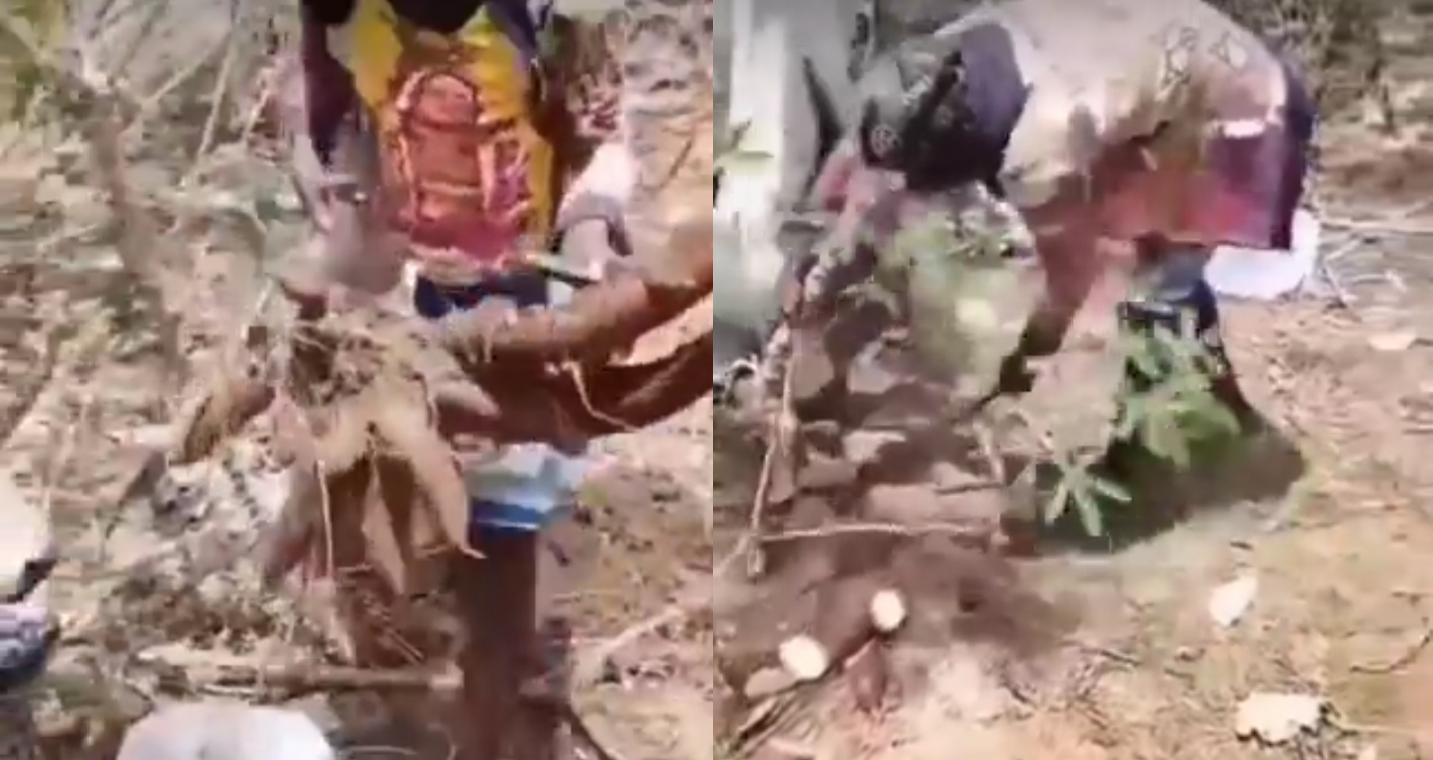
A video making rounds online shows a Fulani herdsman uprooting cassava from someone’s farmland. In the video, he is seen cutting up the cassava with a cutlass so his cows can eat it.
We do not yet know exactly where or when this happened. It is also not clear if the farm owner was there when it happened, if a report was made to the police, or if anyone has been arrested over it.
This Has Happened Before
This kind of thing is not new in Nigeria. It has happened many times before, and in some cases, it has led to serious trouble.
In 2018, a farmer in Igangan, Oyo State, said herders brought their cattle onto his cassava farm to eat crops he had just harvested. When he tried to stop them, he said he was attacked with machetes and sticks. He reported it to the police, but no one was arrested. The herders reportedly ran away before police could catch them, and the case was never solved.
This kind of story happens often in farming communities across Nigeria. It is especially common in the Middle Belt and southern states, where herders move their cattle around looking for grass to feed them, especially during the dry season.
Why Arrests Don’t Always Happen
Even when farmers report cases like this, an arrest does not always follow. This is often because:
- The herders involved sometimes move away quickly after it happens.
- Some herding communities have resisted police when they try to make an arrest.
- There is no single law across Nigeria that punishes this kind of thing. It depends on the state and the local police.
What Some States Are Doing
To reduce this problem, some states like Benue, Taraba, and Ekiti have made laws that ban open grazing. This means herders are expected to keep their cattle in one place, called a ranch, instead of letting them roam and eat from other people’s farms. But these laws are not always enforced properly.
Farmer groups have asked for more ranches to solve the problem for good. But some herder groups, like Miyetti Allah, say ranching costs too much money and land is hard to get.
Why Is This Case Important?
By itself, this video shows something small — one farm and one herdsman. But it has spread quickly online because many farmers say this happens to them often, yet it is rarely caught on camera. A video is harder to argue with than just someone’s word, which is part of why people are paying attention to it.
This video has also come out at a time when the relationship between farmers and herders in Nigeria is still a sensitive topic. Videos like this can shape how people think and feel very fast, sometimes before all the facts are even known. This is why it matters to confirm details like where it happened and what has been done about it, instead of assuming things.
What Does This Mean for Nigeria?
This one video points to a much bigger problem in the country: the ongoing tension between farmers and herders. This tension has caused financial loss, fear, and in some cases, violence.
Here is why this matters for the country as a whole:
- Food supply: Cassava is a major food source for many Nigerians. When cattle destroy farms, farmers lose money, and this can affect how much food is available and how much it costs.
- Trust between communities: When cases like this keep happening without any action taken, it can make farmers and herders trust each other less over time.
- Pressure on government: Cases like this push the government to act, whether through better ranching systems or stronger enforcement of anti-grazing laws.
- How people see each other: In a country already facing many tensions between different groups, videos like this can either lead to honest conversation and solutions, or they can be used to create more division, depending on how they are shared and discussed.
My Take
This video reminds us of a problem that has been happening quietly in many farming communities for a long time. Crops that took months to grow can be destroyed in minutes, often with no consequences for the person responsible. Whether or not someone is arrested this time, the bigger issue stays the same: many states still do not have strong systems to protect farmers or hold people accountable. Until this changes, videos like this will likely keep going viral, again and again, without much really changing.
Published by Ejoh Caleb