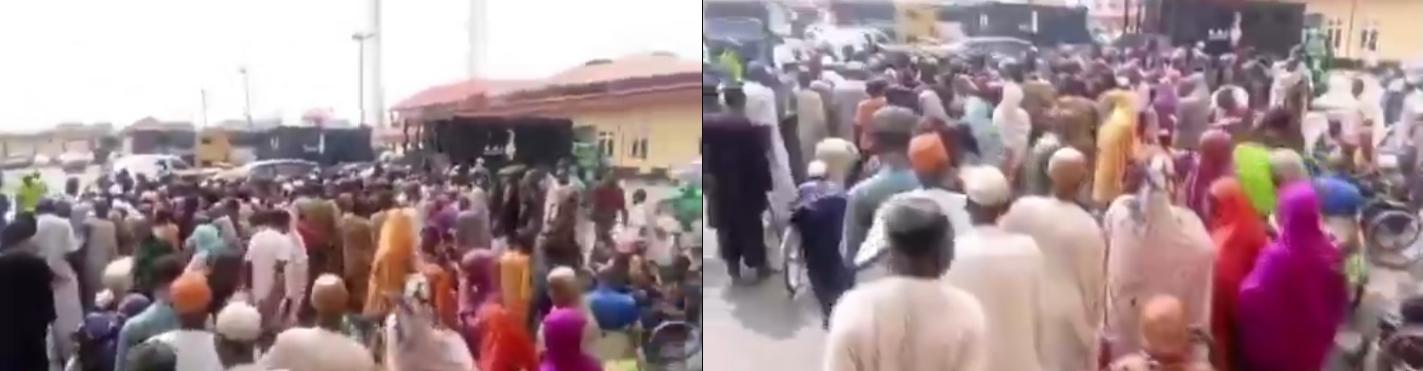
Lagos State has arrested 396 beggars. This happened during a clean-up operation across the state. The government now plans to send these people back to their home states.
The Commissioner for Environment and Water Resources, Tokunbo Wahab, shared this news on his official X account on Tuesday. He said officials from the Lagos State Environmental Sanitation Corps carried out the operation. The goal is to keep Lagos clean, safe, and orderly.
Wahab said the arrested beggars will first be checked and registered. Those who need help will get it. After that, they will be handed over to the right authorities and taken back to their home states.
This Has Happened Before
This is not the first time Lagos has done this. In fact, it has been happening almost every week for months.
Just weeks ago, in June 2026, Lagos arrested 226 beggars in a similar operation. The plan was the same: send them back to their states. Before that, smaller raids across places like Oshodi, Agege, CMS, Lagos Island, Ikorodu, Ikeja, Mushin, Alimosho, and Falomo added up to 289 arrests in just one month. In fact, one single raid picked up 144 people in a single day at Oshodi, Agege, and CMS.
The government also said that by May 2026, it had rescued over 1,300 vulnerable people. It had also taken 459 beggars to its Mobile Court.
So this new arrest of 396 people is not a one-time thing. It is part of a bigger, ongoing effort by the state.
Why Is Lagos Doing This?
The state government says street begging causes pollution and disturbs the public. Officials also worry that beggars staying on pedestrian bridges and other public places can be dangerous for residents.
What Happens to the Beggars After Arrest?
Lagos State has centres where some of the arrested people are taken care of. These include:
- The Rehabilitation and Training Centre in Majidun, Ikorodu
- A centre in Isheri
- The Tajudeen Olusi Rehabilitation and Vocational Training Centre in Ajah
At these centres, people are supposed to get medical care, counselling, and skills training. After that, they are either sent home or helped to start a new life.
Does This Really Solve the Problem?
Many people are asking this question. A Lagos-based journalist warned earlier this year that constantly removing beggars, especially children, from the streets does not fix the real problem. He said many children end up back on the streets because the real causes — poverty, broken homes, and weak family support — are still there.
Even the government’s own numbers seem to prove this point. Despite rescuing over 1,300 people at one point, the streets filled up with beggars again soon after. This shows that arresting and sending people home may only work for a short time. It may not be a lasting fix.
Lagos has also been telling residents to stop giving money directly to beggars on the street. Instead, they should donate through churches, mosques, or registered charity groups.
My Take
Lagos State clearly wants a cleaner and safer city. That is a good goal. But arresting and sending back beggars every few weeks, only to see new ones show up on the same streets, tells us something important: people are not begging just because they want to. Most of them are pushed onto the streets by poverty.
Until Lagos and other states work together to fix the real problem — through jobs, better welfare support, and real help for the poor — these arrests will likely keep happening again and again. And the problem may never truly go away.
Published by Ejoh Caleb