
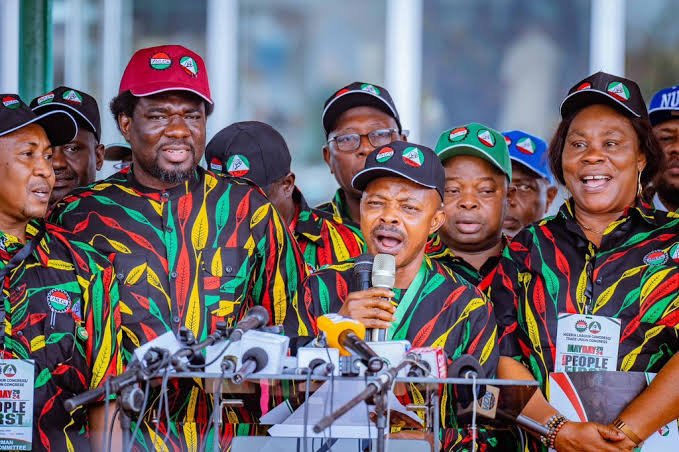
The Nigeria Labour Congress (NLC) has rejected the proposed N100,000 national minimum wage currently being considered by state governors, describing the figure as inadequate in the face of Nigeria’s rising cost of living.
Speaking on the issue, NLC spokesperson Benson Upah argued that inflation, the depreciation of the naira, and increasing living expenses have drastically reduced the value of workers’ earnings, making the proposed wage insufficient.
The debate follows remarks by AbdulRahman AbdulRazaq, who disclosed that governors are reviewing a possible adjustment to the national minimum wage, with N100,000 among the figures being discussed.
According to AbdulRazaq, the review is aimed at addressing the economic hardship facing workers due to inflation and rising living costs. He noted that consultations are ongoing between state governments, the Federal Government, and organised labour to arrive at a wage structure that is fair to workers while remaining sustainable for government finances.
However, the NLC insists that the proposed amount does not reflect current economic realities.
Upah acknowledged the governors’ willingness to revisit workers’ salaries but maintained that N100,000 falls far short of what Nigerians need to meet basic living expenses. He pointed to soaring fuel prices, higher electricity tariffs, food inflation, and declining purchasing power as major factors worsening the financial burden on workers.
According to him, a more realistic wage under present conditions would be closer to N1 million per month, considering the sharp increase in the cost of essential goods and services.
The labour leader also argued that improved government revenues should translate into better welfare for workers. He referenced allocations from the Federation Account Allocation Committee (FAAC) and other fiscal gains as evidence that authorities have greater capacity to support workers than in previous years.
The disagreement comes amid renewed calls for another wage review following the removal of fuel subsidy and the floating of the naira, policies that have significantly increased transportation costs, food prices, and the overall cost of living.
Nigeria’s current minimum wage of N70,000, approved in 2024 after lengthy negotiations, has continued to face criticism from labour unions, which argue that inflation has already eroded much of its purchasing power.
Reactions
“If N70,000 cannot sustain a worker today, N100,000 will only provide a little relief. The real issue is the rising cost of living.”
“A minimum wage of N1 million may sound unrealistic to some, but it shows how severe inflation has become.”
“Government must balance workers’ welfare with the ability of states to pay salaries consistently.”
“The discussion should focus not only on wages but also on reducing inflation and improving living standards.”
Published by Ejoh Caleb