
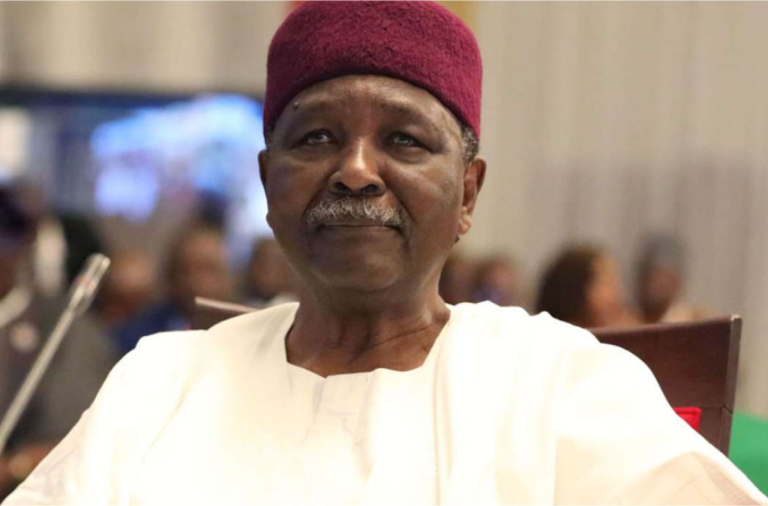
I blame General Yakubu Gowon for many of Nigeria’s enduring woes. In my view, the burden of that responsibility will follow him to his grave. He fired the first shot in a conflict whose consequences continue to haunt the nation. Forget, for a moment, what came before and what followed after. Nigeria today appears to be struggling for survival, weighed down by problems that seem to trace back to that defining moment in its history.
To me, Gowon provoked a war from which Nigeria has never truly recovered and may never fully recover. He reminds me of Rehoboam, the biblical son of Solomon whose decision to place pride above wisdom led to the division and eventual decline of the Kingdom of Israel.
At a critical moment in Nigeria’s history, a population gripped by fear, confusion, and deep anguish was searching for reassurance. Wisdom appeared to emerge from Aburi, Ghana, where Nigerian leaders met in an effort to prevent further bloodshed. The message was simple: give people time to heal, allow trust to be rebuilt, and create space for reconciliation.
For a brief moment, hope seemed possible. The agreements reached at Aburi appeared capable of calming tensions and steering the country away from disaster. The minutes were recorded and signed, and many believed a peaceful path had been found.
That hope did not last.
Upon returning home, Gowon reportedly faced pressure from advisers who argued that he had conceded too much. They questioned why a military ruler should need the consent of Colonel Odumegwu Ojukwu to govern. Their solution was straightforward: divide the regions into states, isolate the East, and force compliance.
The option of restructuring the country through state creation had always existed. Gowon had initially avoided it because he understood the fragile circumstances of the time. The Federal Government was already viewed with deep suspicion in the East, and any unilateral move from the centre risked being interpreted as an act of aggression. That understanding was one reason the Aburi meeting took place in the first place.
Yet, in the end, he chose the very path he had once sought to avoid.
The reaction was predictable. Tensions escalated, compromise collapsed, and war followed. On July 6, 1967, Gowon ordered military action against the secessionist East. In my view, that was the first shot of a conflict whose effects still reverberate across Nigeria today.
The war was fought in the name of national unity, but the wounds it created remain open. Decades later, Nigeria continues to wrestle with mistrust, division, and unresolved grievances. What was intended to preserve the nation instead left scars that have never fully healed.
Those scars have lingered through successive governments and generations. They have settled deep within the country’s political, social, and emotional foundations. Rather than disappearing with time, they have continued to shape national discourse and fuel recurring tensions.
Gowon has spent years defending his role in history, including through extensive writings on the conflict. Yet, to critics, these efforts appear more like attempts at justification than reflection. They argue that true reconciliation requires acknowledgement, remorse, and a willingness to confront painful truths.
Now well into his nineties, Gowon has lived long enough to witness the long-term consequences of the decisions made during that turbulent era. Critics maintain that he has never fully accepted responsibility for the human cost of the war, a conflict that claimed millions of lives and altered the course of Nigeria’s history.
What troubles such critics most is not simply the decisions themselves, but the perception that they have never been accompanied by genuine repentance. To them, the refusal to acknowledge fault represents a deeper tragedy than the war itself.
For those who hold this view, the events of July 6, 1967, marked more than the beginning of a military campaign. They marked the moment Nigeria turned its weapons on its own people—a moment whose consequences are still being felt nearly six decades later.
Published by Chuks Nwachuku